THE CLASSIC COLLECTION✦Doodles, the Sunshine BoyCLASSIC FREE BOOKS
Doodles, the Sunshine Boy
Emma C. Dowd
THE CLASSIC COLLECTION · 1921
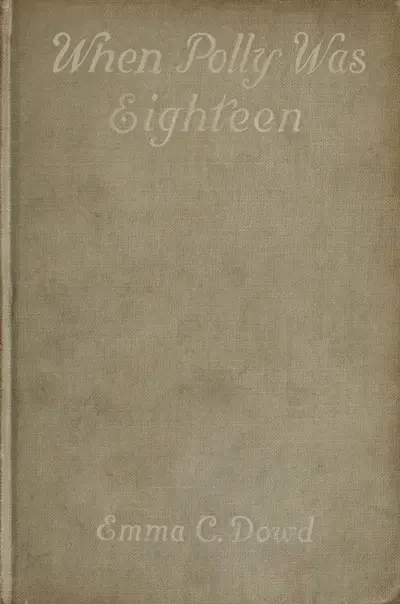
"When Polly Was Eighteen" by Emma C. Dowd is a novel written in the early 20th century. The story follows Polly Dudley, a young woman navigating her relationships and personal growth amidst the complexities of love, friendship, and societal expectations. In the opening chapters, we are introduced to Polly, her love interest David, and the unfolding dynamics of their connection as they struggle with jealousy, misunderstandings, and the challenges of young adulthood. The opening of the book sets the stage with a significant walk between Polly and David, highlighting the tension in their relationship as David grapples with jealousy over Polly's interactions with other boys. This emotional backdrop creates an atmosphere of uncertainty for Polly, who is equally perplexed by David’s mood swings. As the narrative progresses, we see Polly's character evolve; she is caught between her desire for independence and the constraints imposed by her feelings for David. The initial chapters delve into themes of trust, freedom, and self-discovery, as Polly begins to articulate her need for autonomy even while being deeply entwined in her romantic feelings.
Introduction adapted from the source catalogue; source summaries may be automatically generated.
Free to read · English · 60,208 words · No account needed
MAKE TIME FOR A GOOD BOOK
On by default. Untick to stop anonymous reading totals. Each page counts after 10 seconds in view. How this works.
Anonymous counting is on unless you have switched it off.
“I am sick of the way you behave,” she returned. “You make me ashamed
of you.”
“That should be reversed,” observed David coldly.
A tiny smile puckered Polly’s lips.
“Oh, yes, laugh!” he burst out. “It is what you have been doing all
day.”
Marietta and her partner whirled past the doorway.
Polly arose. “If we must talk in this fashion,” she responded, “we had better find a more secluded spot.”
“I will take you home,” he decided, offering his arm.
Many glances followed them as they picked their way between the dancers. Polly wore a mask of smiles. David looked straight ahead. So they reached the front entrance.
“I will bring the car round,” he said.
“Not for me,” answered Polly softly. And she stepped outside.
“Are you refusing to go with me?” he questioned severely.
“We cannot talk here,” she demurred, and led the way to a seat under a
tree.
“Will you answer me?” he scowled.
“You brought Marietta down, and I think you had better take her home.”
“Oh! if that is all, I can come back for her. Or she can go along with
somebody else.”
“No,” Polly replied quietly, “that will not do. I’ll return as I came.”
“H’m! I might have known you would not miss going with Ely.”
Polly did not reply. “What do you wish to say to me?” she asked.
With a little growl of disapproval, he dropped to the seat beside her.
“If you won’t,” he began, “I suppose you won’t; and I want this business disposed of. I am tired of our everlasting squabbling. Perhaps a girl likes it--I don’t.”
Polly sat silent. She was resolved not to be brought into another argument; she knew how little it would avail.
“Well?” spoke up David, after a moment of stillness.
Polly drummed lightly the arm of the bench.
“Why don’t you say something?” David’s voice was a bit impatient.
“I have nothing to say,” she sighed.
“Not even an apology?” he asked in a surprised tone.
“For what?”
“Now, don’t pose as a martyr!”
“I might,” she replied with a little bitter laugh. “To-day has given me sufficient excuse for it.”
“To-day!” he echoed, “to-day! When I have accorded you full reign, and let you do exactly as you pleased!”
She made no response, and he continued. “Do you think it meant no self-sacrifice on my part to allow you to come to such a party in company with another man? Is it nothing for me to let you run about with other fellows? to let you dance with those men?”
Polly smiled.
Your reading position is saved on this browser. Take it to another device with a library code. Reading pages adapt to text, rather than matching a printed edition.
BEHIND THE BOOK
This eBook is for the use of anyone anywhere in the United States and most other parts of the world at no cost and with almost no restrictions whatsoever. You may copy it, give it away or re-use it under the terms of the Project Gutenberg License included with this eBook or online at www.gutenberg.org. If you are not located in the United States, you will have to check the laws of the country where you are located before using this eBook. Read the source licence.
The original source file, including credits and licence, is retained by this library. Request an original-format copy at no charge. Please include the book title and Project Gutenberg identifier #58512.
KEEP YOUR CURIOSITY GOING
Coulson Kernahan

Maurice Baring
Frances Wright
Cécile Tormay

Frederic Jesup Stimson

W. H. P. (William Henry Pope) Jarvis