THE CLASSIC COLLECTION✦Doodles, the Sunshine BoyCLASSIC FREE BOOKS
Doodles, the Sunshine Boy
Emma C. Dowd
THE CLASSIC COLLECTION · 1921
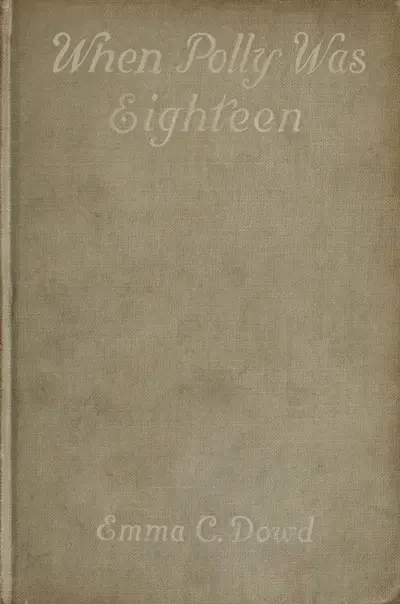
"When Polly Was Eighteen" by Emma C. Dowd is a novel written in the early 20th century. The story follows Polly Dudley, a young woman navigating her relationships and personal growth amidst the complexities of love, friendship, and societal expectations. In the opening chapters, we are introduced to Polly, her love interest David, and the unfolding dynamics of their connection as they struggle with jealousy, misunderstandings, and the challenges of young adulthood. The opening of the book sets the stage with a significant walk between Polly and David, highlighting the tension in their relationship as David grapples with jealousy over Polly's interactions with other boys. This emotional backdrop creates an atmosphere of uncertainty for Polly, who is equally perplexed by David’s mood swings. As the narrative progresses, we see Polly's character evolve; she is caught between her desire for independence and the constraints imposed by her feelings for David. The initial chapters delve into themes of trust, freedom, and self-discovery, as Polly begins to articulate her need for autonomy even while being deeply entwined in her romantic feelings.
Introduction adapted from the source catalogue; source summaries may be automatically generated.
Free to read · English · 60,208 words · No account needed
MAKE TIME FOR A GOOD BOOK
On by default. Untick to stop anonymous reading totals. Each page counts after 10 seconds in view. How this works.
Anonymous counting is on unless you have switched it off.
“Yes,” David was saying, “he is going to take me up to their camp. His father and mother are in Seattle, you know.”
“M-h’m,” she bowed. “How long you going to stay?”
“I don’t know. He hasn’t set any time.”
“It’ll be great, won’t it?” Polly smiled in her friendliest way.
He nodded gravely, slipping abruptly into complaint.
“You do not like Converse. You have never taken the trouble to know
him.”
The girl’s eyes twinkled. “I certainly ought to adore him,” she said; “it is the first time you ever wanted me to look at any boy except Your Royal Highness.”
“Oh, you don’t understand!” sighed David.
“I am always wondering,” Polly went on, a tiny scowl wrinkling her smooth forehead, “how it is that Converse happens to attract you.”
“He is a good fellow,” said David positively. “But he has no stock of
prittle-prattle.”
“It isn’t his lack of nonsense,” Polly smiled. “He is too pretty. That combined with his name--but he can’t help either, poor boy! Anyway, he looks like a nice baby--”
“Baby!” sniffed David.
“Well, he does. With his round face and rosy cheeks and curly hair--honestly, I always want to take him on my knee and trot him.”
David laughed, though as if against his will.
“There’s nothing of the baby about him,” he asserted, “and a fellow can’t help his looks.”
Polly shook her head. “No,” she agreed. “If only he and his sister could exchange faces! Maybe, after all, it is she that flavors my opinion of him.”
“Marietta?”
“Yes.” She was making little jabs in the soft moss with her slender forefinger, and a faint smile began to curve her lips.
“She is a brainy girl,” was the somewhat stiff response, “and she has always been very pleasant to me.”
“She is brainy enough,” replied Polly; “the trouble is, she knows it and she shows that she knows it.”
“If she did not know it, there would be nothing to know,” said David
severely.
Polly’s smile broadened. “I was thinking,” she resumed, “of what Patricia said the other day. Marietta has just been elected president of the Much Ado Club in place of Ruth Mansfield. You know the Mansfields are going to live in California. Ruth has grown pretty stout, and Marietta looks as if she would blow away. Somebody was wondering if she could fill Ruth’s place, and Patricia said very soberly, ‘I think she’ll wabble about a little.’ Wasn’t that bright?”
“Unkind,” he answered forbiddingly.
“Oh, David!” she sighed, “you are so matter-of-fact. You don’t like Patty any better than ever.”
Your reading position is saved on this browser. Take it to another device with a library code. Reading pages adapt to text, rather than matching a printed edition.
BEHIND THE BOOK
This eBook is for the use of anyone anywhere in the United States and most other parts of the world at no cost and with almost no restrictions whatsoever. You may copy it, give it away or re-use it under the terms of the Project Gutenberg License included with this eBook or online at www.gutenberg.org. If you are not located in the United States, you will have to check the laws of the country where you are located before using this eBook. Read the source licence.
The original source file, including credits and licence, is retained by this library. Request an original-format copy at no charge. Please include the book title and Project Gutenberg identifier #58512.
KEEP YOUR CURIOSITY GOING
Coulson Kernahan

Maurice Baring
Frances Wright
Cécile Tormay

Frederic Jesup Stimson

W. H. P. (William Henry Pope) Jarvis