THE CLASSIC COLLECTION✦The Crystal Sceptre: A Story of AdventureCLASSIC FREE BOOKS
The Crystal Sceptre: A Story of Adventure
Philip Verrill Mighels
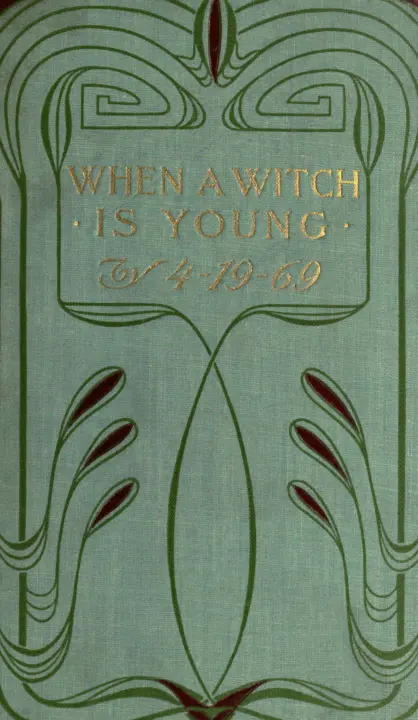
THE CLASSIC COLLECTION · 1901
"When a Witch is Young" by Philip Verrill Mighels is a historical novel written in the early 20th century. Set against the backdrop of 17th century Massachusetts during the tumultuous periods following King Philip’s War, the narrative explores themes of identity, conflict, and burgeoning connections amid colonial pressures. The story primarily revolves around Adam Rust, a young boy who has been captured by the Puritans and his complex emotional experiences tied to his Indian upbringing, including his relationships with those around him. The opening of the novel introduces the aftermath of King Philip's death, revealing the emotional turmoil in Plymouth as the townsfolk celebrate a brutal victory over the Wampanoag tribe. The scene is vivid, depicting the crowd, the captives, and especially young Adam, who grapples with the loss of his Indian family and his own identity. This internal conflict is compounded by his emerging friendship with William Phipps, a shipbuilder who offers him companionship and a chance for a new life away from Plymouth. Additionally, the text hints at Adam's longing for connection, particularly with Garde Merrill, a local Puritan girl. Thus, the beginning sets the tone for a richly woven tale of youthful emotions amid historical upheaval and personal transformation.
Introduction adapted from the source catalogue; source summaries may be automatically generated.
Free to read · English · 108,168 words · No account needed
MAKE TIME FOR A GOOD BOOK
On by default. Untick to stop anonymous reading totals. Each page counts after 10 seconds in view. How this works.
Anonymous counting is on unless you have switched it off.
The room never had ceased to have its fascinations for Garde, since the first time she had seen it, in her childhood. The small bags, which hung from the rafters, along with pendants made of herbs, roots and bulbs, might have contained gold and precious gems, for all that Garde knew to the contrary, while the dark cupboard and the great chest increased the possibilities of the place, which would have been so grand to rummage in, had it not been for the brass warming-pan, so terribly like a watchful moon, forever looking down from the wall. Then lastly, and mostly, in some particulars, there was Rex, the jackdaw, a veritable concentration of all the dark arts and wisdoms extant.
“Good morning, my dear,” said Goody, as Garde entered, breathless with her haste, “you have come to see me early.”
“She’s in love,” said the jackdaw, gravely.
“Oh, dear me!” gasped the girl.
“Rex, you wicked one,” expostulated Goody, mildly. “Never mind, my dear, he found you out that morning last week.”
This was the truth for Goody had said these very same words, several times, in the presence of Rex, no more than five minutes after Garde had gone, that day when she and Adam had met in the forest.
“But I—oh, Goody, Rex is really wicked,” said Garde. “But I do so need you to tell me something.”
“Who doesn’t,” answered Goody. “What a pity it would be if I could never save anyone in the world from some little pain, or some mistake, and yet”—she shook her head, smiling half sadly—“how few human beings are willing even to listen. They must all burn their fingers and learn for themselves.”
“Fools!” said the jackdaw, “fools, fools, fools. I’m a fool myself.”
Fortunately Garde was not unaccustomed to these interruptions on the part of the knowing bird, so that, although he always made her pause and look at him, as if she expected to see how he did it, when he spoke, she was now enabled to tell Goody her troubles with quite as much rapidity as coherence.
She held back nothing. She told all about her original glimpse of Adam in the Plymouth procession, of their meeting, her immediate regard for him, then and there, the long fostering of her affection, and the events of the days just past. This done, she produced her slip of paper, on which Adam had written his mediocre verse, and laid it before the wise woman to be deciphered.
Your reading position is saved on this browser. Take it to another device with a library code. Reading pages adapt to text, rather than matching a printed edition.
Philip Verrill Mighels
Philip Verrill Mighels
Philip Verrill Mighels
BEHIND THE BOOK
This eBook is for the use of anyone anywhere in the United States and most other parts of the world at no cost and with almost no restrictions whatsoever. You may copy it, give it away or re-use it under the terms of the Project Gutenberg License included with this eBook or online at www.gutenberg.org. If you are not located in the United States, you will have to check the laws of the country where you are located before using this eBook. Read the source licence.
The original source file, including credits and licence, is retained by this library. Request an original-format copy at no charge. Please include the book title and Project Gutenberg identifier #68249.
KEEP YOUR CURIOSITY GOING
Cécile Tormay

Moritz Busch
Coulson Kernahan
John L. Ransom

Maurice Baring
Frances Wright