THE CLASSIC COLLECTION✦The Crystal Sceptre: A Story of AdventureCLASSIC FREE BOOKS
The Crystal Sceptre: A Story of Adventure
Philip Verrill Mighels
THE CLASSIC COLLECTION · 1901
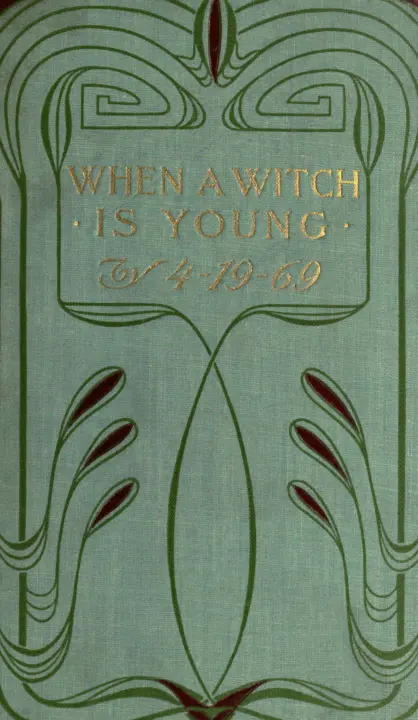
"When a Witch is Young" by Philip Verrill Mighels is a historical novel written in the early 20th century. Set against the backdrop of 17th century Massachusetts during the tumultuous periods following King Philip’s War, the narrative explores themes of identity, conflict, and burgeoning connections amid colonial pressures. The story primarily revolves around Adam Rust, a young boy who has been captured by the Puritans and his complex emotional experiences tied to his Indian upbringing, including his relationships with those around him. The opening of the novel introduces the aftermath of King Philip's death, revealing the emotional turmoil in Plymouth as the townsfolk celebrate a brutal victory over the Wampanoag tribe. The scene is vivid, depicting the crowd, the captives, and especially young Adam, who grapples with the loss of his Indian family and his own identity. This internal conflict is compounded by his emerging friendship with William Phipps, a shipbuilder who offers him companionship and a chance for a new life away from Plymouth. Additionally, the text hints at Adam's longing for connection, particularly with Garde Merrill, a local Puritan girl. Thus, the beginning sets the tone for a richly woven tale of youthful emotions amid historical upheaval and personal transformation.
Introduction adapted from the source catalogue; source summaries may be automatically generated.
Free to read · English · 108,168 words · No account needed
MAKE TIME FOR A GOOD BOOK
On by default. Untick to stop anonymous reading totals. Each page counts after 10 seconds in view. How this works.
Anonymous counting is on unless you have switched it off.
ELOQUENT as Wainsworth had proved himself, in the presence of Adam, he was but an indifferent love’s-man, now that he found himself alone with Garde.
“I wanted to come back for—for the papers,” he stammered.
“Yes,” said Garde, whose spirit of elfishness Henry always aroused, “they would soon have missed you sorely.”
“Would they—What, papers?—Oh, you are making fun of——”
“I am making a search to find them,” interrupted Garde. “Here they are. I am so sorry they have detained you.”
“Thank you—oh, thank you,” said Henry, still stumbling confusedly. “It is such a lovely day I thought I should like to come back and—and—and see—if I had really left them here.”
“Yes, such a lovely day would make any one wish to do the same thing,” said Garde, gravely. “Now that you have them, you must be very happy again.”
“Yes, oh yes—no, no, the papers haven’t made me happy.”
“Then I am sorry you are sad,” said Garde. “Perhaps the lovely day outside will make you feel more joyous again.”
“But I am not sad,” protested Henry, getting momentarily redder. “I wanted to say—I wanted to come back——”
“Yes, you did say so, to get the papers.”
“No—yes!—but I wanted to say——”
“That you had left them, because it was such a lovely day?”
“Yes, of course, but—no, no, I wanted to say—church!”
“Oh, they are church papers, Mr. Wainsworth?” asked Garde innocently.
“No, I—I wanted to say it is such a lovely day——”
“You have said so many things that you may have mentioned the day before.” Garde’s eyes were dancing, but he had hardly dared to look at her face, lest his tongue should fail him utterly.
He now fixed his attention on the table with all his power of will.
“I wanted to say, if the Sabbath is a lovely day, like this, may I not walk to meeting with you and David Donner?”
Piqued somewhat by the way Adam had treated her, Garde instantly saw a possible opportunity of arousing Adam’s jealousy. He would doubtless attend meeting. He might see her with Henry. As Prudence would also be there, with her father, there might be further developments.
“If it is a lovely day, Mr. Wainsworth,” she answered, “I think Granther Donner will be glad of your company, but if it is not a lovely day, Granther and I will have to get along as best we may, alone, I suppose.”
Your reading position is saved on this browser. Take it to another device with a library code. Reading pages adapt to text, rather than matching a printed edition.
Philip Verrill Mighels
Philip Verrill Mighels
Philip Verrill Mighels
BEHIND THE BOOK
This eBook is for the use of anyone anywhere in the United States and most other parts of the world at no cost and with almost no restrictions whatsoever. You may copy it, give it away or re-use it under the terms of the Project Gutenberg License included with this eBook or online at www.gutenberg.org. If you are not located in the United States, you will have to check the laws of the country where you are located before using this eBook. Read the source licence.
The original source file, including credits and licence, is retained by this library. Request an original-format copy at no charge. Please include the book title and Project Gutenberg identifier #68249.
KEEP YOUR CURIOSITY GOING
Cécile Tormay

Moritz Busch
Coulson Kernahan
John L. Ransom

Maurice Baring
Frances Wright