THE CLASSIC COLLECTION✦The Crystal Sceptre: A Story of AdventureCLASSIC FREE BOOKS
The Crystal Sceptre: A Story of Adventure
Philip Verrill Mighels
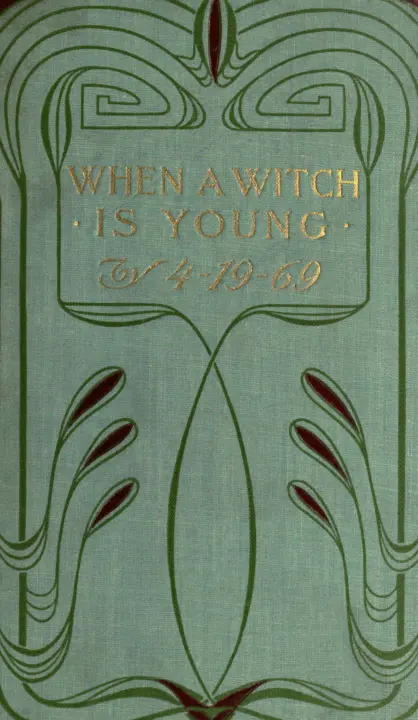
THE CLASSIC COLLECTION · 1901
"When a Witch is Young" by Philip Verrill Mighels is a historical novel written in the early 20th century. Set against the backdrop of 17th century Massachusetts during the tumultuous periods following King Philip’s War, the narrative explores themes of identity, conflict, and burgeoning connections amid colonial pressures. The story primarily revolves around Adam Rust, a young boy who has been captured by the Puritans and his complex emotional experiences tied to his Indian upbringing, including his relationships with those around him. The opening of the novel introduces the aftermath of King Philip's death, revealing the emotional turmoil in Plymouth as the townsfolk celebrate a brutal victory over the Wampanoag tribe. The scene is vivid, depicting the crowd, the captives, and especially young Adam, who grapples with the loss of his Indian family and his own identity. This internal conflict is compounded by his emerging friendship with William Phipps, a shipbuilder who offers him companionship and a chance for a new life away from Plymouth. Additionally, the text hints at Adam's longing for connection, particularly with Garde Merrill, a local Puritan girl. Thus, the beginning sets the tone for a richly woven tale of youthful emotions amid historical upheaval and personal transformation.
Introduction adapted from the source catalogue; source summaries may be automatically generated.
Free to read · English · 108,168 words · No account needed
MAKE TIME FOR A GOOD BOOK
On by default. Untick to stop anonymous reading totals. Each page counts after 10 seconds in view. How this works.
Anonymous counting is on unless you have switched it off.
AFTER nearly a week of rain and dull, gray skies, the weather was again entrancing. The warm, soporific breeze which played through the house lulled Grandther Donner off to sleep, as he sat in his chair, staring at vacancy and rubbing his thumb across the ends of his fingers.
Garde, responding to the mood of coming summer, could not resist the impulse to go out into the garden, which to her would always be associated with her childish meeting with Adam Rust, and which therefore now made of her yearning to see him a positive force.
Thus it doubtless appeared to her as an answer to her longing when she felt a presence and glanced up at the gate, to see him standing there, as he had so many years before, with two of the pickets clasped in his big, strong hands.
Her heart gave a leap that almost hurt, so suddenly did it send the ecstasy bounding through her veins. Yet so sublimated was the look on Adam’s face, as, with parted lips and visible color rising and falling in his face, he gazed at her, steadfastly, and as one entranced, that she went toward him as slowly as if walking might disturb the spell.
One of her hands, like a homing dove, came up to press on her bosom above her heart. She was pale, for the cares of those weeks had bleached the rose-tints from her cheeks. Nevertheless, the moment painted them with vestal flames of love’s own lamp, as she looked into Adam’s eyes and saw the tender passion abiding there.
“Adam, I prithee come in,” she said, in a soft murmur, unconsciously repeating what she had said when first he had leaned upon this gate.
As one approaching something sacred, Adam came in and took her two hands in his. He raised them slowly to his lips, and then pressed them together against his breast.
“Garde,” he said, almost whispering. “Garde. My little Garde.”
“Oh, Adam,” she answered.
They looked at one another and smiled, she through shining tears. Then they laughed, for there were no words, there was nothing which could absolutely express their overflowing joy, but their laughing, which was wholly spontaneous, came the nearest.
“Oh, I have been so afraid this moment would never come,” said Garde, presently, when she could trust herself to speak. “It has been such a long, long time to wait.”
Your reading position is saved on this browser. Take it to another device with a library code. Reading pages adapt to text, rather than matching a printed edition.
Philip Verrill Mighels
Philip Verrill Mighels
Philip Verrill Mighels
BEHIND THE BOOK
This eBook is for the use of anyone anywhere in the United States and most other parts of the world at no cost and with almost no restrictions whatsoever. You may copy it, give it away or re-use it under the terms of the Project Gutenberg License included with this eBook or online at www.gutenberg.org. If you are not located in the United States, you will have to check the laws of the country where you are located before using this eBook. Read the source licence.
The original source file, including credits and licence, is retained by this library. Request an original-format copy at no charge. Please include the book title and Project Gutenberg identifier #68249.
KEEP YOUR CURIOSITY GOING
Cécile Tormay

Moritz Busch
Coulson Kernahan
John L. Ransom

Maurice Baring
Frances Wright