THE CLASSIC COLLECTION✦The Crystal Sceptre: A Story of AdventureCLASSIC FREE BOOKS
The Crystal Sceptre: A Story of Adventure
Philip Verrill Mighels
THE CLASSIC COLLECTION · 1901
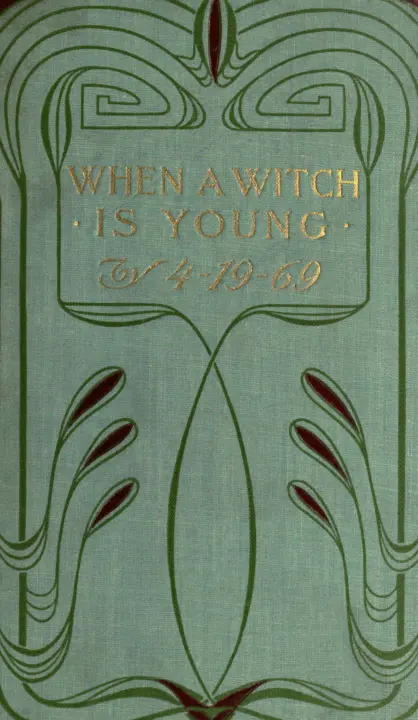
"When a Witch is Young" by Philip Verrill Mighels is a historical novel written in the early 20th century. Set against the backdrop of 17th century Massachusetts during the tumultuous periods following King Philip’s War, the narrative explores themes of identity, conflict, and burgeoning connections amid colonial pressures. The story primarily revolves around Adam Rust, a young boy who has been captured by the Puritans and his complex emotional experiences tied to his Indian upbringing, including his relationships with those around him. The opening of the novel introduces the aftermath of King Philip's death, revealing the emotional turmoil in Plymouth as the townsfolk celebrate a brutal victory over the Wampanoag tribe. The scene is vivid, depicting the crowd, the captives, and especially young Adam, who grapples with the loss of his Indian family and his own identity. This internal conflict is compounded by his emerging friendship with William Phipps, a shipbuilder who offers him companionship and a chance for a new life away from Plymouth. Additionally, the text hints at Adam's longing for connection, particularly with Garde Merrill, a local Puritan girl. Thus, the beginning sets the tone for a richly woven tale of youthful emotions amid historical upheaval and personal transformation.
Introduction adapted from the source catalogue; source summaries may be automatically generated.
Free to read · English · 108,168 words · No account needed
MAKE TIME FOR A GOOD BOOK
On by default. Untick to stop anonymous reading totals. Each page counts after 10 seconds in view. How this works.
Anonymous counting is on unless you have switched it off.
“Are you fastened in?” added Simon Bradstreet.
“Might we not pull him down?” suggested Wainsworth.
“My friends, how many be you?” said the hot, muffled voice of John.
“Five,” said one of the solemn governors. “Shall we give you a little
assistance?”
“It would only be a little I should want,” said the carpenter, dropping the nails he had clung to in desperation.
The five gentlemen disposed themselves about John’s anatomy and pulled at his legs with united strength, grasping the cloth of his trousers for the purpose.
“Enough! enough!” roared John, after a moment of hopeless pain and
wriggling.
His warning came belated. His trousers were of good stuff enow, but trousers have their limitations. They parted, slightly above the uneven line of gripping hands, and came away in ragged banners.
The five citizens were horrified. So was John. Two of the gentlemen, with the booty taken from their friend, fell heavily to the floor.
“Dear me, this was most uncalled for,” said David Donner.
John Soam tried to draw his legs up under his coat, vainly. He made terrible sounds of anguish, in his nakedness below and his loneliness up above the ceiling. His fellow-citizens, undecided as to whether they should go outside, for the sake of modesty, or remain and lend further aid to John, looked at one another inquiringly.
“John,” then said Leverett, somewhat sternly, “would you council us to get an ax and knock out the board you have hammered into place?”
“Yes,” bawled the carpenter, “there be two axes in the corner. Let them both be employed!”
“I have chopped down a tree in my youth,” said David Donner.
He therefore took one of the axes, while Governor Winslow took the
second.
They were then at a loss to reach the ceiling, wherefore it became necessary for the good men to build up a platform, of boxes and boards, while John Soam’s legs tried to hide, one behind the other.
The platform being hastily constructed, the ax-men mounted and began to swing ill-directed blows upward at the stubborn board which the carpenter had hammered in so thoroughly.
No more than three blows had been delivered when John made protest, howling lustily for the purpose, as the ax-men failed at first to hear him, while busy with their work of salvation.
“It jars me rudely,” he roared out, unable wholly to repress his feelings. “It’s hellish.”
“Ahem,” said Governor Leverett. “What would you council us to do next,
friend Soam?”
“Saw the board,” counseled John. “It was a rare good fit, but it had
best be sawed.”
Your reading position is saved on this browser. Take it to another device with a library code. Reading pages adapt to text, rather than matching a printed edition.
Philip Verrill Mighels
Philip Verrill Mighels
Philip Verrill Mighels
BEHIND THE BOOK
This eBook is for the use of anyone anywhere in the United States and most other parts of the world at no cost and with almost no restrictions whatsoever. You may copy it, give it away or re-use it under the terms of the Project Gutenberg License included with this eBook or online at www.gutenberg.org. If you are not located in the United States, you will have to check the laws of the country where you are located before using this eBook. Read the source licence.
The original source file, including credits and licence, is retained by this library. Request an original-format copy at no charge. Please include the book title and Project Gutenberg identifier #68249.
KEEP YOUR CURIOSITY GOING
Cécile Tormay

Moritz Busch
Coulson Kernahan
John L. Ransom

Maurice Baring
Frances Wright