THE CLASSIC COLLECTION✦The Crystal Sceptre: A Story of AdventureCLASSIC FREE BOOKS
The Crystal Sceptre: A Story of Adventure
Philip Verrill Mighels
THE CLASSIC COLLECTION · 1901
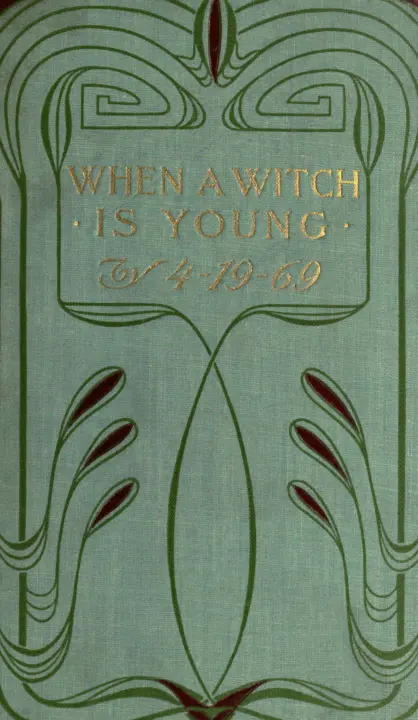
"When a Witch is Young" by Philip Verrill Mighels is a historical novel written in the early 20th century. Set against the backdrop of 17th century Massachusetts during the tumultuous periods following King Philip’s War, the narrative explores themes of identity, conflict, and burgeoning connections amid colonial pressures. The story primarily revolves around Adam Rust, a young boy who has been captured by the Puritans and his complex emotional experiences tied to his Indian upbringing, including his relationships with those around him. The opening of the novel introduces the aftermath of King Philip's death, revealing the emotional turmoil in Plymouth as the townsfolk celebrate a brutal victory over the Wampanoag tribe. The scene is vivid, depicting the crowd, the captives, and especially young Adam, who grapples with the loss of his Indian family and his own identity. This internal conflict is compounded by his emerging friendship with William Phipps, a shipbuilder who offers him companionship and a chance for a new life away from Plymouth. Additionally, the text hints at Adam's longing for connection, particularly with Garde Merrill, a local Puritan girl. Thus, the beginning sets the tone for a richly woven tale of youthful emotions amid historical upheaval and personal transformation.
Introduction adapted from the source catalogue; source summaries may be automatically generated.
Free to read · English · 108,168 words · No account needed
MAKE TIME FOR A GOOD BOOK
On by default. Untick to stop anonymous reading totals. Each page counts after 10 seconds in view. How this works.
Anonymous counting is on unless you have switched it off.
“Garde,” said Adam, in a voice she barely heard, “Garde—I have—come home. I never got your letter till to-night.”
She could not answer, for a moment.
“I—have been waiting,” she then said, and striving to hold her lips from trembling, she let two great tears trickle slowly across her face as she still looked up in his eyes.
There was nothing he could say. He read her whole story of faithfulness and of suffering, her epic of a love that could not die, in that one long look. Slowly he went up to her and taking her face in his hands he kissed away the tears from her cheeks. He put her head gently against his breast and let her cry.
She still held to the fence, as if she dared not too suddenly lean on his love, without which she had learned to live so long. But gradually, as he held her there, saying nothing, but softly kissing her hair and the one little hand he had taken in his own, her arms crept upward about his shoulders and her heart beat against his, in a peace surpassing anything of earth.
“My Garde,” he finally began to whisper, over and over again, “my own Garde—my darling, precious Garde.”
“Oh, this may all be wrong, Adam,” she answered him, after a time. “I don’t understand it. We don’t know what has happened, in all these years. Oh, how did you happen to come?”
“You drew me, sweetheart,” he said, in a voice made tremulous with emotion. “I have had no peace till now. I have loved you so! I have dreamed of you so! But I never knew—till to-night, when I got your letter.”
“You—never got it till to-night? Oh Adam,” she said. “Oh, Adam, I have been so punished for the wrong I did. Oh, you can never, never forgive me!”
“There, there, sweetheart,” he said to her soothingly, letting her cry out the sobs she had stifled so vainly. “Forgive you, dear? You had no need to ask for forgiveness—you who came to me there in that jail—you, whose sweet little motherly spirit so provided for my poor old beef-eaters, when they were hungry and fleeing for their lives. Dearest, I don’t see how you did it, when I was a hunted renegade, a fugitive, with doubled infamies piled upon my head. Oh, forgive me, dear, that ever I doubted my own little mate.”
“No, I should never have believed them—not all the world!” she protested. “My Adam. My Adam.”
Your reading position is saved on this browser. Take it to another device with a library code. Reading pages adapt to text, rather than matching a printed edition.
Philip Verrill Mighels
Philip Verrill Mighels
Philip Verrill Mighels
BEHIND THE BOOK
This eBook is for the use of anyone anywhere in the United States and most other parts of the world at no cost and with almost no restrictions whatsoever. You may copy it, give it away or re-use it under the terms of the Project Gutenberg License included with this eBook or online at www.gutenberg.org. If you are not located in the United States, you will have to check the laws of the country where you are located before using this eBook. Read the source licence.
The original source file, including credits and licence, is retained by this library. Request an original-format copy at no charge. Please include the book title and Project Gutenberg identifier #68249.
KEEP YOUR CURIOSITY GOING
Cécile Tormay

Moritz Busch
Coulson Kernahan
John L. Ransom

Maurice Baring
Frances Wright