THE CLASSIC COLLECTION✦The Crystal Sceptre: A Story of AdventureCLASSIC FREE BOOKS
The Crystal Sceptre: A Story of Adventure
Philip Verrill Mighels
THE CLASSIC COLLECTION · 1901
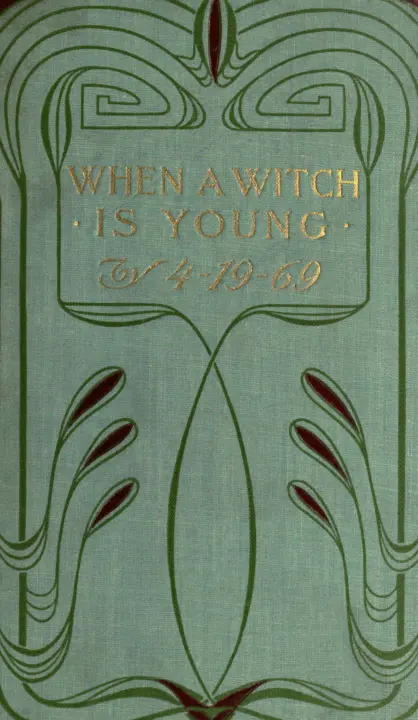
"When a Witch is Young" by Philip Verrill Mighels is a historical novel written in the early 20th century. Set against the backdrop of 17th century Massachusetts during the tumultuous periods following King Philip’s War, the narrative explores themes of identity, conflict, and burgeoning connections amid colonial pressures. The story primarily revolves around Adam Rust, a young boy who has been captured by the Puritans and his complex emotional experiences tied to his Indian upbringing, including his relationships with those around him. The opening of the novel introduces the aftermath of King Philip's death, revealing the emotional turmoil in Plymouth as the townsfolk celebrate a brutal victory over the Wampanoag tribe. The scene is vivid, depicting the crowd, the captives, and especially young Adam, who grapples with the loss of his Indian family and his own identity. This internal conflict is compounded by his emerging friendship with William Phipps, a shipbuilder who offers him companionship and a chance for a new life away from Plymouth. Additionally, the text hints at Adam's longing for connection, particularly with Garde Merrill, a local Puritan girl. Thus, the beginning sets the tone for a richly woven tale of youthful emotions amid historical upheaval and personal transformation.
Introduction adapted from the source catalogue; source summaries may be automatically generated.
Free to read · English · 108,168 words · No account needed
MAKE TIME FOR A GOOD BOOK
On by default. Untick to stop anonymous reading totals. Each page counts after 10 seconds in view. How this works.
Anonymous counting is on unless you have switched it off.
“I—I cannot,” Garde said, fighting heroically against the greatest temptation she had ever known. “We must say——good-by, now, and I must——”
“Yes, I know, dear,” he broke in impetuously, “but just for a moment,
just——”
He was at the window. He tried to take her hands, to draw her toward him. She shrank away with an action so strange that his sentence died on his lips. “Why, Garde,” he said, “can’t I even touch your hands?”
She shook her head. He could barely see her, in the pale light which the
stars diffused.
“I—I must never see—never see you—again,” she stammered, painfully, “we must say—say good-by.”
“You must never——Garde—why—we must say—But, Garde, dear,—I don’t understand you. What does all this mean?”
“Oh, please go—now,” she said. “That is all—all I can say. It must be
good-by.”
Adam was made dumb for a moment. He stared at her unbelievingly. He passed his hand across his brow, as if he feared his fasting and long-endured labors had weakened his mind.
“What in heaven’s name has happened?” he said, as if partially to himself. “Am I Adam Rust? Are you Garde? Say good-by?——Dearest, has anything happened?”
She nodded to him, forcing back the sob that arose in her throat. “Something—something has happened,” she repeated. For maidenly shame she could not broach the subject of the Indian child.
He was silent for a moment before replying.
“But you came to-night and gave me the keys, an hour or so ago,” he said, in wonderment and confusion. “You did that?”
“I—couldn’t—do less,” she answered, mastering her love and anguish by a mighty resolution.
“Do you mean—you would have done the same for anybody?” he asked. And seeing her nod an affirmative he gave a little laugh. “I am crazy now, or I have been crazy before,” he told himself. “Something has happened. Something—Of course—it couldn’t help happening, in time. Some one has told you——I might have known it would happen.... And yet—you once said you could wait for me fifty years. And I believed it.... Well, I thank you. I have been amused.”
His broken sentences seemed to Garde to fill in the possible gaps of the story—to make his confession complete. But Adam had, in reality, stopped himself on the verge of accusing her of listening to the love-making of some one other than himself, in his absence.
Your reading position is saved on this browser. Take it to another device with a library code. Reading pages adapt to text, rather than matching a printed edition.
Philip Verrill Mighels
Philip Verrill Mighels
Philip Verrill Mighels
BEHIND THE BOOK
This eBook is for the use of anyone anywhere in the United States and most other parts of the world at no cost and with almost no restrictions whatsoever. You may copy it, give it away or re-use it under the terms of the Project Gutenberg License included with this eBook or online at www.gutenberg.org. If you are not located in the United States, you will have to check the laws of the country where you are located before using this eBook. Read the source licence.
The original source file, including credits and licence, is retained by this library. Request an original-format copy at no charge. Please include the book title and Project Gutenberg identifier #68249.
KEEP YOUR CURIOSITY GOING
Cécile Tormay

Moritz Busch
Coulson Kernahan
John L. Ransom

Maurice Baring
Frances Wright