THE CLASSIC COLLECTION✦The Crystal Sceptre: A Story of AdventureCLASSIC FREE BOOKS
The Crystal Sceptre: A Story of Adventure
Philip Verrill Mighels
THE CLASSIC COLLECTION · 1901
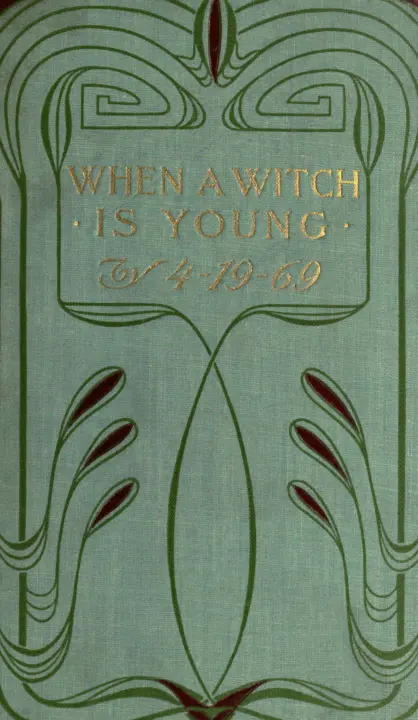
"When a Witch is Young" by Philip Verrill Mighels is a historical novel written in the early 20th century. Set against the backdrop of 17th century Massachusetts during the tumultuous periods following King Philip’s War, the narrative explores themes of identity, conflict, and burgeoning connections amid colonial pressures. The story primarily revolves around Adam Rust, a young boy who has been captured by the Puritans and his complex emotional experiences tied to his Indian upbringing, including his relationships with those around him. The opening of the novel introduces the aftermath of King Philip's death, revealing the emotional turmoil in Plymouth as the townsfolk celebrate a brutal victory over the Wampanoag tribe. The scene is vivid, depicting the crowd, the captives, and especially young Adam, who grapples with the loss of his Indian family and his own identity. This internal conflict is compounded by his emerging friendship with William Phipps, a shipbuilder who offers him companionship and a chance for a new life away from Plymouth. Additionally, the text hints at Adam's longing for connection, particularly with Garde Merrill, a local Puritan girl. Thus, the beginning sets the tone for a richly woven tale of youthful emotions amid historical upheaval and personal transformation.
Introduction adapted from the source catalogue; source summaries may be automatically generated.
Free to read · English · 108,168 words · No account needed
MAKE TIME FOR A GOOD BOOK
On by default. Untick to stop anonymous reading totals. Each page counts after 10 seconds in view. How this works.
Anonymous counting is on unless you have switched it off.
“No, I wouldn’t,” said Rust, stoutly enough. “It would then have been quite another matter. As it is, you play the deuce with my brain and fancy. I start in to talk to you as man to man, and then I think you are almost better fitted to be a girl—and you admit you were raised somewhat in that manner, so what can one expect?”
“Well, what if your sweetheart heard you speaking thus?” said Garde, who was enjoying the situation the more for the very danger of it. “Should you like to have her hear you telling me I should have made a girl that a man could—could love?”
“You being a boy, why not?” Adam made answer. “Ah, she is too present in my thought and feeling for me to say anything I would be loth for her to hear.”
They had arrived at the edge of a brook which was somewhat swelled by the snow, back on the hills, melting in the genial warmth of the sun. It was nothing for Adam to stride across, stepping from rock to rock, but Garde hesitated, her femininity uppermost in a moment, despite her utmost efforts to be boyish.
“Here, give us your hand,” said big Adam, turning back to help her over. “Now, then, jump!”
Thrilling with the delight of his warm, strong fingers closing so firmly on her own, Garde came across the brook in safety and then reluctantly released her grip from his.
Adam had not escaped unscathed from this contact of love, with which she was fairly thrilling. He looked at her oddly, when they were safe again on the further side. Garde caught her breath, in fear that she had betrayed herself at last, in that moment of weakness.
“You are too much for me, John,” Adam admitted, shaking his head in puzzlement. “You are a strange boy.”
“I thought it was all explained,” Garde replied, anxious to get him quieted on the subject. “How far should you say it is to Boston?”
“I think I begin to work it out a little,” the man went on, musingly. “It’s because you remind me of some one I have known.”
“Do I?” said Garde, half afraid of her question. “Of whom?”
“I don’t quite know,” he confessed, looking at her earnestly. “And yet I ought to be able to tell. It was some one I liked, I am sure.”
“As much as you did your sweetheart?”
Adam seemed not to hear this question. “Your complexion,” he resumed, “makes me think of a sweet maid I knew at Jamaica.”
“Oh!”
Your reading position is saved on this browser. Take it to another device with a library code. Reading pages adapt to text, rather than matching a printed edition.
Philip Verrill Mighels
Philip Verrill Mighels
Philip Verrill Mighels
BEHIND THE BOOK
This eBook is for the use of anyone anywhere in the United States and most other parts of the world at no cost and with almost no restrictions whatsoever. You may copy it, give it away or re-use it under the terms of the Project Gutenberg License included with this eBook or online at www.gutenberg.org. If you are not located in the United States, you will have to check the laws of the country where you are located before using this eBook. Read the source licence.
The original source file, including credits and licence, is retained by this library. Request an original-format copy at no charge. Please include the book title and Project Gutenberg identifier #68249.
KEEP YOUR CURIOSITY GOING
Cécile Tormay

Moritz Busch
Coulson Kernahan
John L. Ransom

Maurice Baring
Frances Wright