THE CLASSIC COLLECTION✦The Crystal Sceptre: A Story of AdventureCLASSIC FREE BOOKS
The Crystal Sceptre: A Story of Adventure
Philip Verrill Mighels
THE CLASSIC COLLECTION · 1901
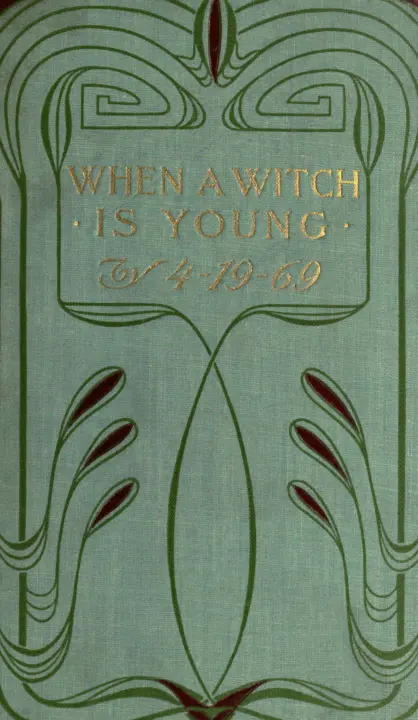
"When a Witch is Young" by Philip Verrill Mighels is a historical novel written in the early 20th century. Set against the backdrop of 17th century Massachusetts during the tumultuous periods following King Philip’s War, the narrative explores themes of identity, conflict, and burgeoning connections amid colonial pressures. The story primarily revolves around Adam Rust, a young boy who has been captured by the Puritans and his complex emotional experiences tied to his Indian upbringing, including his relationships with those around him. The opening of the novel introduces the aftermath of King Philip's death, revealing the emotional turmoil in Plymouth as the townsfolk celebrate a brutal victory over the Wampanoag tribe. The scene is vivid, depicting the crowd, the captives, and especially young Adam, who grapples with the loss of his Indian family and his own identity. This internal conflict is compounded by his emerging friendship with William Phipps, a shipbuilder who offers him companionship and a chance for a new life away from Plymouth. Additionally, the text hints at Adam's longing for connection, particularly with Garde Merrill, a local Puritan girl. Thus, the beginning sets the tone for a richly woven tale of youthful emotions amid historical upheaval and personal transformation.
Introduction adapted from the source catalogue; source summaries may be automatically generated.
Free to read · English · 108,168 words · No account needed
MAKE TIME FOR A GOOD BOOK
On by default. Untick to stop anonymous reading totals. Each page counts after 10 seconds in view. How this works.
Anonymous counting is on unless you have switched it off.
Goody lost but little time in thinking. She produced a cup, from her shelf of decoctions, and dabbling her finger into its contents she proceeded to stain the girl’s face a rich brown color, which made her more handsome than ever, if possible, but which masked her so completely that her own reflection would not have known her. The brown stuff went into her pretty ears and all around her plump pretty throat and even on top of her eyelids as they were closed, for Goody was something of an artist. When she had finished, she regarded her work critically.
“The angel Gabriel wouldn’t know you now, himself,” she said. “When you wish to get it off, use vinegar. Take your stick and your little pack, put it over your shoulder, so, and now you are ready. Would you like something to eat before you go?”
“Oh no,” gasped the girl, frightened half out of her wits, at the prospect of going forth into the world with two pretty, visible legs to walk withal. “I—I couldn’t eat anything. I—wait a minute. I—I think I would like a little drink of water.”
Goody gave her a dipper full, of which she took one miniature sip.
“Do I—do I look—terrible?” she faltered.
“You look like a farmer’s boy—a lout of a country lad,” said Goody. “So, good-by, young man. My last word is, forget you have got any legs, or you will surely be detected.”
“Legs!” said the jackdaw, glad of a new word. “Legs! Legs!”
“I couldn’t—wear anything—over them, could I?” said Garde, timidly, having jumped when Rex croaked so suddenly.
“You can wear a wedding gown over them, if you prefer,” said the old woman, grimly, and suggestively. “I really expected you to do better than this.”
“Well—I will!” said the poor child, resolutely. “Good-by, dear Goody. I shall always love you, more than ever, for this.”
Goody kissed her, as she bent affectionately forward, and patted her motherly on the back. “That’s a good boy,” she said.
She opened the door and Garde went forth. The open air made her conscious of her attire instantly. But she did her best, shy and unboyish as the effort was.
“Oh, I forgot to ask,” she said, glad to get one more moment in which to get ready. “How is Hester? How was she when you saw her last?”
Goody’s face darkened. “I saw her the first thing this morning,” she said. “Some one must have called last night, after I left. Hester is dead.”
Your reading position is saved on this browser. Take it to another device with a library code. Reading pages adapt to text, rather than matching a printed edition.
Philip Verrill Mighels
Philip Verrill Mighels
Philip Verrill Mighels
BEHIND THE BOOK
This eBook is for the use of anyone anywhere in the United States and most other parts of the world at no cost and with almost no restrictions whatsoever. You may copy it, give it away or re-use it under the terms of the Project Gutenberg License included with this eBook or online at www.gutenberg.org. If you are not located in the United States, you will have to check the laws of the country where you are located before using this eBook. Read the source licence.
The original source file, including credits and licence, is retained by this library. Request an original-format copy at no charge. Please include the book title and Project Gutenberg identifier #68249.
KEEP YOUR CURIOSITY GOING
Cécile Tormay

Moritz Busch
Coulson Kernahan
John L. Ransom

Maurice Baring
Frances Wright