THE CLASSIC COLLECTION✦A dead man’s diaryCLASSIC FREE BOOKS
A dead man’s diary
Coulson Kernahan
THE CLASSIC COLLECTION · 1903
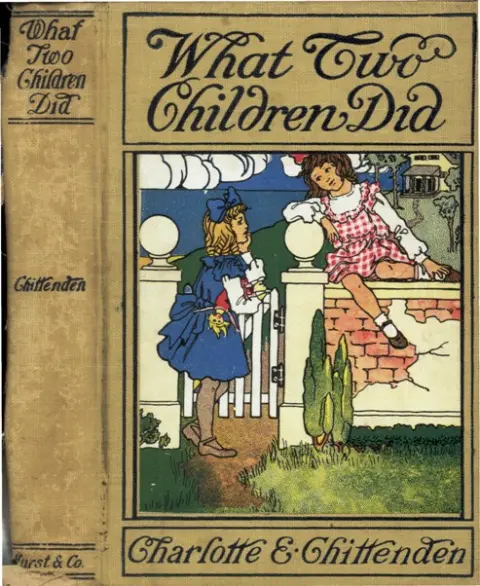
"What Two Children Did" by Charlotte E. Chittenden is a children's fiction book written in the early 20th century. The story revolves around two sisters, Ethelwyn and Beth, as they embark on various adventures and musings, highlighting themes of childhood innocence, curiosity, and the bond between siblings. Against a backdrop of summer activities at the seashore, the book illustrates their simple, yet profound interactions with their mother and the world around them. At the start of the narrative, we find Ethelwyn and Beth traveling by train with their mother, who is preoccupied with her thoughts. The children, noticing their mother's furrowed brow, worry that they are the cause of her distress due to past mischief. As they indulge in a feast of sandwiches and cookies, they ponder deep questions about mistakes and the nature of God. This opening segment sets the stage for their character development, showcasing the children's playful spirits and desire to please their mother while navigating their own understanding of the complexities of life. Their summer journey introduces them to new friends, responsibilities, and opportunities to help others in need, laying the groundwork for further adventures to unfold.
Introduction adapted from the source catalogue; source summaries may be automatically generated.
Free to read · English · 27,709 words · No account needed
MAKE TIME FOR A GOOD BOOK
On by default. Untick to stop anonymous reading totals. Each page counts after 10 seconds in view. How this works.
Anonymous counting is on unless you have switched it off.
"Besides, my father says not to lay up treasure for roth and must to corrupt!" put in Nan, coming to the surface. At this, they all shouted, much to Nan's discomfiture.
For awhile the banker looked out on the showery landscape, then he turned to the children's mother.
"Perhaps you are right, Mrs. Rayburn," he said gently. "The world is all too selfish;" and he sighed as he said it.
"It is indeed," came the emphatic answer. "There is no crime, there is no sin, that has not for its basis selfishness. It is the evil part of life, and the Christ life that ought to be man's pattern, is the type of unselfishness."
"Well," said the banker, taking up his paper, "I am open to conviction."
The sun was shining when they arrived at the pretty station, and they all stopped on the platform to listen a moment to the organ note of the sea. As they waited, a wagon drove up, and a young fellow jumped out and ran towards them.
"It's--it's--Dick! Dick who used to walk on crutches!" cried Ethelwyn, fairly rubbing her eyes in astonishment.
There were no signs of lameness now in this tall youth, and his face was radiant with happiness. He could not speak for a moment, as he shook hands with those whom he knew, and of whom he had almost constantly thought with heartfelt gratitude.
"My sakes! Aren't you mended up well, though?" said Beth, walking
around him admiringly.
They all laughed at this, of course, and Dick was then introduced to Bobby's mother, his grandfather, and Bobby himself.
"Dick is the first patient of the Home," said Mrs. Rayburn, "and he does it credit. He is Mrs. Stevens's right-hand man now. Where and how is dear Mrs. Stevens?"
"She is well but could not leave to come to the train," said Dick. "She can hardly wait to see you, though."
"I do sincerely trust she has baked a bushel of cookies," said Ethelwyn, as they climbed into the wagon.
The approach to the Home was very beautiful. The sun was going down in a blaze of glory, and the wagon wound around the hill road to where the cottage, gay with flags and striped awnings, crowned its summit.
Then, above the roar of the sea and the clatter of hoofs, came the sound of children's voices calling from the broad piazza,
"Welcome home! Welcome home!"
Then a child's voice sang,
"To give sad children's hearts a joy,
To give the weary rest,
To give to those who need it sore,
This makes a life most blest."
Your reading position is saved on this browser. Take it to another device with a library code. Reading pages adapt to text, rather than matching a printed edition.
BEHIND THE BOOK
This eBook is for the use of anyone anywhere in the United States and most other parts of the world at no cost and with almost no restrictions whatsoever. You may copy it, give it away or re-use it under the terms of the Project Gutenberg License included with this eBook or online at www.gutenberg.org. If you are not located in the United States, you will have to check the laws of the country where you are located before using this eBook. Read the source licence.
The original source file, including credits and licence, is retained by this library. Request an original-format copy at no charge. Please include the book title and Project Gutenberg identifier #15541.
KEEP YOUR CURIOSITY GOING
Coulson Kernahan

Maurice Baring
Frances Wright
Cécile Tormay

Frederic Jesup Stimson

W. H. P. (William Henry Pope) Jarvis