THE CLASSIC COLLECTION✦A dead man’s diaryCLASSIC FREE BOOKS
A dead man’s diary
Coulson Kernahan
THE CLASSIC COLLECTION · 1903
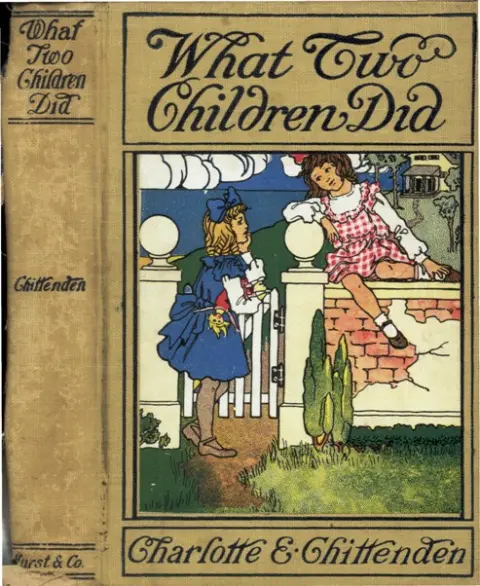
"What Two Children Did" by Charlotte E. Chittenden is a children's fiction book written in the early 20th century. The story revolves around two sisters, Ethelwyn and Beth, as they embark on various adventures and musings, highlighting themes of childhood innocence, curiosity, and the bond between siblings. Against a backdrop of summer activities at the seashore, the book illustrates their simple, yet profound interactions with their mother and the world around them. At the start of the narrative, we find Ethelwyn and Beth traveling by train with their mother, who is preoccupied with her thoughts. The children, noticing their mother's furrowed brow, worry that they are the cause of her distress due to past mischief. As they indulge in a feast of sandwiches and cookies, they ponder deep questions about mistakes and the nature of God. This opening segment sets the stage for their character development, showcasing the children's playful spirits and desire to please their mother while navigating their own understanding of the complexities of life. Their summer journey introduces them to new friends, responsibilities, and opportunities to help others in need, laying the groundwork for further adventures to unfold.
Introduction adapted from the source catalogue; source summaries may be automatically generated.
Free to read · English · 27,709 words · No account needed
MAKE TIME FOR A GOOD BOOK
On by default. Untick to stop anonymous reading totals. Each page counts after 10 seconds in view. How this works.
Anonymous counting is on unless you have switched it off.
He and Bobby's mother were seated on one side, and Nan's mother (her father could not leave) and Mrs. Rayburn were across from them, while Nan, Ethelwyn, Beth, and Bobby appeared and disappeared, like meteors, in the most unexpected places. Joe's sister was not well enough that day to accompany them, so it was arranged that her brother should bring her as soon as she felt better.
If I have, by the use of the word "grandfather," given you an idea of decrepitude and old age, in the case of Bobby's grandfather, I wish at once to change that idea.
He was a very erect and handsome man, with a white mustache indeed, but with a firm mouth underneath that gave no sign of diminished force.
He had always told Mrs. Rayburn that he thought it was very foolish for her to give such large sums of money for charity.
"It's not right," he now repeated, twirling his mustache. The morning paper lay across his knees, and, as he spoke, with an air of finality and disapproval, he picked it up.
"What isn't right, grandfather?" asked Bobby, suddenly appearing on the back of his chair, and encircling his grandfather's neck with a pair of sturdy legs.
His grandfather drew him down by one leg into his lap.
"Giving all your money away to people who don't appreciate it," he
explained.
"How do you know they don't?" asked Bobby.
"Because, sir, people don't appreciate what is given to them, as much as they do what they earn."
Bobby pondered over this.
"I like my Christmas presents better than the money I get for chopping kindling," he replied at length; "because the Christmas money is more, for one thing."
"And more certain," put in his mother, laughing; "the kindling money
isn't always earned."
"Are you talking about the Home money?" asked Ethelwyn, looking over the back of the chair in front of them.
"Yes."
"But we like to give it, and so will you, when you see how nice it is, and Dick and Aunty Stevens and the best cookies that she can make. What's the good of keeping money? We can always buy more down at your bank," she concluded easily.
"You may not always think so, young lady, nor take such wide views of things. When you grow up, you may wish you had more money," said the banker, laughing.
"Does keeping money make folks happy?" inquired Beth, suddenly popping
up.
The lines in grandfather's face deepened, and there came over it a look
of care.
"Not always, child, I must confess," he said at length.
Your reading position is saved on this browser. Take it to another device with a library code. Reading pages adapt to text, rather than matching a printed edition.
BEHIND THE BOOK
This eBook is for the use of anyone anywhere in the United States and most other parts of the world at no cost and with almost no restrictions whatsoever. You may copy it, give it away or re-use it under the terms of the Project Gutenberg License included with this eBook or online at www.gutenberg.org. If you are not located in the United States, you will have to check the laws of the country where you are located before using this eBook. Read the source licence.
The original source file, including credits and licence, is retained by this library. Request an original-format copy at no charge. Please include the book title and Project Gutenberg identifier #15541.
KEEP YOUR CURIOSITY GOING
Coulson Kernahan

Maurice Baring
Frances Wright
Cécile Tormay

Frederic Jesup Stimson

W. H. P. (William Henry Pope) Jarvis