THE CLASSIC COLLECTION✦A dead man’s diaryCLASSIC FREE BOOKS
A dead man’s diary
Coulson Kernahan
THE CLASSIC COLLECTION · 1903
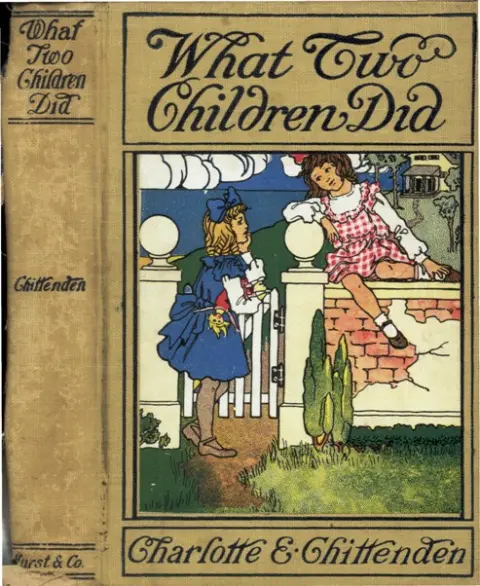
"What Two Children Did" by Charlotte E. Chittenden is a children's fiction book written in the early 20th century. The story revolves around two sisters, Ethelwyn and Beth, as they embark on various adventures and musings, highlighting themes of childhood innocence, curiosity, and the bond between siblings. Against a backdrop of summer activities at the seashore, the book illustrates their simple, yet profound interactions with their mother and the world around them. At the start of the narrative, we find Ethelwyn and Beth traveling by train with their mother, who is preoccupied with her thoughts. The children, noticing their mother's furrowed brow, worry that they are the cause of her distress due to past mischief. As they indulge in a feast of sandwiches and cookies, they ponder deep questions about mistakes and the nature of God. This opening segment sets the stage for their character development, showcasing the children's playful spirits and desire to please their mother while navigating their own understanding of the complexities of life. Their summer journey introduces them to new friends, responsibilities, and opportunities to help others in need, laying the groundwork for further adventures to unfold.
Introduction adapted from the source catalogue; source summaries may be automatically generated.
Free to read · English · 27,709 words · No account needed
MAKE TIME FOR A GOOD BOOK
On by default. Untick to stop anonymous reading totals. Each page counts after 10 seconds in view. How this works.
Anonymous counting is on unless you have switched it off.
As Bobby's grandfather helped the grown people out of the wagon--the children had climbed down without waiting for help--he cleared his throat once or twice.
"I'm nearer conviction than I was," he said.
As she hurried towards the porch, Mrs. Rayburn smiled to herself.
Nan's mother waited, and walked up with Bobby's grandfather. Over her had come a great and happy change; her eyes were now full of earnest light, and she had forgotten her headaches and other small ills.
She now looked up into the banker's face.
"After all, life to be beautiful and to reach rightly towards eternity should be helpful, and self-forgetful; do you not think so?" she said. "I was long learning the two great commandments, which embody the whole decalogue, and I probably never should have learned them if it had not been for these blessed children, and their mother."
"H--m, h--m," said the banker.
On the porch were twenty children. In forty eyes the new light of happiness was dawning. At the beginning, many of them had been hopeless and even evil, but now it was all different, for they had found out that they could laugh.
Aunty Stevens herself, full of laughter and bubbling over with joy at seeing her friends again, surrounded by the shouting children, made them more than welcome.
Bobby's grandfather was armed with a huge box, which he had mysteriously guarded all day; he now set it down upon the porch.
"If you children don't make this box lighter at once, I shall have no use for you," he declared. And they all, scenting candy with infallible instinct, fell upon it with rapture.
They had tea on the lawn, that evening, and, after a consultation with Mrs. Stevens, Bobby's grandfather sent a message over the telephone that was followed very shortly by a man with ice cream and a huge cake. When eight o'clock came, one of the teachers began to play a march on the piano in the hall. At once the children fell into line, marking time with their feet, and singing,
"Good-night, good-night,
Children and blossoms who sleep all the night,
Always will wake up happy and bright,
Good-night, good-night!"
As they sang, they marched away to bed. The others followed them in.
The boys' dormitories were in a building on one side of the lawn, and the girls' on the other, while the babies' nursery was in the main building.
Your reading position is saved on this browser. Take it to another device with a library code. Reading pages adapt to text, rather than matching a printed edition.
BEHIND THE BOOK
This eBook is for the use of anyone anywhere in the United States and most other parts of the world at no cost and with almost no restrictions whatsoever. You may copy it, give it away or re-use it under the terms of the Project Gutenberg License included with this eBook or online at www.gutenberg.org. If you are not located in the United States, you will have to check the laws of the country where you are located before using this eBook. Read the source licence.
The original source file, including credits and licence, is retained by this library. Request an original-format copy at no charge. Please include the book title and Project Gutenberg identifier #15541.
KEEP YOUR CURIOSITY GOING
Coulson Kernahan

Maurice Baring
Frances Wright
Cécile Tormay

Frederic Jesup Stimson

W. H. P. (William Henry Pope) Jarvis