THE CLASSIC COLLECTION✦The art of fictionCLASSIC FREE BOOKS
The art of fiction
Walter Besant
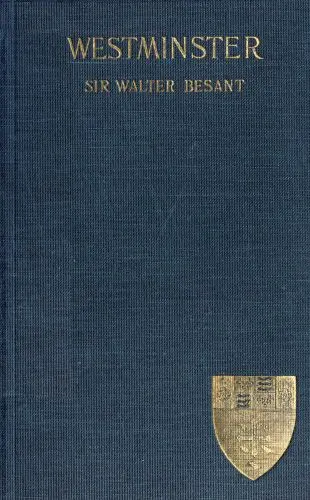
THE CLASSIC COLLECTION · 1894
"Westminster" by Sir Walter Besant is a historical account written in the late 19th century. This work explores the rich tapestry of Westminster’s past, delving into its unique characteristics as a city without citizens. The narrative promises to uncover the history of Westminster Abbey, the Palace of Westminster, and the lives of those who inhabited this intriguing area throughout the centuries. The opening of "Westminster" introduces the reader to the remarkable peculiarity of the city, emphasizing its lack of a true citizenry compared to neighboring London. Besant discusses how the governance of Westminster has historically been tied to the Church and the Abbot, preventing residents from cultivating a civic identity or demanding self-governance. The text sets the stage for a detailed examination of Westminster’s evolution, hinting at the bustling activity of its early days as a trade hub, the significant role of the Abbey, and the societal dynamics of its population, which often included those seeking sanctuary. Thus, Besant invites readers into a layered exploration of a city defined by its religious foundation and complex historical context.
Introduction adapted from the source catalogue; source summaries may be automatically generated.
Free to read · English · 84,340 words · No account needed
MAKE TIME FOR A GOOD BOOK
On by default. Untick to stop anonymous reading totals. Each page counts after 10 seconds in view. How this works.
Anonymous counting is on unless you have switched it off.
George III. in Abbey, 170
Gourdemains, the witch, 370
Great College Street, 337
Great Seal, seizure of, 306
Green Coat Hospital, 346
Grey Coat Hospital, 351
Gunpowder Plot, 78
Harrod and Burtt, story of robbery of King’s Treasury, 150
Henry II., 40
---- IV. in Abbey, 165
---- VIII. in Abbey, 168
Historical associations of the Palace, 62
Holbein Gate, 262
Horseferry Road, 359
Hospital, Green Coat, 346
---- Grey Coat, 351
House of Lords, old, 49
Houses of Parliament, 291
Hugh de Steyninge, 100
Inigo Jones, 251
---- ---- his design, 260, 261
Inner and Outer Bailly, 48
Invasion of Saxons, 20
Islip, Abbot, 239
Jews, massacre of the, 96
Kensington Palace, 250
Kilburn, the cell of, 147
King’s House, removal to Whitehall, 76
King’s Palace of Westminster, 38 et seq.
---- ---- ---- Painted Chamber, 49
---- ---- ---- extent of, 61
King Street, 186, 335
----- ---- worthy inhabitants, 332
Knights, ceremony of creation, 165
Large, Robert, 221
Loftie’s theory of origin, 31
Lollardism, 104
London, map of, 28
---- a city of palaces, 39
---- old House of Lords, 49
---- and Westminster, quarrel between, 78
Long Meg, 207
Marsh, great, round Thorney Island, 8
Masque, “Hue and Cry after Cupid,” 283
Masques, 283
Matthew of Westminster, 151
May-day, Evil, 87
May-pole, the, 95
Members for City, 4
Messengers, service of, 71
Milton, 337
Miracle of Hallowing, 21
Mob in Old Palace Yard, 78
Monastic life, services, 103
---- ---- rules, 106
---- ---- state of abbot, 118
---- ---- diversions, 122
---- ---- Scriptorium, 146
Monks, life of, 146
Murder and sacrilege, 160
Neighborhood of Sanctuary, 186
New Palace Yard, 79
Officers of State, 44
Old House of Lords, 49
Old Palace Yard, 78
Old Pye Street, 365
Orchard Street, 365
Ordeal of battle in Tothill Fields, 370
Pageants, splendor of Richard II., 46, 65
Painted Chamber, 49, 64
Palace, picturesque character of the, 61
---- historical association of, 62
---- early morning in the, 65
Palace Yard in 15th century, 82
Park Lane, 32
Parliament suspended, 161
Pickering Cup, 206
Picturesque character of the Palace, 61
Pillory, New Palace Yard, Perkin Warbeck, 82
---- ---- ---- ---- Titus Oates, 82
---- ---- ---- ---- William Prynne, 82
Podelicote, Richard, 147
Prince’s Chamber, 49
Printing, invention of, 228
Prisoners of Cromwell, 374
Quarrel between London and Westminster, 78
Queen of Henry VII., Elizabeth, in Abbey, 167
Queen Anne’s Gate, 336
Queen Square, 336
Raleigh, 64
---- execution of, 78
Ramage, John de, 155
Recuyell, 234
Red Pale, 208
---- ---- sign of, 211
Refugees in Sanctuary, 182
Richard II., Palace in his time, 38
---- ---- his archers, 41
---- ---- his Court, 44
---- ---- ---- ---- Harding’s description, 45
---- ---- built Tower, 57
---- ---- asserts himself, 73
Robbery of Royal Treasury, 147
Rochester Row, 346
Roman civilization, 12
Rosamond’s Pond, 369
Rule of the Essenes, 30
Sacrilege and murder, 160
Sacrist, 154
Sailor’s riot, 318
St. Andrew Undershaft Church, 85
St. James’s Park, 369
St. Katherine Cree curate, 95
St. Margaret’s Church, 354, 355
---- ---- parish of, 3
St. Stephen’s Chapel, 53
---- ---- ---- crypt of, 53
Salutation Inn, 338
Sanctuary, 173
---- theory of, 174
---- refugees, 182
---- breaking of, by Richard III., 182
---- neighborhood of, 186
Saxon Church, destruction of, by Danes, 27
Saxons, invasion of, 20
Scrope v. Grosvenor, 281
Your reading position is saved on this browser. Take it to another device with a library code. Reading pages adapt to text, rather than matching a printed edition.
Walter Besant
Walter Besant

Walter Besant

Walter Besant
BEHIND THE BOOK
This eBook is for the use of anyone anywhere in the United States and most other parts of the world at no cost and with almost no restrictions whatsoever. You may copy it, give it away or re-use it under the terms of the Project Gutenberg License included with this eBook or online at www.gutenberg.org. If you are not located in the United States, you will have to check the laws of the country where you are located before using this eBook. Read the source licence.
The original source file, including credits and licence, is retained by this library. Request an original-format copy at no charge. Please include the book title and Project Gutenberg identifier #58672.
KEEP YOUR CURIOSITY GOING
Wilfrid Scawen Blunt
Wilfrid Scawen Blunt

E. W. (Edgar Watson) Howe
Cécile Tormay

Moritz Busch
John L. Ransom