THE CLASSIC COLLECTION✦The art of fictionCLASSIC FREE BOOKS
The art of fiction
Walter Besant
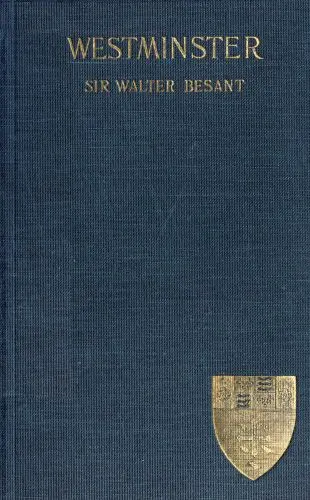
THE CLASSIC COLLECTION · 1894
"Westminster" by Sir Walter Besant is a historical account written in the late 19th century. This work explores the rich tapestry of Westminster’s past, delving into its unique characteristics as a city without citizens. The narrative promises to uncover the history of Westminster Abbey, the Palace of Westminster, and the lives of those who inhabited this intriguing area throughout the centuries. The opening of "Westminster" introduces the reader to the remarkable peculiarity of the city, emphasizing its lack of a true citizenry compared to neighboring London. Besant discusses how the governance of Westminster has historically been tied to the Church and the Abbot, preventing residents from cultivating a civic identity or demanding self-governance. The text sets the stage for a detailed examination of Westminster’s evolution, hinting at the bustling activity of its early days as a trade hub, the significant role of the Abbey, and the societal dynamics of its population, which often included those seeking sanctuary. Thus, Besant invites readers into a layered exploration of a city defined by its religious foundation and complex historical context.
Introduction adapted from the source catalogue; source summaries may be automatically generated.
Free to read · English · 84,340 words · No account needed
MAKE TIME FOR A GOOD BOOK
On by default. Untick to stop anonymous reading totals. Each page counts after 10 seconds in view. How this works.
Anonymous counting is on unless you have switched it off.
Sebert, founder of Abbey, 21
Service, the, of the Palace, 41
---- of consecration, 139
Silent City, 4
Skelton, John, 194, 195
“Slender Billy,” 373
Slums, 363
Snipe in South Kensington, 30
Snuff-box, the Westminster, 373
Spanish prisoner, 159
Speaker’s Court, 319
Spenser, poet, 335
Stanhope, Anne, 339
Star Chamber, 54
Steyninge, Hugh de, 100
Taverns, 340
Thames highway, 332
Theory of Sanctuary, 174
Thorney Island, 3, 5, 6
---- ---- evidence of situation, 7
---- ---- ---- of excavation, 9
---- ---- ---- of ancient monuments, 11
Thorney Island, Roman remains on, 10
---- ---- place of trade, 16
---- ---- evidence of tradition, 19
---- ---- founding of first church, 20
---- ---- destruction of first church on, 20
---- ---- evidence of history, 23
---- ---- area of, 34
Tombs in Abbey, 162
Tothill Fields, 366, 372
---- ---- execution in, 370
---- ---- tournaments in, 370
---- ---- ordeal of battle in, 370
---- ---- Cromwell’s entry, 374
Tournaments in Tothill Fields, 370
Tower built by Richard II., 57
Trade route across Thorney Island, 15
Traditional origin of the Abbey, 6
Vanished palace, 248
Victoria in Abbey, 170
Wall of defense, 46
Watling Street, 20, 32
Westminster, Bardwell’s account of, 5
---- older than London, 33
---- King’s Palace of, 38 et seq.
---- ---- ---- officers of state, 44
Westminster, King’s Palace of, service in, 44
---- ---- ---- Prince’s Chamber, 49
---- ---- ---- St. Stephen’s Chapel, 53
---- ---- ---- Painted Chamber, 49
---- and London, quarrel between, 78
---- elections, 293
---- streets of, 331
---- hustings, 1868, 307
---- “Desert” of, 363
---- the snuff-box, 373
---- slums, 363
Westminster Abbey, arms of, 99
---- ---- Scriptorium, noted, 146
---- ---- monuments of men of letters, 162
---- ---- Addison on, 164
Westminster Hall, 54, 85
Whitehall and Court of Requests, 49
Whitehall Palace, 248
---- ---- description, 259
---- ---- destruction, 265
---- ---- plan of, 280
Woffington, Peg, 336
Wolsey, Cardinal, 197, 257
Wool staple, 85
Wray, Sir Cecil, 307
---- ---- ---- posters, etc., 311
York House, 257
[1] Stanley, “Westminster Abbey,” p. 7.
[2] Edward the Confessor’s officers were named respectively the Marshal; the Stallere (Comes stabuli, or Constable); the Bower-Thane (Chamberlain); the Dish-Thane (Seneschal); the Hordere (Treasurer); with, of lower rank, Carver, Cup-bearer, Butler, Seal-bearer, Wardrobe-Thane, Harper, and Headsman.
[3] The rules, it is true, were relaxed in the case of scholars engaged upon any learned work, and there must have been some such scholars at Westminster.
[4] Here are some of the lesser offices: Infirmarer, Porter, Refectioner, Hospitaller, Chamberlain, Keeper of the Granary, Master of the Common House, Orcharder, Operarius, Registrar, Auditor, Secretary, Butler, Keeper of Baskets, Keeper of the Larder, Baker, Brewer, Carpenter, Carver, Sculptor, Bookbinder, Copyist, Conveyancer, etc.
[5] “King Richard II.”
[6] See Lacroix, Les Arts au Moyen Age, for a sensible résumé of
the whole question.
[7] The chine is always considered the nicest part of the pork, either roasted or boiled, and is monstrous fine eating when the Norfolk Turkies are in season.
[8] The tail of a little roasted pig is a nice morsel.
[9] Porkey was the Sow’s name.
Your reading position is saved on this browser. Take it to another device with a library code. Reading pages adapt to text, rather than matching a printed edition.
Walter Besant
Walter Besant

Walter Besant

Walter Besant
BEHIND THE BOOK
This eBook is for the use of anyone anywhere in the United States and most other parts of the world at no cost and with almost no restrictions whatsoever. You may copy it, give it away or re-use it under the terms of the Project Gutenberg License included with this eBook or online at www.gutenberg.org. If you are not located in the United States, you will have to check the laws of the country where you are located before using this eBook. Read the source licence.
The original source file, including credits and licence, is retained by this library. Request an original-format copy at no charge. Please include the book title and Project Gutenberg identifier #58672.
KEEP YOUR CURIOSITY GOING
Wilfrid Scawen Blunt
Wilfrid Scawen Blunt

E. W. (Edgar Watson) Howe
Cécile Tormay

Moritz Busch
John L. Ransom