THE CLASSIC COLLECTION✦The art of fictionCLASSIC FREE BOOKS
The art of fiction
Walter Besant
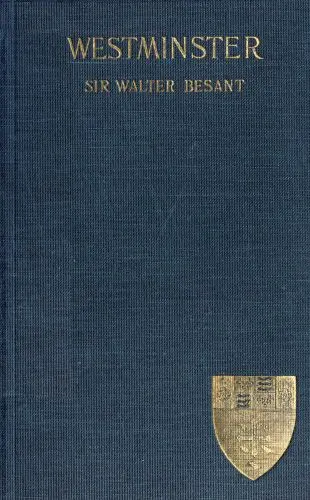
THE CLASSIC COLLECTION · 1894
"Westminster" by Sir Walter Besant is a historical account written in the late 19th century. This work explores the rich tapestry of Westminster’s past, delving into its unique characteristics as a city without citizens. The narrative promises to uncover the history of Westminster Abbey, the Palace of Westminster, and the lives of those who inhabited this intriguing area throughout the centuries. The opening of "Westminster" introduces the reader to the remarkable peculiarity of the city, emphasizing its lack of a true citizenry compared to neighboring London. Besant discusses how the governance of Westminster has historically been tied to the Church and the Abbot, preventing residents from cultivating a civic identity or demanding self-governance. The text sets the stage for a detailed examination of Westminster’s evolution, hinting at the bustling activity of its early days as a trade hub, the significant role of the Abbey, and the societal dynamics of its population, which often included those seeking sanctuary. Thus, Besant invites readers into a layered exploration of a city defined by its religious foundation and complex historical context.
Introduction adapted from the source catalogue; source summaries may be automatically generated.
Free to read · English · 84,340 words · No account needed
MAKE TIME FOR A GOOD BOOK
On by default. Untick to stop anonymous reading totals. Each page counts after 10 seconds in view. How this works.
Anonymous counting is on unless you have switched it off.
The Form of Government is by the wisdom of many Ages, so contrived and regulated, that it is almost impossible to mend it. The Account (which is of so many Natures, and is therefore very difficult, must pass through many hands, and is therefore very exact) is so wisely contrived and methodized, that without the Combination of everyone of these following Officers, viz., the Cofferer, a Clerk of the Green-Cloth, a Clerk Comptroller, a Clerk of the Kitchin, of the Spicery or Avery, or a particular Clerk, together with the conjunction of a Purveyor and Waiter in the Office, it is impossible to defraud the King of a Loaf of Bread, of a Pint of Wine, a Quart of Beer, or Joint of Meat, or Money, or anything else.
Abbey, traditional origin of, 6
---- foundation by Sebert, 21
---- miraculous hallowing of, 21
---- church, relics in, 24
---- the, 98
---- Henry III.’s alterations, 145
---- tombs in, 162
---- coronations, 165
---- ---- Henry IV., 165
---- ---- Elizabeth, queen of Henry VII., 167
---- ---- Henry VIII., 168
---- ---- Elizabeth, 168
---- ---- George III., 170
---- ---- Victoria, 170
Aix Cathedral, 27
Almshouses, 341
Anchorite, the, 132
Apollo, Temple of, 20
Archers, Richard II.’s, 41
Aristocracy, history of, 325
---- caste, 330
Bacon, 64
Bailly, Inner and Outer, 48
Banquet, royal, 269, 277
Bardwell’s accounts of Westminster, 5
Barton Street, 338
Benedictines, 110
Black Friars, 253
Blue Coat School, 353, 357, 361
Breaking of sanctuary by Richard III., 182
Broken cross, 201
Brother Ambrosius, 111
Burdett, Sir Francis, 375
Burtt and Harrod, story of robbery of King’s Treasury, 150
Caxton, 211
---- birth and origin, 217
---- apprenticed, 219
Caxton at Bruges, 223
---- house of, 231
---- marriage of, 234
---- at Westminster, 235
---- death of, 246
Charles II., Court of, 381
Charter, Edgar’s, 29
Chaucer, 162
Chaucer’s monk, 126
Chess, 235
Chivalry, 38
City without citizens, 1
---- without industries, 2
---- without Folk’s Mote, 2
---- of the Abbot, 2
Civil Government, 382
Clock Tower, 82
Cnut, King, 35
Cnut’s “Hus Carles,” 41
College buildings, 53
Consecration, service of, 139
Coronation of Elizabeth, 168
---- of George III., 170
Coronations in Abbey, 165
Court, itinerant, 40
---- of Requests, Whitehall, 49
---- of Exchequer, 54
---- under Elizabeth, 267
---- in reign of Elizabeth and James, 267
---- of James I., 277
---- of Charles II., 381
Cromwell’s prisoners, 374
Cross of Neath, 155
Crypt of St. Stephen’s Chapel, 53
Cunningham, Peter, 216
Dean, authority of the, 4
“Desert” of Westminster, 363
Destruction of first church on Thorney, 20
Dissolution, 4
“Domus Anglorum,” 223
Drokenesford, John de, 156
Dyfan and Ffagan, 20
Eagle Tavern, 207
Edgar’s charter, 29
Edward the Confessor, 40
Elections: that of 1741, 294
Elizabeth, queen of Henry VII., in Abbey, 167
---- in Abbey, 168
---- coronation pageant, 168
Elizabeth Woodville, queen of Edward IV., 182
Emanuel Hospital, 345
Essenes, rule of the, 30
Evil May-day, 87
Execution in Tothill Fields, 370
Extent of King’s Palace, 61
Fair of St. Edward’s Day, 372
Ffagan and Dyfan, 20
Fight between London and Westminster, 78
First church on Thorney, founding of, 20
Your reading position is saved on this browser. Take it to another device with a library code. Reading pages adapt to text, rather than matching a printed edition.
Walter Besant
Walter Besant

Walter Besant

Walter Besant
BEHIND THE BOOK
This eBook is for the use of anyone anywhere in the United States and most other parts of the world at no cost and with almost no restrictions whatsoever. You may copy it, give it away or re-use it under the terms of the Project Gutenberg License included with this eBook or online at www.gutenberg.org. If you are not located in the United States, you will have to check the laws of the country where you are located before using this eBook. Read the source licence.
The original source file, including credits and licence, is retained by this library. Request an original-format copy at no charge. Please include the book title and Project Gutenberg identifier #58672.
KEEP YOUR CURIOSITY GOING
Wilfrid Scawen Blunt
Wilfrid Scawen Blunt

E. W. (Edgar Watson) Howe
Cécile Tormay

Moritz Busch
John L. Ransom