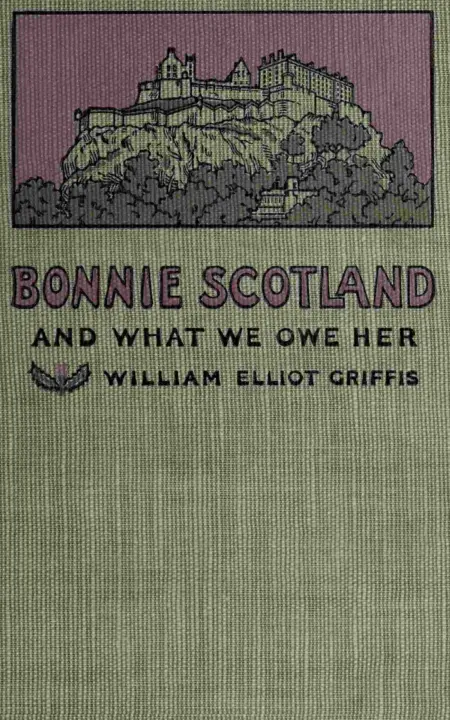
Bonnie Scotland and what we owe her
William Elliot Griffis
THE CLASSIC COLLECTION · 1921
"Welsh Fairy Tales" by William Elliot Griffis is a collection of folklore and fairy tales written in the early 20th century. This anthology draws from the rich tradition of Welsh storytelling, featuring a variety of enchanting tales that explore themes of love, bravery, and the magical elements typical of fairy lore. The stories involve various characters such as Saint David, brave maidens, fearsome monsters, and clever wizards, offering readers insight into Welsh culture and mythology. At the start of "Welsh Fairy Tales," the author presents a preface that reflects on his Welsh heritage and the cultural significance of storytelling. He then launches into the first tale, "Welsh Rabbit and Hunted Hares," where the reader is introduced to the compassionate figure of Saint David, who teaches the people of Wales about food and manners. The story unfolds with a hunting prince who encounters a maiden named Monacella, who protects a wild hare through her prayers, ultimately gaining the prince's admiration and a sacred sanctuary in his land. This opening sets the tone for a charming and whimsical exploration of Welsh fairy tales filled with magic, moral lessons, and the intertwining of everyday life with the supernatural.
Introduction adapted from the source catalogue; source summaries may be automatically generated.
Free to read · English · 43,319 words · No account needed
MAKE TIME FOR A GOOD BOOK
On by default. Untick to stop anonymous reading totals. Each page counts after 10 seconds in view. How this works.
Anonymous counting is on unless you have switched it off.
Every old country that has won fame in history and built up a civilization of its own, has a national flower. Besides this, some living creature, bird, or beast, or, it may be, a fish is on its flag. In places of honor, it stands as the emblem of the nation; that is, of the people, apart from the land they live on. Besides flag and symbol, it has a motto. That of Wales is: "Awake: It is light."
Now because the glorious stories of Wales, Scotland and Ireland have been nearly lost in that of mighty England, men have at times, almost forgotten about the leek, the thistle, and the shamrock, which stand for the other three divisions of the British Isles.
Yet each of these peoples has a history as noble as that of which the rose and the lion are the emblems. Each has also its patron saint and civilizer. So we have Saint George, Saint David, Saint Andrew, and Saint Patrick, all of them white-souled heroes. On the union flag, or standard of the United Kingdom, we see their three crosses.
The lion of England, the harp of Ireland, the thistle of Scotland, and the Red Dragon of Wales represent the four peoples in the British Isles, each with its own speech, traditions, and emblems; yet all in unity and in loyalty, none excelling the Welsh, whose symbol is the Red Dragon. In classic phrase, we talk of Albion, Scotia, Cymry, and Hibernia.
But why red? Almost all the other dragons in the world are white, or yellow, green or purple, blue, or pink. Why a fiery red color like that of Mars?
Borne on the banners of the Welsh archers, who in old days won the battles of Crecy and Agincourt, and now seen on the crests on the town halls and city flags, in heraldry, and in art, the red dragon is as rampant, as when King Arthur sat with His Knights at the Round Table.
The Red Dragon has four three-toed claws, a long, barbed tongue, and tail ending like an arrow head. With its wide wings unfolded, it guards those ancient liberties, which neither Saxon, nor Norman, nor German, nor kings on the throne, whether foolish or wise, have ever been able to take away. No people on earth combine so handsomely loyal freedom and the larger patriotism, or hold in purer loyalty to the union of hearts and hands in the British Empire, which the sovereign represents, as do the Welsh.
Your reading position is saved on this browser. Take it to another device with a library code. Reading pages adapt to text, rather than matching a printed edition.
William Elliot Griffis
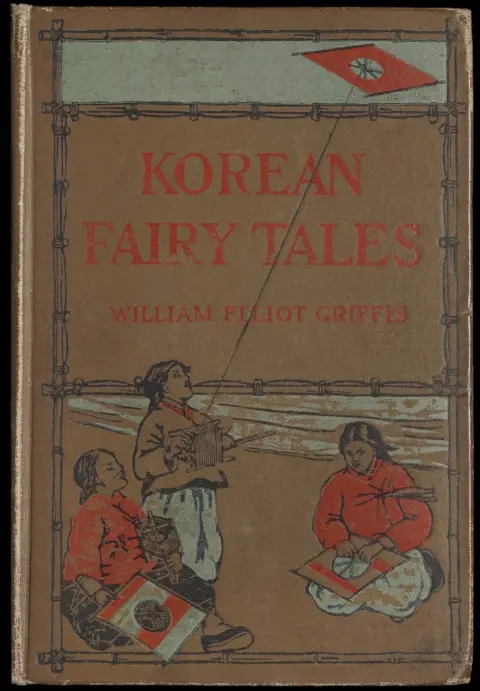
William Elliot Griffis
William Elliot Griffis
William Elliot Griffis
BEHIND THE BOOK
This eBook is for the use of anyone anywhere in the United States and most other parts of the world at no cost and with almost no restrictions whatsoever. You may copy it, give it away or re-use it under the terms of the Project Gutenberg License included with this eBook or online at www.gutenberg.org. If you are not located in the United States, you will have to check the laws of the country where you are located before using this eBook. Read the source licence.
The original source file, including credits and licence, is retained by this library. Request an original-format copy at no charge. Please include the book title and Project Gutenberg identifier #9368.
KEEP YOUR CURIOSITY GOING

Maurice Baring
Francis Greenleaf Allinson & Anne C. E. (Anne Crosby Emery) Allinson
Stuart Dodgson Collingwood
Percy Keese Fitzhugh
Mary Macleod & Edmund Spenser

Cooke Don-Carlos