
The Writing of News A Handbook with Chapters on Newspaper Correspondence and Copy Reading
Charles G. (Charles Griffith) Ross
THE CLASSIC COLLECTION · 1899
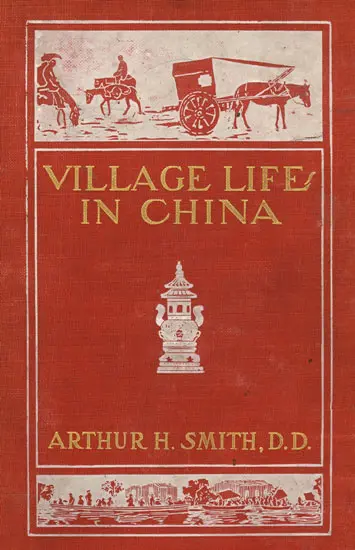
"Village Life in China: A Study in Sociology" by Arthur H. Smith is a sociological examination written in the late 19th century. This work dives into the intricacies of Chinese village life, exploring topics like family structures, social institutions, and cultural practices, aiming to foster a deeper understanding of the Chinese people and their way of life. Smith presents the Chinese village as a microcosm of the broader Chinese society, emphasizing both its unique characteristics and the impact of foreign influences. The opening of the book provides a foreword that reveals the author's extensive experience in China, highlighting his respect and admiration for Chinese culture and the challenges faced by its people. Smith sets the stage for the discussion by raising questions about the daily lives and thoughts of the vast rural population, contrasting it with the common misconceptions of China. He acknowledges the complexity and variety of village life while suggesting that a detailed survey of one village can yield significant insights into the entire country, preparing the reader for a thorough exploration of Chinese villages, their institutions, and the fabric of familial and communal life.
Introduction adapted from the source catalogue; source summaries may be automatically generated.
Free to read · English · 123,085 words · No account needed
MAKE TIME FOR A GOOD BOOK
On by default. Untick to stop anonymous reading totals. Each page counts after 10 seconds in view. How this works.
Anonymous counting is on unless you have switched it off.
Schools in villages, why important, 70;
prevalence of schools, 73;
abundance of teachers, 73;
salaries, 74;
school lists, 74;
arrangements concerning tuition, 75;
schoolhouses, 75;
furniture, 75, 76;
duration of school year, 76;
vacations, 76, 90;
honour shown to Confucius, 76;
school hours and intermissions, 77;
heating schoolrooms, 77;
returning from school, 77;
severity of discipline, 79, 80;
shouting in study, 80;
"backing," 81, 82;
books studied, 82-85;
"explaining," 85, 86;
writing exercises, 87;
studies interrupted by teacher's guests and his examinations, 88, 89;
playing in the school, 89;
irregular attendance of pupils, 89, 90;
lack of classification, 90;
no genuine intellectual work done, 90;
two valuable lessons learned at school, 93;
do not teach arithmetic, 104, 105;
their strength and weakness, 106, 107.
Screens before gates, their use, 21.
Secret sects, 145.
Seers or "bright-eyes," 283, 284.
Shan-tung productions, 161, 162.
Shops in villages, goods sold, 49, 50;
headquarters from which to radiate to fairs, 50;
hard lot of clerks, 51, 52;
case of meat seller, 51, 52;
cheating methods, 53.
Sorghum, 161;
stripping off lower leaves, 166.
Strolling scholars, 107, 109.
"Style" of individuals, 239, 240.
Suicide, punishment for inciting to, 322, 323.
Superintendent of Instruction, 130, 131.
"Surety" for literary candidates, 115, 116.
"Surnames, Book of," 84.
Surnames, the four common ones, 31.
T'ai Shan's historical importance, 141;
its pilgrimages, 141, 142;
"Mountain Societies," 142.
Taxes on "empty grain-tax land," 329
Teacher's hard lot as pictured in a play, 67, 68;
in proverbs, 73;
in experience, 74;
do not teach in their own towns, 74, 75;
their manner of life, 75;
honourable position, 76, 78;
unlimited power, 78;
relation to pupils, 78;
substitute teachers, 89;
Western criticism of, 102.
Temples to be used as schoolhouses, 135;
how village temples came to be built, 136;
reasons for their absence in some villages, 137;
two gods most commonly honoured with temples, 137, 138;
uses made of building fund surplus, 138;
resorts of thieves and beggars, 139;
temple expenses, 139;
as receptacles of coffins and funeral paraphernalia, 139;
different deities in same temple, 140;
temple tax at fairs, 149;
lawsuits over, 232.
Theatre, its origin in China, 54;
little understood by foreigners, 55;
the stage and its equipment, 55, 56;
the theatre an investment, 56, 57;
costumes, 57;
classes of players, 58;
amateurs, 58;
child apprentices, 58, 59;
plays a public benefit, 60, 65;
occasions for giving a play, 60, 61;
cost of presenting it, 61;
the "program bearer," 62;
transporting stage properties, 62;
preparations for a theatre, 62;
used as a device for attracting customers for fairs, 62;
impression made by a play, 63;
plays as a social factor, 63, 64;
a drain upon hosts, 64;
subjects of plays, 66;
synopsis of one, 66-68;
the theatre an index of the Chinese theory of life, 68, 69.
Thieves' action at theatres, 65;
use temples as resorts, 139.
"Thousand Character Classic," 84.
Title deeds often lost, 27.
Torture as a means of raising temple funds, 136.
"Trimetrical Classic" quoted, 78;
origin, 82;
epitomised, 82-84;
its allusions often not understood, 100.
Village hunt, why possible in populous China, 174;
the bald annunciator of the hare-hunt, 175, 176;
the hunt described, 176;
resulting quarrels, 176-178.
Villages, number of in India, 15;
the residence of most Chinese, 15;
irregularly laid out, 21;
how first settled, 21;
streets and alleys, 21;
overcrowding, 21;
village walls and their use, 29;
nearness of one to another, 146, 147;
each village a principality, 226.
"Vinegar sipping," 300.
Wages of farm labourers, 247;
of boys, 247.
Washington and the cherry tree in Chinese, 333-335.
Your reading position is saved on this browser. Take it to another device with a library code. Reading pages adapt to text, rather than matching a printed edition.
BEHIND THE BOOK
This eBook is for the use of anyone anywhere in the United States and most other parts of the world at no cost and with almost no restrictions whatsoever. You may copy it, give it away or re-use it under the terms of the Project Gutenberg License included with this eBook or online at www.gutenberg.org. If you are not located in the United States, you will have to check the laws of the country where you are located before using this eBook. Read the source licence.
The original source file, including credits and licence, is retained by this library. Request an original-format copy at no charge. Please include the book title and Project Gutenberg identifier #33485.
KEEP YOUR CURIOSITY GOING
Charles G. (Charles Griffith) Ross
Hannah Webster Foster

Emily Lawless
Edwin Hamlin Carr

Charles De Lano Hine
Andrew Ure