
The Writing of News A Handbook with Chapters on Newspaper Correspondence and Copy Reading
Charles G. (Charles Griffith) Ross
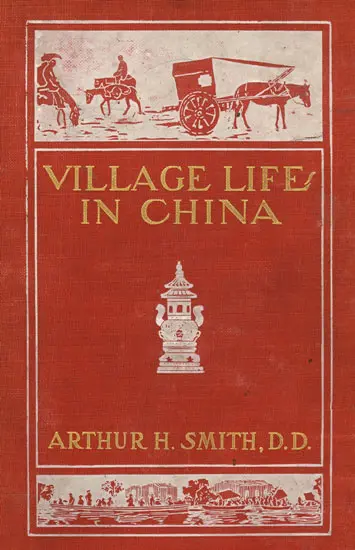
THE CLASSIC COLLECTION · 1899
"Village Life in China: A Study in Sociology" by Arthur H. Smith is a sociological examination written in the late 19th century. This work dives into the intricacies of Chinese village life, exploring topics like family structures, social institutions, and cultural practices, aiming to foster a deeper understanding of the Chinese people and their way of life. Smith presents the Chinese village as a microcosm of the broader Chinese society, emphasizing both its unique characteristics and the impact of foreign influences. The opening of the book provides a foreword that reveals the author's extensive experience in China, highlighting his respect and admiration for Chinese culture and the challenges faced by its people. Smith sets the stage for the discussion by raising questions about the daily lives and thoughts of the vast rural population, contrasting it with the common misconceptions of China. He acknowledges the complexity and variety of village life while suggesting that a detailed survey of one village can yield significant insights into the entire country, preparing the reader for a thorough exploration of Chinese villages, their institutions, and the fabric of familial and communal life.
Introduction adapted from the source catalogue; source summaries may be automatically generated.
Free to read · English · 123,085 words · No account needed
MAKE TIME FOR A GOOD BOOK
On by default. Untick to stop anonymous reading totals. Each page counts after 10 seconds in view. How this works.
Anonymous counting is on unless you have switched it off.
Loan Societies, object, 152;
simplest form, 152, 153;
feasts, 153;
societies charging interest, 154;
method of securing loans, 154, 155;
tables illustrating their working, 155, 156;
insuring payment, 157;
risks involved, 157, 158;
Hong Kong lawsuit re such societies, 158-160.
Local deity, T'u-ti, 137, 138.
Lord Clive a Chinese bully in boyhood, 218.
"Lord-of-bitterness," i. e., elder brother, 283.
Markets, why necessary, 146;
harmful to morals, 147;
"official" markets, 147;
number attending, 147;
use made of market taxes, 148;
market-day nomenclature, 148, 149;
"market" and "fair" differentiated, 149;
taxes levied, 149, 150;
coA¶peration most helpful in one respect, 151.
Mencius' view of teachers, 70.
Men (See Boys and men).
Mill, James, and his method of teaching, 72.
Mind, characteristics of the Chinese, 102;
like a high bicycle, 103.
Ming Huang, the god of actors, 54.
Mohammedans exempt from temple assessment, 137.
Mothers-in-law, 276, 277.
Names of villages derived from surnames, 30;
from temples, 30;
confusion in names, 31, 32;
names derived from distances, 31;
villages nicknamed, 33;
singular names, 33, 34.
Naming children, 238;
a clue to relationship, 239.
New Year in China:
dumplings, 196, 197;
family reunions, 197, 198;
new clothes essential to, 198, 199;
New Year religious rites, 199, 200;
its social ceremonies, 200, 201;
universal leisure of the time, 201, 202;
gambling, 202, 203;
debt-paying, 203, 204;
lantern search for debtors, 208.
New Year Societies:
fees, 209;
use of funds, 209;
consequences if not paid, 210;
gamblers' use of its funds, 210.
"Odes, Book of," quoted, 237.
Parents, care of in Chinese theory, 328, 329.
Partial payments in China, 207, 208.
Peking Gazette, 99.
Pig-styes, 28, 29.
Pits near villages, 24.
Poisoning in China, 330, 331.
Population of China:
ignorance of the Chinese people concerning it, 17;
official ignorance on the subject, 17;
attempts of foreigners to ascertain density in certain districts,
18, 19;
too great, 308, 309.
Poverty characteristic of China, 310, 311;
its alleviation, 311.
Property, distribution of, 327-329.
Proverbs:
concerning teachers, 73, 74;
school discipline in last month, 76;
necessity of continuous study, 91;
reading required, if one would know history, 99;
funeral feasts, 192;
girls vs. boys, 258;
obstreperous women, 305;
daughters useless to mother's family, 326.
Punctuality a lost art in China, 151.
Rain-making:
gods connected therewith, 169, 170;
iron tablets used, 170;
why these methods seem efficacious, 171;
detrimental influences, 171;
punishment of unsuccessful rain-gods, 172.
Reforms in China, how to be secured, 43;
difficult in educational matters, 107.
Relationships, assumed, 240.
Religious societies, four characteristics of, 141;
two varieties of "Mountain Societies," 142, 143;
program on reaching the mountain, 144, 145;
the secret sects, 145.
Roads in villages used as shops, 35;
"low-ways," 35;
why crooked, 35;
flanked by ditches, 36;
in rainy season often rivers, 36;
method of making new ones, 37;
road-building and la grippe, 38.
Scholars "not utensils," 93;
economically they are useless, 94;
an exception, 94;
begging of foreigners, 94, 95;
without adequate literary apparatus, 96, 97;
their ignorance of history, 98, 100;
of geography, 101;
their conservatism, 103;
lack of literary judgment, 104;
ignorance of arithmetic, 105;
strolling scholars, 107-109;
functions at funerals, 133;
in lawsuits, 133;
subjectivity of, 313;
gullibility, 314;
riots due to their credulity, 314, 315.
Schoolboy beginning his studies, 80;
honoured in the family, 91, 92;
a spoiled child, 92;
effects of study, 92, 93.
Schoolhouses, 75;
their furniture, 75, 76.
Your reading position is saved on this browser. Take it to another device with a library code. Reading pages adapt to text, rather than matching a printed edition.
BEHIND THE BOOK
This eBook is for the use of anyone anywhere in the United States and most other parts of the world at no cost and with almost no restrictions whatsoever. You may copy it, give it away or re-use it under the terms of the Project Gutenberg License included with this eBook or online at www.gutenberg.org. If you are not located in the United States, you will have to check the laws of the country where you are located before using this eBook. Read the source licence.
The original source file, including credits and licence, is retained by this library. Request an original-format copy at no charge. Please include the book title and Project Gutenberg identifier #33485.
KEEP YOUR CURIOSITY GOING
Charles G. (Charles Griffith) Ross
Hannah Webster Foster

Emily Lawless
Edwin Hamlin Carr

Charles De Lano Hine
Andrew Ure