
The Writing of News A Handbook with Chapters on Newspaper Correspondence and Copy Reading
Charles G. (Charles Griffith) Ross
THE CLASSIC COLLECTION · 1899
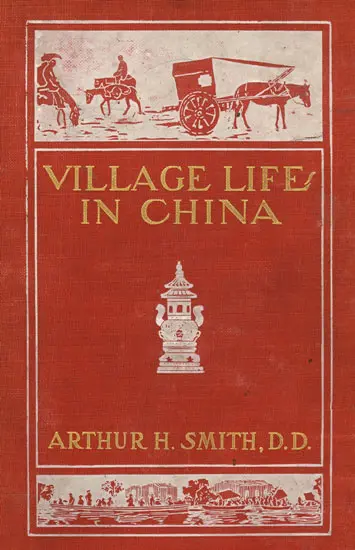
"Village Life in China: A Study in Sociology" by Arthur H. Smith is a sociological examination written in the late 19th century. This work dives into the intricacies of Chinese village life, exploring topics like family structures, social institutions, and cultural practices, aiming to foster a deeper understanding of the Chinese people and their way of life. Smith presents the Chinese village as a microcosm of the broader Chinese society, emphasizing both its unique characteristics and the impact of foreign influences. The opening of the book provides a foreword that reveals the author's extensive experience in China, highlighting his respect and admiration for Chinese culture and the challenges faced by its people. Smith sets the stage for the discussion by raising questions about the daily lives and thoughts of the vast rural population, contrasting it with the common misconceptions of China. He acknowledges the complexity and variety of village life while suggesting that a detailed survey of one village can yield significant insights into the entire country, preparing the reader for a thorough exploration of Chinese villages, their institutions, and the fabric of familial and communal life.
Introduction adapted from the source catalogue; source summaries may be automatically generated.
Free to read · English · 123,085 words · No account needed
MAKE TIME FOR A GOOD BOOK
On by default. Untick to stop anonymous reading totals. Each page counts after 10 seconds in view. How this works.
Anonymous counting is on unless you have switched it off.
Girls and women in China:
girls' inferiority to boys, 258;
unwelcome at birth, 258;
reasons for female infanticide, 258, 259;
sale of daughters, 259, 260;
"rearing marriage," 260;
foot-binding, 261;
girls' employments, 261;
confined at home, 262;
married daughter's return home and its consequences, 263, 264;
daughters rarely taught to read, 264;
anxiety about girl's betrothal, 265;
restrictions after betrothal, 265, 266;
evils of early engagements, 267;
engagement cards, 268;
arrival of bridal chair, 268, 269;
"lucky days" sometimes unlucky, 269;
delivery of bride essential feature of wedding, 269;
dowry, 270, 271;
birth of first baby, 272;
children must be born at their father's house, 272, 273;
faulty care of infants and children, 274, 275;
mortality of infants, 274, 275;
early senility of women, 275;
incessant labours of women, 275, 276;
daughter- and mother-in-law, 276, 277;
abuse of daughters-in-law and consequent retaliation, 277-279;
lawsuits in such cases are rare, 279, 280;
result of bride's suicide, 281;
a typical case, 282-286;
number of women suicides, 286;
suicide a virtue, extract from the Shih Pao, 287, 288;
grounds of divorce, 288, 290;
why women must be married, 289;
prudishness in speaking about marriage, 290, 291;
sons should be married before parents' death, 291, 292;
marriage to epileptics, idiots, etc., 292;
kidnapping of wives, 292-295;
wives sold by husbands, 295, 296;
"cheaper than an animal," 297;
concubines, 297, 300-302;
marrying the dead, 298, 299;
men and women do not eat together, 302;
husband and wife do not converse, 303;
wife's twofold defence, 303, 304;
hen-pecked husbands, 304, 305;
classical teaching concerning women, 305, 306;
Confucianism's seven sins against woman: lack of education, 306, 307;
sale of wives and daughters, 307, 308;
early and too universal marriage, 308;
female infanticide, 308, 309;
secondary wives, 309;
suicide of wives and daughters, 309;
overpopulation, 309, 310.
God of Literature, 140.
God of War, 137.
Government high schools or colleges, 131.
Government, weaknesses of Chinese, 220;
its strength, 221.
Grapevines unlucky in yards, 24.
Greek drama in some respects like the Chinese, 56.
Hare hunting in Denmark, 175.
"Harrying to death," 185.
Headmen, village: names, 227;
qualifications, 227;
duties and functions, 227-229;
"ins" and "outs," 229, 230;
why incompetents are not removed, 230;
result of complaints illustrated, 230-232;
facility with which troubles arise in village life, 233, 234.
High schools, how different from common schools, 110;
Government high schools, 131.
History, Chinese, 99.
History taught through plays, 66.
Hospitable man described, 180.
Houses of stone, 22;
of bricks, 22;
of adobe, 23;
their roof, 23;
rooms, 25;
doors, 26;
windows, 26;
k'angs, 26, 27;
floors, 28;
furnishings, 28.
Hsien District, conditions in, 317, 318, note.
Hsiu-ts'ai obliged to attend examinations after graduation, 129.
Ice-sleds, 245.
Illness announced and the results, 255.
Imperial University in Peking, 135.
Incendiary fires, 217.
Infanticide of girls, 258, 259;
opposition to, 259.
Infant mortality, 274.
Intellectuality without stimulus except in school, 91;
intellectual obtuseness, 101.
Interest per month, 152, 210.
K'ang, construction and use of, 26, 27.
Kidnapping wives, 292-295.
Kinship claimed for inheritance, 253.
Kitchen god, 27;
at New Year, 199.
Kung-shAȘng's rank, 129, 130.
Lending a necessity, 205, 206.
Letters, ambiguity of address, 240.
Letter-writing, 101, 102.
Life in villages, monotony and vacuity of: villages a fixture, 312; their intellectual life in grooves, 313; illiteracy a source of vacuity, 315; topics of conversation, 315; indifference to happenings outside the village, 315, 316; travelled villagers speedily stagnate, 316.
Li Hung Chang honouring snakes, 169.
Literary chancellor's duties, 111.
Live-stock fairs, 148.
Your reading position is saved on this browser. Take it to another device with a library code. Reading pages adapt to text, rather than matching a printed edition.
BEHIND THE BOOK
This eBook is for the use of anyone anywhere in the United States and most other parts of the world at no cost and with almost no restrictions whatsoever. You may copy it, give it away or re-use it under the terms of the Project Gutenberg License included with this eBook or online at www.gutenberg.org. If you are not located in the United States, you will have to check the laws of the country where you are located before using this eBook. Read the source licence.
The original source file, including credits and licence, is retained by this library. Request an original-format copy at no charge. Please include the book title and Project Gutenberg identifier #33485.
KEEP YOUR CURIOSITY GOING
Charles G. (Charles Griffith) Ross
Hannah Webster Foster

Emily Lawless
Edwin Hamlin Carr

Charles De Lano Hine
Andrew Ure