
The Writing of News A Handbook with Chapters on Newspaper Correspondence and Copy Reading
Charles G. (Charles Griffith) Ross
THE CLASSIC COLLECTION · 1899
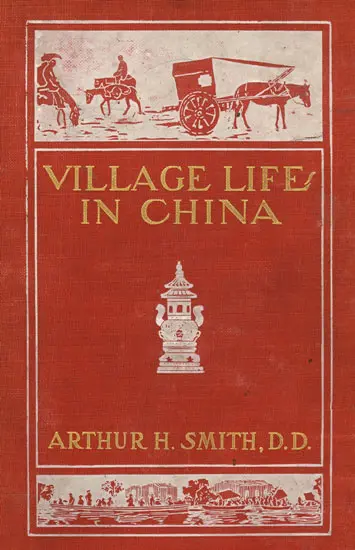
"Village Life in China: A Study in Sociology" by Arthur H. Smith is a sociological examination written in the late 19th century. This work dives into the intricacies of Chinese village life, exploring topics like family structures, social institutions, and cultural practices, aiming to foster a deeper understanding of the Chinese people and their way of life. Smith presents the Chinese village as a microcosm of the broader Chinese society, emphasizing both its unique characteristics and the impact of foreign influences. The opening of the book provides a foreword that reveals the author's extensive experience in China, highlighting his respect and admiration for Chinese culture and the challenges faced by its people. Smith sets the stage for the discussion by raising questions about the daily lives and thoughts of the vast rural population, contrasting it with the common misconceptions of China. He acknowledges the complexity and variety of village life while suggesting that a detailed survey of one village can yield significant insights into the entire country, preparing the reader for a thorough exploration of Chinese villages, their institutions, and the fabric of familial and communal life.
Introduction adapted from the source catalogue; source summaries may be automatically generated.
Free to read · English · 123,085 words · No account needed
MAKE TIME FOR A GOOD BOOK
On by default. Untick to stop anonymous reading totals. Each page counts after 10 seconds in view. How this works.
Anonymous counting is on unless you have switched it off.
Degrees, sale of, 121;
three methods of falsely securing, 122-126;
motives leading men to compete for degrees, 132, 133.
Democracy in China apparent, not real, 226.
Dictionary, standard Chinese, 97.
Digging through walls by thieves, 28.
Display, Chinese love of, 191.
"Distant reserve," a Chinese factor in education, 72, 73.
District officials' occasional objections to theatres, 59.
Divorce, seven grades of, 288.
Dogs destroyers of crops, 162.
Door-locking and thieves, 28.
Dunning must be repeated, 206, 207.
Educational Edicts of 1898, 134, 135;
results, 135.
Education, Chinese theories of, 71-73;
its object, 91, 106.
Education of girls unnecessary, 264.
Emigration made necessary in Yung Lo's time, 20.
Essay brokers, 124, 125.
Essay, its place in Chinese education, 110, 111.
Examinations announced, 111, 112;
District Examinations, first day, 112, 113;
second to fourth days, 113;
fees, 113, 114;
second examination on fifth or sixth day, 114;
third examination, 114;
fourth examination, 114;
fifth examination, 115;
number of successful candidates small, 115;
Prefectural Examinations, their character, 116;
number of candidates, 116;
severity of hall regulations, 117, 118;
fees of successful candidates, 119;
"joyful announcements," 119, 120;
honours paid successful candidates, 120;
diplomas lacking, 120, 121;
literary buttons and their forfeiture, 121;
result of negligence of examiners, 127, 128;
examinations required after first degree is obtained, 129.
Fairs, shopkeepers preparing for, 50;
gambling at temple fairs, 144;
differentiated from markets, 149;
numbers attending, 149;
duration, 150;
essentials to their success, 150;
opened by a play, 150.
"Falconing" with a woman, 296.
Family disunity:
why marriage is an element in this, 324-326;
disunity due to daughters, 326;
due to married sons living at home, 326, 327;
due to distribution of property, 327-329;
due to "empty grain-tax land," 329, 330;
due to poisoning propensities, 330, 331;
due to lack of mutual confidence, 332;
due to lack of sympathy and pity, 333;
due to "face," 335, 336;
due to transmigration ideas, 336;
due to domestic brawls, 337;
partial remedy for this disunity, 338.
Family, unstable equilibrium of the Chinese:
unit of social life, 317;
equilibrium affected by famine, 317;
by inundation, 317, 318;
by rebellions, 318;
by the labour market, 318;
by lawsuits, 319;
by debts, 320;
by sickness, 320, 321;
by gambling and opium among the wealthy, 321;
by social immorality, 322.
Farmers in China comparatively independent, 146.
Farms in various plots, 163.
"Feast" in its technical sense, 183.
Ferries, why essential in the North, 39;
loading animals and carts on the boats, 40, 41;
unloading, 41;
why ferry reforms are deemed impossible, 42.
Ferule and its uses, 78, 89.
Financiering, seven deadly sins of Chinese, 204-208.
"Five Classics," 85.
Five degrees of relationship, 193.
Foot-binding, 261.
Foreigners attacked in theatres, 65, 66.
"Four Books," 85.
Freedom of assembling, 228.
Funerals:
of suicides, 186;
why pillaging occurs at rich men's funerals, 186;
fate of unpopular survivors, 187;
announcing funeral expense deficits, 187, 188;
coA¶perative bearers, 188;
catafalque ownership, 188;
funeral aid societies, 189, 190;
two factors determining elaborateness of, 192;
rites of the "seven sevens," 192;
shabby paraphernalia, 193;
mourning costume, 193;
blocking the procession, 194;
funeral director's duties, 194;
at the grave, 195.
Gathering fuel and manure, 246, 247.
Your reading position is saved on this browser. Take it to another device with a library code. Reading pages adapt to text, rather than matching a printed edition.
BEHIND THE BOOK
This eBook is for the use of anyone anywhere in the United States and most other parts of the world at no cost and with almost no restrictions whatsoever. You may copy it, give it away or re-use it under the terms of the Project Gutenberg License included with this eBook or online at www.gutenberg.org. If you are not located in the United States, you will have to check the laws of the country where you are located before using this eBook. Read the source licence.
The original source file, including credits and licence, is retained by this library. Request an original-format copy at no charge. Please include the book title and Project Gutenberg identifier #33485.
KEEP YOUR CURIOSITY GOING
Charles G. (Charles Griffith) Ross
Hannah Webster Foster

Emily Lawless
Edwin Hamlin Carr

Charles De Lano Hine
Andrew Ure