
The Writing of News A Handbook with Chapters on Newspaper Correspondence and Copy Reading
Charles G. (Charles Griffith) Ross
THE CLASSIC COLLECTION · 1899
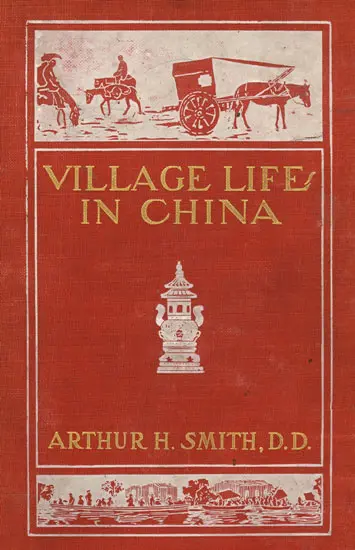
"Village Life in China: A Study in Sociology" by Arthur H. Smith is a sociological examination written in the late 19th century. This work dives into the intricacies of Chinese village life, exploring topics like family structures, social institutions, and cultural practices, aiming to foster a deeper understanding of the Chinese people and their way of life. Smith presents the Chinese village as a microcosm of the broader Chinese society, emphasizing both its unique characteristics and the impact of foreign influences. The opening of the book provides a foreword that reveals the author's extensive experience in China, highlighting his respect and admiration for Chinese culture and the challenges faced by its people. Smith sets the stage for the discussion by raising questions about the daily lives and thoughts of the vast rural population, contrasting it with the common misconceptions of China. He acknowledges the complexity and variety of village life while suggesting that a detailed survey of one village can yield significant insights into the entire country, preparing the reader for a thorough exploration of Chinese villages, their institutions, and the fabric of familial and communal life.
Introduction adapted from the source catalogue; source summaries may be automatically generated.
Free to read · English · 123,085 words · No account needed
MAKE TIME FOR A GOOD BOOK
On by default. Untick to stop anonymous reading totals. Each page counts after 10 seconds in view. How this works.
Anonymous counting is on unless you have switched it off.
Boys and men, village:
infancy of, 237, 238;
"milknames" given them, 238;
why called by girls' names, 238;
names a clue to relationship, 239;
"style," 239, 240;
secret titles used on letters, 240;
titles for men, 240;
boys carried about for years, 241;
Chinese fathers not sympathetic with childhood, 242, 243;
boys' amusements and toys, 242-245;
do not rob birds' nests, 244;
work of boys, 245-247;
their wages, 247;
outings, 247;
"donning the cap" on arriving at majority, 247, 248;
getting married, 248-250;
adoption of sons, 251, 252;
adopting a daughter's husband, 252;
"reverting to original names," 253, 254;
two branches of a family represented by one man, 254;
treatment in serious illness, 255, 256;
subordination of men to the elder relationships, 256;
summary of village boy's limitations, 256, 257.
Bricks, colour and manufacture of, 22;
adobe, 23.
Bridal chair, 269;
its dismantling, 271.
Bully, the village:
peculiar to China, 211;
Chinese traits favouring his existence, 211;
names, 211, 216;
differentiated from four cognate classes of society, 211, 212;
dual classification of villagers, 212;
three varieties of bully, 212-225;
dress of bullies, 213;
how one becomes a "village king," 214;
gymnastic preparation, 215;
poverty as a qualification, 216;
bullies as incendiaries, 217;
as crop injurers, 217, 218;
feeders to the yamAȘns, 218;
devices used against the rich, 218, 219;
the literary bully, 219;
the female bully, 219;
organization of a bully's followers, 220, 221;
attacks on yamAȘns, 222;
worsted, 223;
power when influential, 223;
an illustration of such a bully, 223-225.
Candidates for examination, 112.
Carts, 39;
how drawn, 39.
Cash, one way of securing rare coins, 52.
Cash payments rare, 206.
Cave dwellings, 22.
Chang Kung, 27.
ChAȘn-tien, or market towns, 147.
Christianity, what can it do for China? it can care for children
physically, 341, 342;
it creates sympathy between parents and children, 342;
it teaches child-training, 342;
it will revolutionise education, 342, 343;
will educate girls as well as boys, 343;
will foster girl friendships, 344;
will lead to Christian choice of partners in marriage, 344, 345;
will postpone marriage to a suitable age, 345;
will oppose polygamy and concubinage, 345;
will sweeten and purify home life, 345;
will be a true peacemaker, 346;
will make man and wife the unit of society, 346;
will change ideals of friendship, 347;
will implant Christian idea of brotherhood, 347;
will improve the government, 348;
will implant patriotism, 348, 349;
the time required for this process, 349, 351, 352;
this prophecy based on past accomplishment, 350;
Christianity's ultimate triumph, 352.
Chu Hsi's Commentary, 87.
Cities irregular in form and reason therefor, 20;
monotonous appearance, 25.
Civilization unable to vitally change China, 348.
"Classics," their excellencies, 95;
their defects, 95, 96.
Classification unheard of in Chinese schools, 90.
Colquhoun's volume and its importance, 16, note.
Concubinage, 297, 300-302.
Confucius and his son, 70, 71;
his theory of teaching, 71, 72;
honoured in schools, 76.
Constables, local, 228.
Conversation, topics of, 315.
Cotton-gathering and manufacture, 276.
Cotton-gleaning, 166, 167.
Courtyard, arrangement of buildings in a, 25;
animals in, 28.
Crop-watching societies, why necessary, 161-164;
description of watchers' lodges, 162;
fate of captured thieves, 163;
announcing the existence of a society, 164;
how expense is borne, 164;
agreement entered into, 165;
trial and punishment of thieves, 165, 166;
fines, 168;
effect on health, 168.
Daughters, infancy of, 237.
Dead, marrying to the, 298, 299.
Your reading position is saved on this browser. Take it to another device with a library code. Reading pages adapt to text, rather than matching a printed edition.
BEHIND THE BOOK
This eBook is for the use of anyone anywhere in the United States and most other parts of the world at no cost and with almost no restrictions whatsoever. You may copy it, give it away or re-use it under the terms of the Project Gutenberg License included with this eBook or online at www.gutenberg.org. If you are not located in the United States, you will have to check the laws of the country where you are located before using this eBook. Read the source licence.
The original source file, including credits and licence, is retained by this library. Request an original-format copy at no charge. Please include the book title and Project Gutenberg identifier #33485.
KEEP YOUR CURIOSITY GOING
Charles G. (Charles Griffith) Ross
Hannah Webster Foster

Emily Lawless
Edwin Hamlin Carr

Charles De Lano Hine
Andrew Ure