THE CLASSIC COLLECTION✦The fatal marriageCLASSIC FREE BOOKS
The fatal marriage
Emma Dorothy Eliza Nevitte Southworth
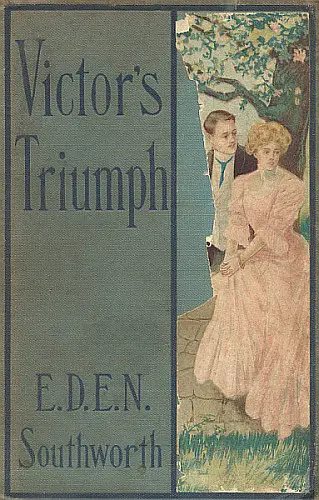
THE CLASSIC COLLECTION · 1900
"Victor's Triumph" by Emma Dorothy Eliza Nevitte Southworth is a novel written in the late 19th century. The narrative likely revolves around themes of love, deception, and societal expectations, focusing on characters entangled in complex relationships. Central to the story is Mary Grey, a young woman with a troubled past who attempts to secure her place in society while navigating the consequences of her earlier choices, which continue to haunt her. The opening portion establishes a dramatic atmosphere, beginning with a conversation between Mary Grey and an aged clergyman who is aware of her tumultuous history. As Mary seeks to manipulate the clergyman's affections and secure his silence about her past, the reader learns of her vulnerability and desperation. Concurrently, Laura Lytton, a close friend of Mary, prepares to return to her family, highlighting the contrasting dynamics between their lives. Through these interactions, the setting is established as one of both kindness and underlying tension, foreshadowing potential conflicts that revolve around identity, concealment, and the search for redemption.
Introduction adapted from the source catalogue; source summaries may be automatically generated.
Free to read · English · 97,879 words · No account needed
MAKE TIME FOR A GOOD BOOK
On by default. Untick to stop anonymous reading totals. Each page counts after 10 seconds in view. How this works.
Anonymous counting is on unless you have switched it off.
And there in open court he read aloud, one after the other, all those fond, foolish, impassioned letters that the love-sick lad, Alden Lytton, had written to the artful woman who had beguiled him in the earliest days of their acquaintance, and before he had discovered her deep depravity.
This was the severest ordeal Alden Lytton had to bear. For he knew he had written these foolish letters in his romantic boyhood, and in his manhood he felt heartily ashamed of them. Under any circumstances he would have been heartily ashamed of them. His ears tingled and his face burned to hear them read aloud to judge, jury and gaping crowd.
And then and there he registered a vow never, never, never to write another gushing love-letter so long as he should live in this world; no, not even to his own dear wife.
When the last terrible letter was finished he felt as much relieved as if he had been unbound from the rack.
But his relief was soon superseded by the utmost astonishment when Mr. Martindale took up another parcel, saying:
"The letters that I have just read, your honor, and gentlemen of the jury, were, as you have heard, written from the University of Charlottesville some years ago. Those that I am about to read to you were written from Wendover last year, in the few weeks preceding the marriage of the prisoner with Mary Grey."
And so saying, the State's Attorney proceeded to read, one after the other, all those forged letters which had been executed with inimitable skill by Mary Grey herself and mailed from Wendover by her unconscious confederate, Craven Kyte.
These counterfeits were even fonder, more foolish and more impassioned than the real ones, and every letter pressed speedy marriage, until the last one, which actually arranged the mode and manner of proceeding.
During the reading of the final letter Mr. Alden Lytton beckoned his counsel, who approached him.
"I acknowledge the first batch of folly written from Charlottesville, when I was a boy of eighteen or nineteen," said Alden, between a laugh and a blush.
"Every man has been a boy, and a fool, at least once in his life. I know I have; and I would much rather be hanged than have my letters read," laughingly replied Mr. Berners.
"But, by all my hopes of heaven, I never wrote one of those infernal letters of the last parcel!" added Mr. Lytton.
"I never supposed you did. It will, no doubt, be possible to prove them to be forgeries. If we can do that the whole prosecution breaks down," replied Mr. Berners.
"They are forgeries!" said Alden Lytton, indignantly.
Your reading position is saved on this browser. Take it to another device with a library code. Reading pages adapt to text, rather than matching a printed edition.
Emma Dorothy Eliza Nevitte Southworth
Emma Dorothy Eliza Nevitte Southworth
Emma Dorothy Eliza Nevitte Southworth
Emma Dorothy Eliza Nevitte Southworth
BEHIND THE BOOK
This eBook is for the use of anyone anywhere in the United States and most other parts of the world at no cost and with almost no restrictions whatsoever. You may copy it, give it away or re-use it under the terms of the Project Gutenberg License included with this eBook or online at www.gutenberg.org. If you are not located in the United States, you will have to check the laws of the country where you are located before using this eBook. Read the source licence.
The original source file, including credits and licence, is retained by this library. Request an original-format copy at no charge. Please include the book title and Project Gutenberg identifier #29729.
KEEP YOUR CURIOSITY GOING
Coulson Kernahan

Maurice Baring
Frances Wright
Cécile Tormay

Frederic Jesup Stimson

W. H. P. (William Henry Pope) Jarvis