THE CLASSIC COLLECTION✦The fatal marriageCLASSIC FREE BOOKS
The fatal marriage
Emma Dorothy Eliza Nevitte Southworth
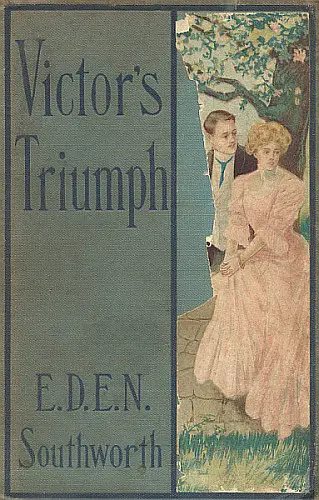
THE CLASSIC COLLECTION · 1900
"Victor's Triumph" by Emma Dorothy Eliza Nevitte Southworth is a novel written in the late 19th century. The narrative likely revolves around themes of love, deception, and societal expectations, focusing on characters entangled in complex relationships. Central to the story is Mary Grey, a young woman with a troubled past who attempts to secure her place in society while navigating the consequences of her earlier choices, which continue to haunt her. The opening portion establishes a dramatic atmosphere, beginning with a conversation between Mary Grey and an aged clergyman who is aware of her tumultuous history. As Mary seeks to manipulate the clergyman's affections and secure his silence about her past, the reader learns of her vulnerability and desperation. Concurrently, Laura Lytton, a close friend of Mary, prepares to return to her family, highlighting the contrasting dynamics between their lives. Through these interactions, the setting is established as one of both kindness and underlying tension, foreshadowing potential conflicts that revolve around identity, concealment, and the search for redemption.
Introduction adapted from the source catalogue; source summaries may be automatically generated.
Free to read · English · 97,879 words · No account needed
MAKE TIME FOR A GOOD BOOK
On by default. Untick to stop anonymous reading totals. Each page counts after 10 seconds in view. How this works.
Anonymous counting is on unless you have switched it off.
"You are very kind. I thank you very much," said Mary Grey, sweetly.
"Here is a room at your and your brother's disposal, ma'am. No one will intrude upon you here," said the hostess, opening a door that led into a neat back parlor, whose windows overlooked the garden and orchard attached to the house.
"Come," said Mary Grey, beckoning to her companion.
"Dear me! I never saw a brother and sister look so much alike as you two do," remarked the hostess, admiringly, as she showed them into the back parlor.
She left them, promising to send in a nice dinner.
"And coffee with it, if you please," added Mary Grey, as the landlady
went out.
"Yes, certainly, ma'am, if you wish it," she answered, as she
disappeared.
Mary Grey went to the back window and looked out upon the pleasant garden, verdant and blooming with shrubs, rose-bushes and flowers.
Craven Kyte joined her.
"Did you hear that old lady call us brother and sister?" inquired the
young man.
"Yes," answered Mary Grey, with her false smile. "But I did not think it necessary to set her right."
"And she said we looked so much alike," smiled Craven.
"We both have dark hair and dark eyes. And we are both rather thin in flesh. That is the beginning and the ending of the likeness. And her imagination did the rest," explained Mary Grey.
They were interrupted by a pretty mulatto girl, who came in to lay the
cloth for dinner.
And this girl continued to flit in and out of the room, bringing the various articles of the service, until, on one of her temporary absences, Craven Kyte exclaimed:
"I would rather have sat and fasted with you under that pretty porch of the old road-side empty house than sit at a feast here, with that girl always running in and out to interrupt us."
"Never mind, dear. As soon as we get something to eat we will go," said Mary Grey, with her sweet, false smile.
In a reasonable time a dainty little dinner was placed upon the table, consisting of broiled chickens, green corn, asparagus and mashed potatoes, with fragrant coffee for a beverage and peaches and cream for dessert.
When they had partaken of this, and had rested a while, Craven Kyte went out and paid the bill. And Mary Grey again drew the landlady aside, out of hearing of her companion, and said:
"We are so much rested and refreshed by your admirable hospitality that my brother and myself think we shall walk back to town and attend afternoon service."
The good hostess smiled approval, but expressed a hope that they would
not overdo themselves.
Your reading position is saved on this browser. Take it to another device with a library code. Reading pages adapt to text, rather than matching a printed edition.
Emma Dorothy Eliza Nevitte Southworth
Emma Dorothy Eliza Nevitte Southworth
Emma Dorothy Eliza Nevitte Southworth
Emma Dorothy Eliza Nevitte Southworth
BEHIND THE BOOK
This eBook is for the use of anyone anywhere in the United States and most other parts of the world at no cost and with almost no restrictions whatsoever. You may copy it, give it away or re-use it under the terms of the Project Gutenberg License included with this eBook or online at www.gutenberg.org. If you are not located in the United States, you will have to check the laws of the country where you are located before using this eBook. Read the source licence.
The original source file, including credits and licence, is retained by this library. Request an original-format copy at no charge. Please include the book title and Project Gutenberg identifier #29729.
KEEP YOUR CURIOSITY GOING
Coulson Kernahan

Maurice Baring
Frances Wright
Cécile Tormay

Frederic Jesup Stimson

W. H. P. (William Henry Pope) Jarvis