
Love and liberty
Alexandre Dumas
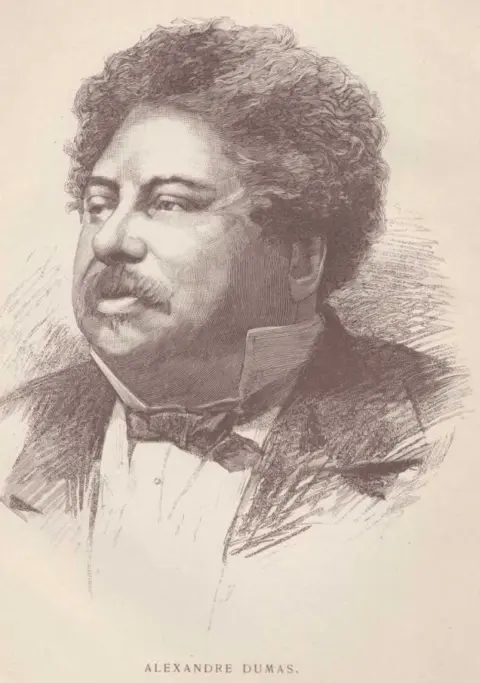
THE CLASSIC COLLECTION · 1841
"Vaninka" by Alexandre Dumas is a historical novel likely written in the early 19th century. The story unfolds during the reign of Emperor Paul I of Russia, focusing on themes of social status, power, and the complexities of love amidst the rigid hierarchy of the Russian nobility. The main character, Vaninka, is a proud and beautiful young woman who navigates her relationships with her father, General Count Tchermayloff, and her potential suitor, Foedor Romayloff, set against a backdrop of severe societal constraints and expectations. The opening of "Vaninka" presents a tense scene where a large crowd gathers to witness the public punishment of a serf, Gregory, in front of General Tchermayloff’s house. The grim atmosphere is underscored by the aide-de-camp, Foedor, who is eager to glimpse Vaninka from a window, signifying his deep and complicated feelings for her. As the punishment unfolds, the narrative introduces the complex dynamics between the characters—Foedor, torn between duty and desire, and Vaninka, whose pride and haughty demeanor shape her identity in a world where she enjoys considerable privilege yet harbors romantic aspirations. This powerful introduction sets the stage for Vaninka's tumultuous journey, woven through themes of love, authority, and rebellion against social norms.
Introduction adapted from the source catalogue; source summaries may be automatically generated.
Free to read · English · 20,654 words · No account needed
MAKE TIME FOR A GOOD BOOK
On by default. Untick to stop anonymous reading totals. Each page counts after 10 seconds in view. How this works.
Anonymous counting is on unless you have switched it off.
With these words the slave left the room, leaving the general convinced by his confidence that some dreadful misfortune threatened him.
From this time onward, as might be expected, the general weighed every word and noticed every gesture which passed between Vaninka and Foedor in his presence; but he saw nothing to confirm his suspicions on the part of the aide-de-camp or of his daughter; on the contrary, Vaninka seemed colder and more reserved than ever.
A week passed in this way. About two o'clock in the morning of the ninth day, someone knocked at the general's door. It was Gregory.
"If your excellency will go into your daughter's room," said Gregory, "you will find Mr. Foedor there."
The general turned pale, dressed himself without uttering a word, and followed the slave to the door of Vaninka's room. Having arrived there, with a motion of his hand he dismissed the informer, who, instead of retiring in obedience to this mute command, hid himself in the corner of the corridor.
When the general believed himself to be alone, he knocked once; but all was silent. This silence, however, proved nothing; for Vaninka might be asleep. He knocked a second time, and the young girl, in a perfectly calm voice, asked, "Who is there?"
"It is I," said the general, in a voice trembling with emotion.
"Annouschka!" said the girl to her foster-sister, who slept in the adjoining room, "open the door to my father. Forgive me, father," she continued; "but Annouschka is dressing, and will be with you in a moment."
The general waited patiently, for he could discover no trace of emotion in his daughter's voice, and he hoped that Gregory had been mistaken.
In a few moments the door opened, and the general went in, and cast a long look around him; there was no one in this first apartment.
Vaninka was in bed, paler perhaps than usual, but quite calm, with the loving smile on her lips with which she always welcomed her father.
"To what fortunate circumstance," asked the young girl in her softest tones, "do I owe the pleasure of seeing you at so late an hour?"
"I wished to speak to you about a very important matter," said the general, "and however late it was, I thought you would forgive me for disturbing you."
"My father will always be welcome in his daughter's room, at whatever hour of the day or night he presents himself there."
The general cast another searching look round, and was convinced that it was impossible for a man to be concealed in the first room--but the second still remained.
"I am listening," said Vaninka, after a moment of silence.
Your reading position is saved on this browser. Take it to another device with a library code. Reading pages adapt to text, rather than matching a printed edition.
Alexandre Dumas
Alexandre Dumas & Auguste Maquet
Alexandre Dumas
Alexandre Dumas
BEHIND THE BOOK
This eBook is for the use of anyone anywhere in the United States and most other parts of the world at no cost and with almost no restrictions whatsoever. You may copy it, give it away or re-use it under the terms of the Project Gutenberg License included with this eBook or online at www.gutenberg.org. If you are not located in the United States, you will have to check the laws of the country where you are located before using this eBook. Read the source licence.
The original source file, including credits and licence, is retained by this library. Request an original-format copy at no charge. Please include the book title and Project Gutenberg identifier #2757.
KEEP YOUR CURIOSITY GOING
Cécile Tormay

Moritz Busch
Coulson Kernahan
John L. Ransom

Maurice Baring
Frances Wright