
Love and liberty
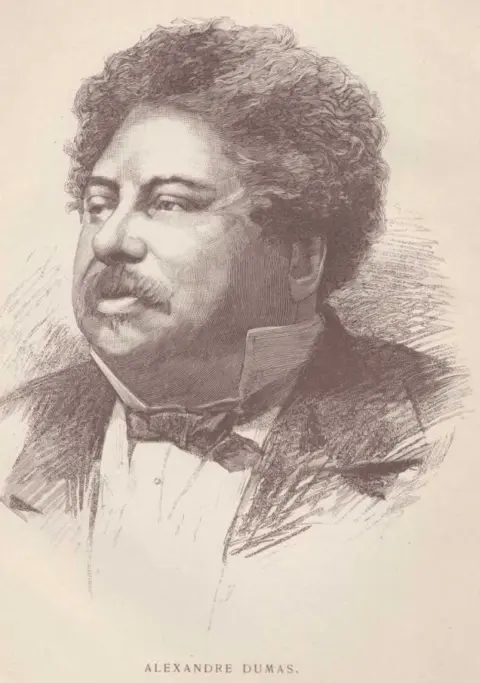
Alexandre Dumas
THE CLASSIC COLLECTION · 1841
"Vaninka" by Alexandre Dumas is a historical novel likely written in the early 19th century. The story unfolds during the reign of Emperor Paul I of Russia, focusing on themes of social status, power, and the complexities of love amidst the rigid hierarchy of the Russian nobility. The main character, Vaninka, is a proud and beautiful young woman who navigates her relationships with her father, General Count Tchermayloff, and her potential suitor, Foedor Romayloff, set against a backdrop of severe societal constraints and expectations. The opening of "Vaninka" presents a tense scene where a large crowd gathers to witness the public punishment of a serf, Gregory, in front of General Tchermayloff’s house. The grim atmosphere is underscored by the aide-de-camp, Foedor, who is eager to glimpse Vaninka from a window, signifying his deep and complicated feelings for her. As the punishment unfolds, the narrative introduces the complex dynamics between the characters—Foedor, torn between duty and desire, and Vaninka, whose pride and haughty demeanor shape her identity in a world where she enjoys considerable privilege yet harbors romantic aspirations. This powerful introduction sets the stage for Vaninka's tumultuous journey, woven through themes of love, authority, and rebellion against social norms.
Introduction adapted from the source catalogue; source summaries may be automatically generated.
Free to read · English · 20,654 words · No account needed
MAKE TIME FOR A GOOD BOOK
On by default. Untick to stop anonymous reading totals. Each page counts after 10 seconds in view. How this works.
Anonymous counting is on unless you have switched it off.
"Not a day passes without Mr. Foedor going into my lady Vaninka's room, although such a favour is not usually granted to a young man in a house like that of your excellency."
"Usually it is I who send him to her," said the general.
"Yes, in the daytime," replied Gregory, "but at night?"
"At night!" cried the general, rising to his feet, and turning so pale that, after a moment, he was forced to lean for support on a table.
"Yes, at night, your excellency," answered Gregory quietly; "and since, as you say, I have begun to mix myself up in a bad business, I must go on with it; besides, even if there were to result from it another punishment for me, even more terrible than that I have already endured, I should not allow so good, a master to be deceived any longer."
"Be very careful about what you are going to say, slave; for I know the men of your nation. Take care, if the accusation you are making by way of revenge is not supported by visible, palpable, and positive proofs, you shall be punished as an infamous slanderer."
"To that I agree," said Gregory.
"Do you affirm that you have seen Foedor enter my daughter's chamber at
night?"
"I do not say that I have seen him enter it, your excellency. I say that I have seen him come out."
"When was that?"
"A quarter of an hour ago, when I was on my way to your excellency."
"You lie!" said the general, raising his fist.
"This is not our agreement, your excellency," said the slave, drawing back. "I am only to be punished if I fail to give proofs."
"But what are your proofs?"
"I have told you."
"And do you expect me to believe your word alone?"
"No; but I expect you to believe your own eyes."
"How?"
"The first time that Mr. Foedor is in my lady Vaninka's room after midnight, I shall come to find your excellency, and then you can judge for yourself if I lie; but up to the present, your excellency, all the conditions of the service I wish to render you are to my disadvantage."
"In what way?"
"Well, if I fail to give proofs, I am to be treated as an infamous slanderer; but if I give them, what advantage shall I gain?"
"A thousand roubles and your freedom."
"That is a bargain, then, your excellency," replied Gregory quietly, replacing the razors on the general's toilet-table, "and I hope that before a week has passed you will be more just to me than you are now."
Your reading position is saved on this browser. Take it to another device with a library code. Reading pages adapt to text, rather than matching a printed edition.
Alexandre Dumas
Alexandre Dumas & Auguste Maquet
Alexandre Dumas
Alexandre Dumas
BEHIND THE BOOK
This eBook is for the use of anyone anywhere in the United States and most other parts of the world at no cost and with almost no restrictions whatsoever. You may copy it, give it away or re-use it under the terms of the Project Gutenberg License included with this eBook or online at www.gutenberg.org. If you are not located in the United States, you will have to check the laws of the country where you are located before using this eBook. Read the source licence.
The original source file, including credits and licence, is retained by this library. Request an original-format copy at no charge. Please include the book title and Project Gutenberg identifier #2757.
KEEP YOUR CURIOSITY GOING
Cécile Tormay

Moritz Busch
Coulson Kernahan
John L. Ransom

Maurice Baring
Frances Wright