
Love and liberty
Alexandre Dumas
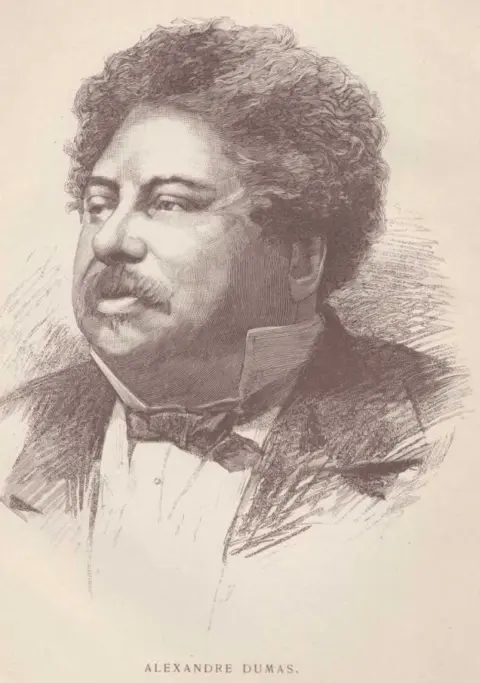
THE CLASSIC COLLECTION · 1841
"Vaninka" by Alexandre Dumas is a historical novel likely written in the early 19th century. The story unfolds during the reign of Emperor Paul I of Russia, focusing on themes of social status, power, and the complexities of love amidst the rigid hierarchy of the Russian nobility. The main character, Vaninka, is a proud and beautiful young woman who navigates her relationships with her father, General Count Tchermayloff, and her potential suitor, Foedor Romayloff, set against a backdrop of severe societal constraints and expectations. The opening of "Vaninka" presents a tense scene where a large crowd gathers to witness the public punishment of a serf, Gregory, in front of General Tchermayloff’s house. The grim atmosphere is underscored by the aide-de-camp, Foedor, who is eager to glimpse Vaninka from a window, signifying his deep and complicated feelings for her. As the punishment unfolds, the narrative introduces the complex dynamics between the characters—Foedor, torn between duty and desire, and Vaninka, whose pride and haughty demeanor shape her identity in a world where she enjoys considerable privilege yet harbors romantic aspirations. This powerful introduction sets the stage for Vaninka's tumultuous journey, woven through themes of love, authority, and rebellion against social norms.
Introduction adapted from the source catalogue; source summaries may be automatically generated.
Free to read · English · 20,654 words · No account needed
MAKE TIME FOR A GOOD BOOK
On by default. Untick to stop anonymous reading totals. Each page counts after 10 seconds in view. How this works.
Anonymous counting is on unless you have switched it off.
"Yes, but we are not alone," replied the general, "and it is important that no other ears should hear what I have to say to you."
"Annauschka, as you know, is my foster-sister," said Vaninka.
"That makes no difference," said the general, going candle in hand into the next room, which was somewhat smaller than his daughter's. "Annouschka," said he, "watch in the corridor and see that no one overhears us."
As he spoke these words, the general threw the same scrutinizing glance all round the room, but with the exception of the young girl there was no one there.
Annouschka obeyed, and the general followed her out, and, looking eagerly round for the last time, re-entered his daughter's room, and seated himself on the foot of her bed. Annouschka, at a sign from her mistress, left her alone with her father. The general held out his hand to Vaninka, and she took it without hesitation.
"My child," said the general, "I have to speak to you about a very
important matter."
"What is it, father?" said Vaninka.
"You will soon be eighteen," continued the general, "and that is the age at which the daughters of the Russian nobility usually marry." The general paused for a moment to watch the effect of these words upon Vaninka, but her hand rested motionless in his. "For the last year your hand has been engaged by me," continued the general.
"May I know to whom?" asked Vaninka coldly.
"To the son of the Councillor-in-Ordinary," replied the general. "What
is your opinion of him?"
"He is a worthy and noble young man, I am told, but I can have formed no opinion except from hearsay. Has he not been in garrison at Moscow for the last three months?"
"Yes," said the general, "but in three months' time he should return."
Vaninka remained silent.
"Have you nothing to say in reply?" asked the general.
"Nothing, father; but I have a favour to ask of you."
"What is it?"
"I do not wish to marry until I am twenty years old."
"Why not?"
"I have taken a vow to that effect."
"But if circumstances demanded the breaking of this vow, and made the celebration of this marriage imperatively necessary?"
"What circumstances?" asked Vaninka.
"Foedor loves you," said the general, looking steadily at Vaninka.
"I know that," said Vaninka, with as little emotion as if the question
did not concern her.
"You know that!" cried the general.
"Yes; he has told me so."
"When?"
"Yesterday."
"And you replied--?"
"That he must leave here at once."
"And he consented?"
"Yes, father."
"When does he go?"
"He has gone."
Your reading position is saved on this browser. Take it to another device with a library code. Reading pages adapt to text, rather than matching a printed edition.
Alexandre Dumas
Alexandre Dumas & Auguste Maquet
Alexandre Dumas
Alexandre Dumas
BEHIND THE BOOK
This eBook is for the use of anyone anywhere in the United States and most other parts of the world at no cost and with almost no restrictions whatsoever. You may copy it, give it away or re-use it under the terms of the Project Gutenberg License included with this eBook or online at www.gutenberg.org. If you are not located in the United States, you will have to check the laws of the country where you are located before using this eBook. Read the source licence.
The original source file, including credits and licence, is retained by this library. Request an original-format copy at no charge. Please include the book title and Project Gutenberg identifier #2757.
KEEP YOUR CURIOSITY GOING
Cécile Tormay

Moritz Busch
Coulson Kernahan
John L. Ransom

Maurice Baring
Frances Wright