
Love and liberty
Alexandre Dumas
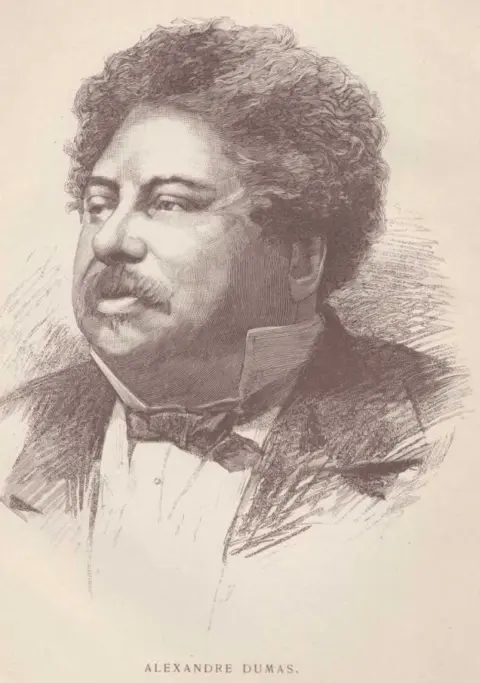
THE CLASSIC COLLECTION · 1841
"Vaninka" by Alexandre Dumas is a historical novel likely written in the early 19th century. The story unfolds during the reign of Emperor Paul I of Russia, focusing on themes of social status, power, and the complexities of love amidst the rigid hierarchy of the Russian nobility. The main character, Vaninka, is a proud and beautiful young woman who navigates her relationships with her father, General Count Tchermayloff, and her potential suitor, Foedor Romayloff, set against a backdrop of severe societal constraints and expectations. The opening of "Vaninka" presents a tense scene where a large crowd gathers to witness the public punishment of a serf, Gregory, in front of General Tchermayloff’s house. The grim atmosphere is underscored by the aide-de-camp, Foedor, who is eager to glimpse Vaninka from a window, signifying his deep and complicated feelings for her. As the punishment unfolds, the narrative introduces the complex dynamics between the characters—Foedor, torn between duty and desire, and Vaninka, whose pride and haughty demeanor shape her identity in a world where she enjoys considerable privilege yet harbors romantic aspirations. This powerful introduction sets the stage for Vaninka's tumultuous journey, woven through themes of love, authority, and rebellion against social norms.
Introduction adapted from the source catalogue; source summaries may be automatically generated.
Free to read · English · 20,654 words · No account needed
MAKE TIME FOR A GOOD BOOK
On by default. Untick to stop anonymous reading totals. Each page counts after 10 seconds in view. How this works.
Anonymous counting is on unless you have switched it off.
"Pride?" asked the astonished general. "That is a failing from which I should have thought him most free."
"Perhaps I should have said ambition," replied Gregory.
"Ambition!" said the general. "It does not seem to me that he has given much proof of ambition in entering my service; for after his achievements in the last campaign he might easily have aspired to the honour of a place in the emperor's household."
"Oh yes, he is ambitious," said Gregory, smiling. "One man's ambition is for high position, another's an illustrious alliance: the former will owe everything to himself, the latter will make a stepping-stone of his wife, then they raise their eyes higher than they should."
"What do you mean to suggest?" said the general, beginning to see what
Gregory was aiming at.
"I mean, your excellency," replied Gregory, "there are many men who, owing to the kindness shown them by others, forget their position and aspire to a more exalted one; having already been placed so high, their heads are turned."
"Gregory," cried the general, "believe me, you are getting into a scrape; for you are making an accusation, and if I take any notice of it, you will have to prove your words."
"By St. Basilius, general, it is no scrape when you have truth on your side; for I have said nothing I am not ready to prove."
"Then," said the general, "you persist in declaring that Foedor loves my
daughter?"
"Ah! I have not said that: it is your excellency. I have not named the lady Vaninka," said Gregory, with the duplicity of his nation.
"But you meant it, did you not? Come, contrary to your custom, reply
frankly."
"It is true, your excellency; it is what I meant."
"And, according to you, my daughter reciprocates the passion, no doubt?"
"I fear so, your excellency."
"And what makes you think this, say?"
"First, Mr. Foedor never misses a chance of speaking to the lady
Vaninka."
"He is in the same house with her, would you have him avoid her?"
"When the lady Vaninka returns late, and when perchance Mr. Foedor has not accompanied you, whatever the hour Mr. Foedor is there, ready, to help her out of the carriage."
"Foedor attends me, it is his duty," said the general, beginning to believe that the serf's suspicions were founded on slight grounds. "He waits for me," he, continued, "because when I return, at any hour of the day or night, I may have orders to give him."
Your reading position is saved on this browser. Take it to another device with a library code. Reading pages adapt to text, rather than matching a printed edition.
Alexandre Dumas
Alexandre Dumas & Auguste Maquet
Alexandre Dumas
Alexandre Dumas
BEHIND THE BOOK
This eBook is for the use of anyone anywhere in the United States and most other parts of the world at no cost and with almost no restrictions whatsoever. You may copy it, give it away or re-use it under the terms of the Project Gutenberg License included with this eBook or online at www.gutenberg.org. If you are not located in the United States, you will have to check the laws of the country where you are located before using this eBook. Read the source licence.
The original source file, including credits and licence, is retained by this library. Request an original-format copy at no charge. Please include the book title and Project Gutenberg identifier #2757.
KEEP YOUR CURIOSITY GOING
Cécile Tormay

Moritz Busch
Coulson Kernahan
John L. Ransom

Maurice Baring
Frances Wright