THE CLASSIC COLLECTION✦Search-Light LettersCLASSIC FREE BOOKS
Search-Light Letters
Robert Grant
THE CLASSIC COLLECTION · 1900
"Unleavened Bread" by Robert Grant is a novel written in the early 20th century. The story revolves around Selma White, a young schoolteacher navigating her path in a rapidly changing American society, following her marriage to Lewis Babcock, a varnish manufacturer. The narrative explores themes of personal development, ambition, and the evolving role of women during a time of social transformation. The opening of the novel introduces Selma and Babcock as they depart from a wedding, setting the stage for their developing relationship. Selma reflects on her previous life and the constraints she feels from her small-town upbringing and societal expectations, contrasting her aspirations of achieving something greater in a burgeoning city like Benham. Babcock, on the other hand, is portrayed as a devoted husband who yearns for Selma's affection while harboring dreams of a prosperous future. Their early interactions signal Selma's ambivalence toward traditional domestic roles and foreshadow the complexities of her character as she grapples with her desires for independence and influence in a changing world.
Introduction adapted from the source catalogue; source summaries may be automatically generated.
Free to read · English · 122,633 words · No account needed
MAKE TIME FOR A GOOD BOOK
On by default. Untick to stop anonymous reading totals. Each page counts after 10 seconds in view. How this works.
Anonymous counting is on unless you have switched it off.
Suddenly there loomed into sight on the political horizon, and came bearing down on Lyons under full sail, Elton's bill for the consolidation of the gas companies. The Benham Sentinel had not been one of the promoters of Lyons's senatorial canvass, but it had not espoused the cause of any of his competitors, and latterly had referred in acquiescent terms to his election as a foregone conclusion. He had not happened to run across Elton during these intervening weeks, and preferred not to encounter him. He cherished an ostrich-like hope that Elton was in no haste regarding the bill, and that consequently it might not pass the legislature until after his election as Senator. If he were to come in contact with Elton, the meeting might jog the busy magnate's memory. It was a barren hope. Immediately after the Sentinel announced that Governor Lyons was practically sure to be the next United States Senator, the gas bill was reported favorably by the committee which had it in charge, and was advanced rapidly in the House. Debate on its provisions developed that it was not to have entirely plain sailing, though the majority recorded in its favor on the first and second readings was large. It was not at first regarded as a party measure. Its supporters included most of the Republicans and more than half of the Democrats. Yet the opposition to it proceeded from the wing of the Democracy with which Stringer was affiliated. Elton's interest in the bill was well understood, and the work of pledging members in advance, irrespective of party, had been so thoroughly done, that but for the exigencies of the senatorial contest it would probably have slipped through without notice as a harmless measure. As it was, the opposition to it in the lower branch was brief and seemed unimportant. The bill passed the House of Representatives by a nearly two-thirds vote and went promptly to the Senate calendar. Then suddenly it became obvious to Lyons not merely that Elton was bent on securing its passage while the present Governor was in office, but that his rival, Stringer, had conceived the cruel scheme of putting him in the position, by a hue and cry against monopoly and corporate interests, where his election to the senatorship would be imperilled if he did not veto the measure. By a caustic speech in the Senate Stringer drew public attention to the skilfully concealed iniquities of the proposed franchise, and public attention thus aroused began to bristle. Newspapers here and there throughout the state put forth edicts that this Legislature had been chosen to protect popular principles, and that here was an opportunity for the Democratic party to fulfil its pledges and serve the people. Stringer and his associates were uttering in the Senate burning words against the audacious menace of what they termed the franchise octopus. Did the people realize that this bill to combine gas companies, which looked so innocent on its face, was a gigantic scheme to wheedle them out of a valuable franchise for nothing? Did they understand that they were deliberately putting their necks in the grip of a monster whose tentacles would squeeze and suck their life-blood for its own enrichment? Stringer hammered away with fierce and reiterated invective. He had no hope of defeating the bill, but he confidently believed that he was putting his adversary, the Governor, in a hole. It had been noised about the lobbies by the friends of the measure earlier in the session that the Governor was all right and could be counted on. Stringer reasoned that Lyons was committed to the bill; that, if he signed it, his opponents might prevent his election as Senator on the plea that he had catered to corporate interests; that if he vetoed it, he would lose the support of powerful friends who might seek to revenge themselves by uniting on his opponent. Stringer recognized that he was playing a desperate game, but it was his only chance. One thing was evident already: As a result of the exposure in the Senate, considerable public hostility to the bill was manifesting itself. Petitions for its defeat were in circulation, and several Senators who had been supposed to be friendly to its passage veered round in deference to the views of their constituents. Its defeat had almost become a party measure. A majority of the Democrats in the Senate were claimed to be against it. Nevertheless there was no delay on the part of those in charge in pushing it to final action. They had counted noses, and their margin of support had been so liberal they could afford to lose a few deserters. After a fierce debate the bill was passed to be engrossed by a majority of eleven. The Democrats in the Senate were just evenly divided on the ballot.
Your reading position is saved on this browser. Take it to another device with a library code. Reading pages adapt to text, rather than matching a printed edition.
Robert Grant
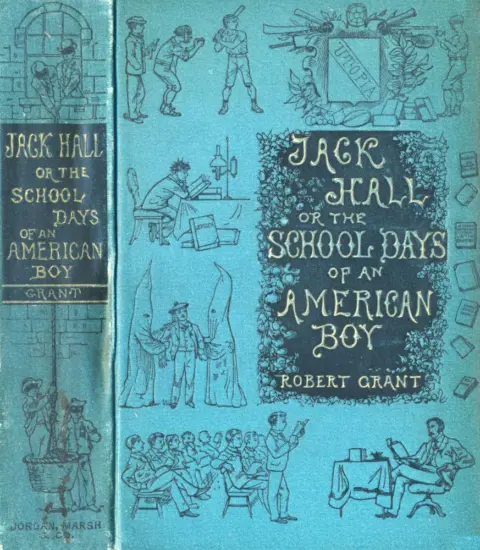
Robert Grant

Robert Grant
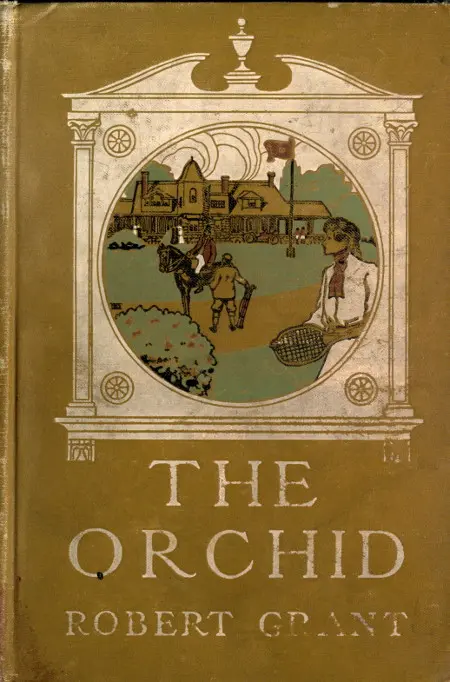
Robert Grant
BEHIND THE BOOK
This eBook is for the use of anyone anywhere in the United States and most other parts of the world at no cost and with almost no restrictions whatsoever. You may copy it, give it away or re-use it under the terms of the Project Gutenberg License included with this eBook or online at www.gutenberg.org. If you are not located in the United States, you will have to check the laws of the country where you are located before using this eBook. Read the source licence.
The original source file, including credits and licence, is retained by this library. Request an original-format copy at no charge. Please include the book title and Project Gutenberg identifier #14645.
KEEP YOUR CURIOSITY GOING
Coulson Kernahan

Maurice Baring
Frances Wright
Cécile Tormay

Frederic Jesup Stimson

W. H. P. (William Henry Pope) Jarvis