THE CLASSIC COLLECTION✦Search-Light LettersCLASSIC FREE BOOKS
Search-Light Letters
Robert Grant
THE CLASSIC COLLECTION · 1900
"Unleavened Bread" by Robert Grant is a novel written in the early 20th century. The story revolves around Selma White, a young schoolteacher navigating her path in a rapidly changing American society, following her marriage to Lewis Babcock, a varnish manufacturer. The narrative explores themes of personal development, ambition, and the evolving role of women during a time of social transformation. The opening of the novel introduces Selma and Babcock as they depart from a wedding, setting the stage for their developing relationship. Selma reflects on her previous life and the constraints she feels from her small-town upbringing and societal expectations, contrasting her aspirations of achieving something greater in a burgeoning city like Benham. Babcock, on the other hand, is portrayed as a devoted husband who yearns for Selma's affection while harboring dreams of a prosperous future. Their early interactions signal Selma's ambivalence toward traditional domestic roles and foreshadow the complexities of her character as she grapples with her desires for independence and influence in a changing world.
Introduction adapted from the source catalogue; source summaries may be automatically generated.
Free to read · English · 122,633 words · No account needed
MAKE TIME FOR A GOOD BOOK
On by default. Untick to stop anonymous reading totals. Each page counts after 10 seconds in view. How this works.
Anonymous counting is on unless you have switched it off.
"We wouldn't care for it, but probably it's just what they like," said Wilbur. "Some society reporter may notice them; in which case we shall see in the Sunday newspaper that Mr. Gregory Williams and party occupied a private box at the Empire Theatre last Tuesday evening, which will be another straw toward helping them to carry out their project of attracting attention. I like the face of your new friend, my dear. I mean to say that she looks unaffected and honest, and as if she had a sense of humor. With those three virtues a woman can afford to have some faults. I suppose she has hers."
Littleton felt that Selma was disposed to fancy her neighbor, but was restrained by conscientious scruples due to her dislike for society concerns. He had fallen in love with and married his wife because he believed her to be free from and superior to the petty weaknesses of the feminine social creed; but though extremely proud of her uncompromising standards, he had begun to fear lest she might indulge her point of view so far as to be unjust. Her scornful references from time to time to those who had made money and occupied fine houses had wounded his own sense of justice. He had endeavored to explain that virtue was not the exclusive prerogative of the noble-minded poor, and now he welcomed an opportunity of letting her realize from personal experience that society was not so bad as it was painted.
Selma returned Mrs. Williams's call during the week, but did not find her at home. A few days later arrived a note stamped with a purple and gold monogram inviting them to dinner. When the evening arrived they found only a party of four. A third couple had given out at the last minute, so they were alone with their hosts. The Williams house in its decoration and upholstery was very different from their own. The drawing-room was bright with color. The furniture was covered with light blue plush; there were blue and yellow curtains, gay cushions, and a profusion of gilt ornamentation. A bear-skin, a show picture on an easel, and a variety of florid bric-à-brac completed the brilliant aspect of the apartment. Selma reflected at once that that this was the sort of drawing-room which would have pleased her had she been given her head and a full purse. It suggested her home at Benham refurnished by the light of her later experience undimmed by the shadow of economy. On the way down to dinner she noticed in the corner of the hall a suit of old armor, and she was able to perceive that the little room on one side of the front door, which they learned subsequently was Mr. Williams's den, contained Japanese curiosities. The dinner-table shone with glass and silver ware, and was lighted by four candles screened by small pink shades. By the side of Flossy's plate and her own was a small bunch of violets, and there was a rosebud for each of the men. The dinner, which was elaborate, was served by two trig maids. There were champagne and frozen pudding. Selma felt almost as if she were in fairy-land. She had never experienced anything just like this before; but her exacting conscience was kept at bay by the reflection that this must be a further manifestation of the New York manner, and her self-respect was propitiated by the cordiality of her entertainers. The conversation was bubbling and light-hearted on the part of both Mr. and Mrs. Williams. They kept up a running prattle on the current fads of the day, the theatre, the doings of well-known social personages, and their own household possessions, which they naïvely called to the attention of their guests, that they might be admired. But Selma enjoyed more than the general conversation her talk with the master of the house, who possessed all the friendly suavity of his wife and also the valuable masculine trait of seeming to be utterly absorbed in any woman to whom he was talking. Gregory had a great deal of manner and a confidential fluency of style, which gave distinction even to commonplace remarks. His method did not condescend to nudging when he wished to note a point, but it fell only so far short of it as he thought social elegance required. His conversation presently drifted, or more properly speaking, flowed into a graphic and frank account of his own progress as a banker. He referred to past successful undertakings, descanted on his present roseate responsibilities, and hinted sagely at impending operations which would eclipse in importance any in which he had hitherto been engaged. In answer to Selma's questions he discoursed alluringly concerning the methods of the Stock Exchange, and gave her to understand that for an intelligent and enterprising man speculation was the high road to fortune. No doubt for fools and for people of mediocre or torpid abilities it was a dangerous trade; but for keen and bold intellects what pursuit offered such dazzling opportunities?
Your reading position is saved on this browser. Take it to another device with a library code. Reading pages adapt to text, rather than matching a printed edition.
Robert Grant
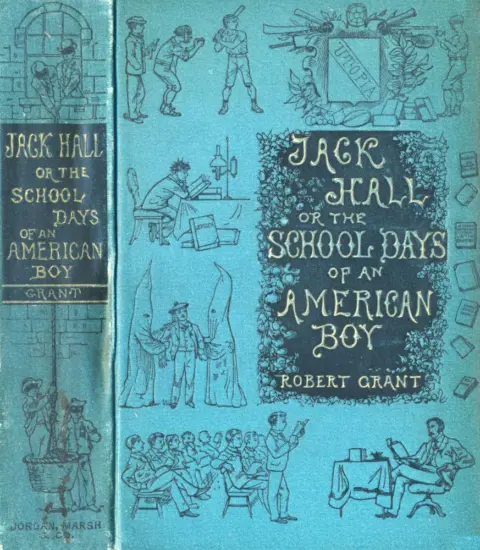
Robert Grant

Robert Grant
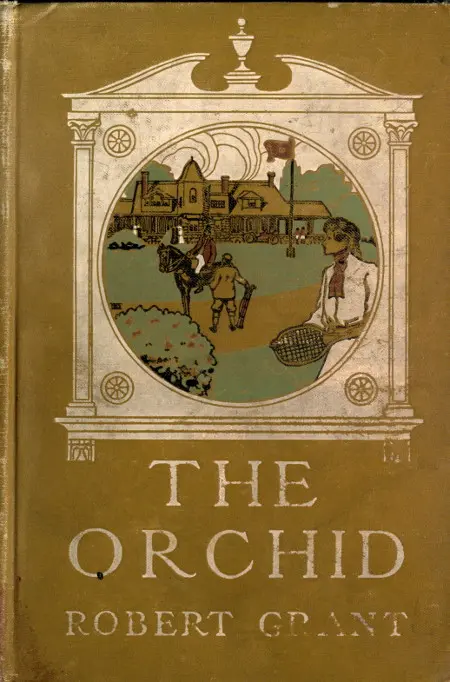
Robert Grant
BEHIND THE BOOK
This eBook is for the use of anyone anywhere in the United States and most other parts of the world at no cost and with almost no restrictions whatsoever. You may copy it, give it away or re-use it under the terms of the Project Gutenberg License included with this eBook or online at www.gutenberg.org. If you are not located in the United States, you will have to check the laws of the country where you are located before using this eBook. Read the source licence.
The original source file, including credits and licence, is retained by this library. Request an original-format copy at no charge. Please include the book title and Project Gutenberg identifier #14645.
KEEP YOUR CURIOSITY GOING
Coulson Kernahan

Maurice Baring
Frances Wright
Cécile Tormay

Frederic Jesup Stimson

W. H. P. (William Henry Pope) Jarvis