
One Woman: Being the Second Part of a Romance of Sussex
Alfred Ollivant
THE CLASSIC COLLECTION · 1919
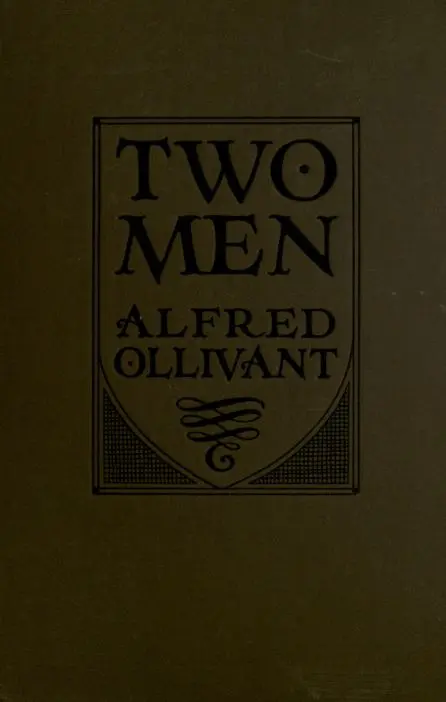
"Two Men: A Romance of Sussex" by Alfred Ollivant is a novel written in the early 20th century. The narrative explores themes of familial dynamics, personal struggles, and the contrast between tradition and modernity against the picturesque backdrop of Sussex. The story introduces us to Edward Caspar, a reluctant heir, and his father Hans Caspar, a powerful railway contractor who grapples with the complexities of raising a son like Edward, who embodies sensitivity and artistic aspirations in a world that demands toughness and resilience. At the start of the novel, we are introduced to the setting of Beachbourne and the reverberating influence of the sea and the landscape on its inhabitants. The opening portrays a picturesque scene at Beau-nez, eventually shifting focus to the relationship between Hans and Edward. We witness a stark contrast in their characters and their lives; Hans, a confident and authoritative figure, stands in stark opposition to Edward, who struggles with self-doubt and a stutter. As the narrative unfolds, we find hints of deeper personal conflicts within their family with the introduction of Edward's wife, Anne, and their children. This opening segment captures the essence of evolving identities against the backdrop of establishment and the inherent struggles of their intertwined destinies.
Introduction adapted from the source catalogue; source summaries may be automatically generated.
Free to read · English · 86,291 words · No account needed
MAKE TIME FOR A GOOD BOOK
On by default. Untick to stop anonymous reading totals. Each page counts after 10 seconds in view. How this works.
Anonymous counting is on unless you have switched it off.
The quality and quantity of the loot so absorbed him that he forgot his fears. And when he glanced up through the screen of thick branches to see a pair of grey-stockinged legs, thick and formidable to a degree, advancing upon the tree with dreadful deliberation, his heart stopped.
The enemy was on them.
Alf emptied handkerchief, pockets, cap: he emptied himself by a swift ducking motion that sent the treasure heaped against his heart pouring forth with a rattle about his neck and head and ears.
Then he cast fearful eyes to the rear. It was thirty yards to the fence and beyond there was but the unscreened path without a scrap of cover, leading across the plough, past the Moot Farm and abandoned kennels to the New Road.
Alf saw at a glance that escape was impossible. Mr. Pigott, for all his forty years, could sprint.
Swift as a cornered rat, Alf made his decision.
He marched out from his shelter towards the approaching legs, a puny
little creature with pale peaked face, and Ern's coat flung over his
arm.
Mr. Pigott was advancing, very grim and grey, across the rough grass, his hands behind him, dragging something. He seemed in no hurry, and not in the least surprised to see Alf, whom he ignored.
"Please, sir," said Alf, perking his face up with an air of frankness, "there's a boy up your tree. Here's his coat."
Mr. Pigott walked slowly on, drawing behind him a sixty-foot hose, which issued like a white snake from the scullery window.
"I know," he said with suppressed quiet. "And I know who set him on to it. I can't beat you because you'd break if I touched you. But I'll take your brother's skin off him though he's twice the man you are, you dirty little cur!"
He brought the hose to bear on the brigand in the tree, and loosed the water-spout and the vials of his wrath together.
"Ah, you young scoundrel!" he roared, finding joy in explosive self-expression. "I'll teach you come monkeying after my nuts!"
Swish went the stream of water through the branches.
Ern hid as best he could on the leeward side of the trunk.
Mr. Pigott brought his artillery mercilessly to bear upon the boy's clasping hands. Ern, spluttering and sprawling, came down the tree with a rush and made a bolt for the fence.
Mr. Pigott, roaring jovially, played the stream full on him. It was a powerful gush, and floored the boy. The avenger knew no mercy and drenched his victim as he lay.
It was a sodden little figure who crept home disconsolately ten minutes
later.
Your reading position is saved on this browser. Take it to another device with a library code. Reading pages adapt to text, rather than matching a printed edition.
Alfred Ollivant

Alfred Ollivant
Alfred Ollivant
Alfred Ollivant
BEHIND THE BOOK
This eBook is for the use of anyone anywhere in the United States and most other parts of the world at no cost and with almost no restrictions whatsoever. You may copy it, give it away or re-use it under the terms of the Project Gutenberg License included with this eBook or online at www.gutenberg.org. If you are not located in the United States, you will have to check the laws of the country where you are located before using this eBook. Read the source licence.
The original source file, including credits and licence, is retained by this library. Request an original-format copy at no charge. Please include the book title and Project Gutenberg identifier #57640.
KEEP YOUR CURIOSITY GOING
Coulson Kernahan

Maurice Baring
Frances Wright
Cécile Tormay

Frederic Jesup Stimson

W. H. P. (William Henry Pope) Jarvis