
One Woman: Being the Second Part of a Romance of Sussex
Alfred Ollivant
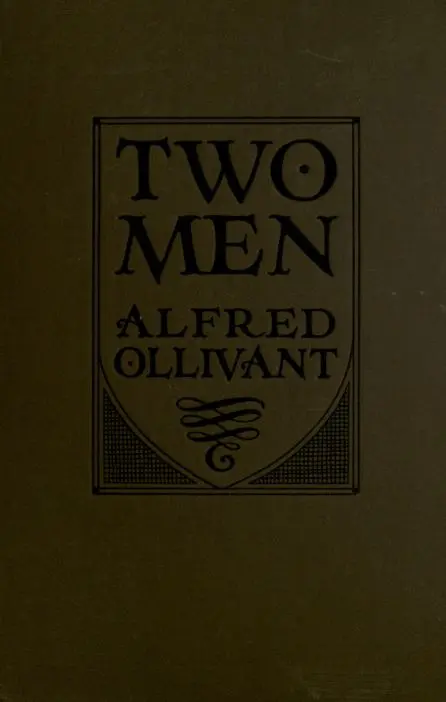
THE CLASSIC COLLECTION · 1919
"Two Men: A Romance of Sussex" by Alfred Ollivant is a novel written in the early 20th century. The narrative explores themes of familial dynamics, personal struggles, and the contrast between tradition and modernity against the picturesque backdrop of Sussex. The story introduces us to Edward Caspar, a reluctant heir, and his father Hans Caspar, a powerful railway contractor who grapples with the complexities of raising a son like Edward, who embodies sensitivity and artistic aspirations in a world that demands toughness and resilience. At the start of the novel, we are introduced to the setting of Beachbourne and the reverberating influence of the sea and the landscape on its inhabitants. The opening portrays a picturesque scene at Beau-nez, eventually shifting focus to the relationship between Hans and Edward. We witness a stark contrast in their characters and their lives; Hans, a confident and authoritative figure, stands in stark opposition to Edward, who struggles with self-doubt and a stutter. As the narrative unfolds, we find hints of deeper personal conflicts within their family with the introduction of Edward's wife, Anne, and their children. This opening segment captures the essence of evolving identities against the backdrop of establishment and the inherent struggles of their intertwined destinies.
Introduction adapted from the source catalogue; source summaries may be automatically generated.
Free to read · English · 86,291 words · No account needed
MAKE TIME FOR A GOOD BOOK
On by default. Untick to stop anonymous reading totals. Each page counts after 10 seconds in view. How this works.
Anonymous counting is on unless you have switched it off.
Ernie was now steadily ablaze. His heart was set; his purpose resolved; there was no faltering in his faith. The armour in which his spirit was cased revealed no fissures under strain. He was amazed at his own strength, and at the illimitable resources on which he could draw at will.
People who saw him at this time, swept by the March winds, haggard and pinched at the Star corner, wondered at the flame of determination burning in his face.
"He seems always waiting for some one," said Elsie Pigott, who, like many another woman, was haunted by his wistful eyes at night.
"Perhaps he is," answered Mrs. Trupp.
It was the slackest season of the year--between Christmas and Easter; and there was no work obtainable. Building was held up by the frosts; visitors were sporadic; and in the East-end a strike of engineers in the great railway shops had dislocated trade.
Elsie Pigott pleaded with her husband for her favourite; but for once she could not tease or taunt the Manager of the Southdown Transport Company in acquiescence with her wishes.
"No," he said, sturdily, "if he wants my help he must come and ask for it. Last time I offered him a job he snubbed me brutally. I've got my self-respect same as others."
That evening she came to his door.
"Please, sir," she said, dropping a curtsey, "Mr. Ernest Caspar!--will
you see him?"
He scowled at her over his Christian Commonwealth.
"You've done this," he said.
"No, sir," demurely bobbing. "He came."
"Show him in."
Ernie entered, shining and unshorn, a tatterdemalion with the face of a
saint.
The old schoolmaster thought how like his father he was growing: the same untidy garden of flesh, the same spirit at work behind the weeds.
"Well," he said, laying down his paper, "I don't see much of you at
chapel these days."
Ernie smiled.
"I'm in chapel all the time, sir," he said. "That's what I come about. I wanted you to know." He sat down suddenly. "You know what you used to tell me about prayer when I was a nipper. Ask, and it shall be given you, and that." He leaned forward. "That's true--every word of it. You can have what you want for the askin--if you'll wait. Now I want something; and I shall get it in time, because I'll be faithful."
Mr. Pigott looked into the rapt eager eyes of the scare-crow opposite
him.
For some reason he felt humiliated, even afraid; and, man-like, he concealed his qualms behind an added gruffness.
"Your father's been talking to you," he said.
Your reading position is saved on this browser. Take it to another device with a library code. Reading pages adapt to text, rather than matching a printed edition.
Alfred Ollivant

Alfred Ollivant
Alfred Ollivant
Alfred Ollivant
BEHIND THE BOOK
This eBook is for the use of anyone anywhere in the United States and most other parts of the world at no cost and with almost no restrictions whatsoever. You may copy it, give it away or re-use it under the terms of the Project Gutenberg License included with this eBook or online at www.gutenberg.org. If you are not located in the United States, you will have to check the laws of the country where you are located before using this eBook. Read the source licence.
The original source file, including credits and licence, is retained by this library. Request an original-format copy at no charge. Please include the book title and Project Gutenberg identifier #57640.
KEEP YOUR CURIOSITY GOING
Coulson Kernahan

Maurice Baring
Frances Wright
Cécile Tormay

Frederic Jesup Stimson

W. H. P. (William Henry Pope) Jarvis