
One Woman: Being the Second Part of a Romance of Sussex
Alfred Ollivant
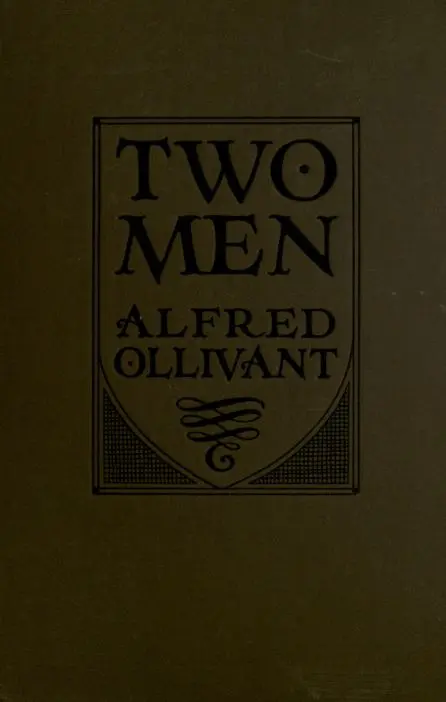
THE CLASSIC COLLECTION · 1919
"Two Men: A Romance of Sussex" by Alfred Ollivant is a novel written in the early 20th century. The narrative explores themes of familial dynamics, personal struggles, and the contrast between tradition and modernity against the picturesque backdrop of Sussex. The story introduces us to Edward Caspar, a reluctant heir, and his father Hans Caspar, a powerful railway contractor who grapples with the complexities of raising a son like Edward, who embodies sensitivity and artistic aspirations in a world that demands toughness and resilience. At the start of the novel, we are introduced to the setting of Beachbourne and the reverberating influence of the sea and the landscape on its inhabitants. The opening portrays a picturesque scene at Beau-nez, eventually shifting focus to the relationship between Hans and Edward. We witness a stark contrast in their characters and their lives; Hans, a confident and authoritative figure, stands in stark opposition to Edward, who struggles with self-doubt and a stutter. As the narrative unfolds, we find hints of deeper personal conflicts within their family with the introduction of Edward's wife, Anne, and their children. This opening segment captures the essence of evolving identities against the backdrop of establishment and the inherent struggles of their intertwined destinies.
Introduction adapted from the source catalogue; source summaries may be automatically generated.
Free to read · English · 86,291 words · No account needed
MAKE TIME FOR A GOOD BOOK
On by default. Untick to stop anonymous reading totals. Each page counts after 10 seconds in view. How this works.
Anonymous counting is on unless you have switched it off.
"Come on yourself," answered Ern without enthusiasm.
"Now, I'll stay and watch the path for you against her," piped Alf.
But for once Ern was firm.
"I aren't a-gooin unless you cooms too," he said doggedly.
"What's the good of me, then?" scoffed Alf in his fierce and feverish way. "Can I climb the tree? Only wish I could. I'd show you. I suppose you'll be throwin that up at me next! My belief you're afraid."
But Ernie was not to be moved from the position which he had taken up. Just now and then Alf had remarked that his brother for all his softness became hard--adamant indeed--in a way that rather frightened Alf.
"I'll goo up the tree and shake em down to you," Ern said in his slow, musical voice. "You stand at the foot of her and gather em."
"Fine!" jeered Alf. "And when Mr. Pigott comes out you'll be up the tree safe as dysies, and I'll be on the floor for him to paste!"
"I thart you said he'd gone to Lewes," retorted Ern, unusually alert.
"So he has," replied Alf sourly. "Only I suppose he won't stay there
for ever, will he?"
Ern, however, was proof against all the other's logic; and finally the two boys climbed the fence together.
The walnut was a majestic tree, with boughs that dropped almost to the ground, making a splendid pavilion of green.
Ern swarmed the tree. Alf stood at the foot, sheltered by the drooping branches. Thus he could watch the house, while nobody in the house could see anything of him but a pair of meagre black legs.
He was fairly safe and knew it, but even so his heart pattered, he bit
his nails continually, and kept a furtive eye on the line of his
retreat.
"Hurry!" he kept on calling.
Ern, up aloft, went to work like a man. He tossed the branches to and fro. The ripe walnuts came rattling down. Alf, underneath, gathered rich harvest. He filled his pockets, his cap, his handkerchief. Opening his shirt, he stuffed the brown treasure into his bosom and grew into a portly urchin who rattled when he moved.
"I got nigh a bushel!" he cried keenly. "Throw your coat down, and
I'll fill the pockets!"
The little devil darted to and fro, tumbling spiderlike upon the falling riches, absorbed in accumulation. His heart and eyes burned. There was money in this--money. And money was already taking its appointed place in Alf's philosophy.
He would sell the nuts at so much a pound--some wholesale to a
fruiterer he knew in the remote East End; some retail to his
schoolfellows.
Your reading position is saved on this browser. Take it to another device with a library code. Reading pages adapt to text, rather than matching a printed edition.
Alfred Ollivant
Alfred Ollivant
Alfred Ollivant
Alfred Ollivant
BEHIND THE BOOK
This eBook is for the use of anyone anywhere in the United States and most other parts of the world at no cost and with almost no restrictions whatsoever. You may copy it, give it away or re-use it under the terms of the Project Gutenberg License included with this eBook or online at www.gutenberg.org. If you are not located in the United States, you will have to check the laws of the country where you are located before using this eBook. Read the source licence.
The original source file, including credits and licence, is retained by this library. Request an original-format copy at no charge. Please include the book title and Project Gutenberg identifier #57640.
KEEP YOUR CURIOSITY GOING
Coulson Kernahan

Maurice Baring
Frances Wright
Cécile Tormay

Frederic Jesup Stimson

W. H. P. (William Henry Pope) Jarvis