
Life of Edwin Forrest, the American Tragedian. Volume 2 (of 2)
William Rounseville Alger & Horatio, Jr. Alger

THE CLASSIC COLLECTION · 1890
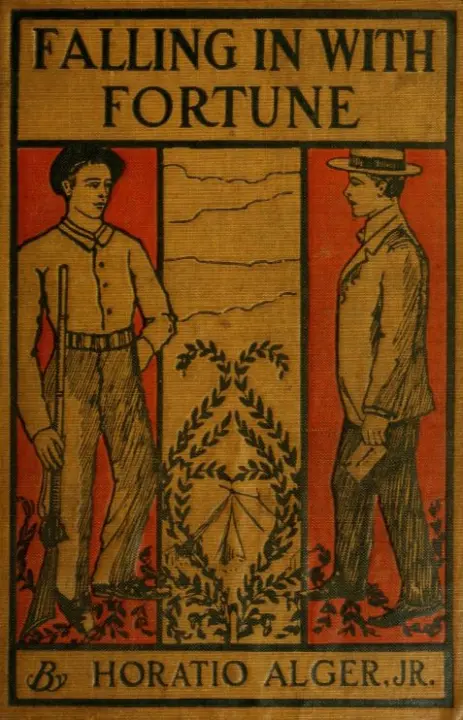
"Tony, the Hero; Or, A Brave Boy's Adventures with a Tramp" by Horatio Alger, Jr. is a novel written in the late 19th century. The story follows Tony, a 14-year-old boy who leads a vagrant life alongside his uncle, Rudolph, a dark and suspicious tramp. The narrative explores themes of resilience, the desire for a better life, and the quest for identity as Tony grapples with his situation and dreams of a stable future. The opening of the book introduces Tony and Rudolph trudging through a country town in New York. As they converse, it becomes apparent that Tony is weary of the life of a tramp and wishes to break free from it, while Rudolph believes in the independence of their lifestyle. The dynamics of their relationship highlight Tony's internal struggle between loyalty to his guardian and the yearning for a more conventional life. Despite feeling stuck, Tony manages to assert his desire for change, setting the stage for his eventual quest for self-discovery and belonging.
Introduction adapted from the source catalogue; source summaries may be automatically generated.
Free to read · English · 71,055 words · No account needed
MAKE TIME FOR A GOOD BOOK
On by default. Untick to stop anonymous reading totals. Each page counts after 10 seconds in view. How this works.
Anonymous counting is on unless you have switched it off.
Belcher paid no attention to the derision with which his words were treated. He was preparing, with one or two companions, to leave the playground when he saw Roger near him with a heavy stone in his hand drawing back for a furious throw.
Partly in sport and partly out of regard for the lad aimed at, he stepped behind the excited boy and caught his arm.
Roger whirled about instantly in a great heat. As Belcher stepped quickly backward, laughing, he let fly the stone at him with all his force, crying:
"Take it yourself, then!"
The stone struck Belcher full in the face, breaking two of his front teeth and knocking him down.
Seeing what he had done, Blake sobered in an instant and ran to the aid of his fallen schoolfellow.
"I didn't mean to, Belcher," said Roger, bending over him remorsefully, and evidently afraid he had killed him.
The boys began to express their indignation quite loudly, but Blake made no attempt to defend himself, only hanging over the injured lad, and declaring how sorry he was.
"Come," pleaded he, "try to get up, and let me help you down to the schoolhouse--I'll pay the doctor anything in the world to make you well again."
But Whitmarsh, as soon as he recovered a little, showed that he resented his sympathy as bitterly as he did his blow.
Pushing away his hand spitefully, he staggered to his feet with the help of another boy, and holding his handkerchief to his bloody face moved off the green, sobbing with pain and revengeful rage.
By the time school commenced he had been assisted to wash and bind up his bleeding mouth, when he started for home, giving Roger a look which was very seldom seen on his face, but which meant plainly enough:
"I'll have the worth of this out of your skin some day, see if I don't!"
That afternoon the boys received a sound lecture from the teacher on the evil of throwing stones, and a penalty was imposed upon the leaders in the reckless sport, Roger among them, who, however, in consideration of his penitence, was only charged with a message to his parents, making full confession and submitting his case entirely to their judgment.
Days passed, and everything went on much as before at the school, save that Belcher Whitmarsh was missed, being at home healing his wound.
Every day that his absence was noticed was to Roger's quick feelings
like a new condemnation.
No one was more pleased, then, than Roger Blake to see Belcher, after a little more than a week had passed, back at his place in school.
Your reading position is saved on this browser. Take it to another device with a library code. Reading pages adapt to text, rather than matching a printed edition.
William Rounseville Alger & Horatio, Jr. Alger

William Rounseville Alger & Horatio, Jr. Alger

Horatio, Jr. Alger
Horatio, Jr. Alger & Edward Stratemeyer
BEHIND THE BOOK
This eBook is for the use of anyone anywhere in the United States and most other parts of the world at no cost and with almost no restrictions whatsoever. You may copy it, give it away or re-use it under the terms of the Project Gutenberg License included with this eBook or online at www.gutenberg.org. If you are not located in the United States, you will have to check the laws of the country where you are located before using this eBook. Read the source licence.
The original source file, including credits and licence, is retained by this library. Request an original-format copy at no charge. Please include the book title and Project Gutenberg identifier #59904.
KEEP YOUR CURIOSITY GOING
Coulson Kernahan

Maurice Baring
Frances Wright
Cécile Tormay

Frederic Jesup Stimson

W. H. P. (William Henry Pope) Jarvis