THE CLASSIC COLLECTION✦A dead man’s diaryCLASSIC FREE BOOKS
A dead man’s diary
Coulson Kernahan
THE CLASSIC COLLECTION · 1902
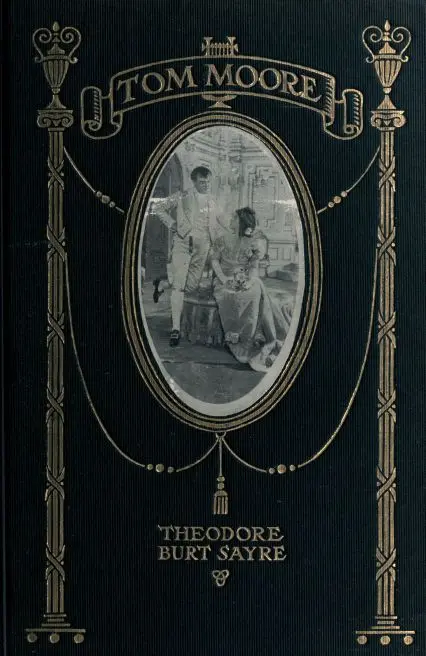
"Tom Moore: An Unhistorical Romance" by Theodore Burt Sayre is a novel written in the early 20th century. The narrative centers around the life of Thomas Moore, an influential Irish poet, capturing both his artistic endeavors and personal relationships during a period marked by ambition and creative struggle. The story introduces Moore as a character of great charm and wit, engaging in both humorous interactions and romantic pursuits in the backdrop of Ireland. At the start of the novel, Thomas Moore is portrayed as a cheerful and aspiring poet who enjoys fishing and reflecting on love as he navigates the rural landscape. The opening depicts Moore in a playful exchange with a young boy named Micky, highlighting his affable nature and deep-seated romantic inclinations. As he ventures toward a nearby school, where Mistress Bessie Dyke, the charming schoolmistress, teaches, their witty banter hints at a budding romance. The initial chapters set a vibrant tone, showcasing Moore's personality and laying the groundwork for the intricate relationships and societal dynamics that will unfold throughout the narrative.
Introduction adapted from the source catalogue; source summaries may be automatically generated.
Free to read · English · 78,818 words · No account needed
MAKE TIME FOR A GOOD BOOK
On by default. Untick to stop anonymous reading totals. Each page counts after 10 seconds in view. How this works.
Anonymous counting is on unless you have switched it off.
"Knowing the gentleman as I do, I promised my better self that, if the young lady did come to London as the protegee of Lovelace, I would fetch you here as mine, so, if the time came when she would require a strong arm and a loving heart to defend her happiness, she need not go far to find it. That very day I left Ireland and have since been abroad. Two days ago I returned from Paris and found to my surprise that Mistress Dyke is acting at Drury Lane. Surely, you did not allow this willingly?"
"Not I, sir. I had nothing to say about it."
"You mean she preferred Lovelace's advice to yours, Mr. Moore?"
"We quarrelled, sir, and from that day--it was the one on which you left the old country, my lord--she has had no good word for me. Circumstances placed me in an unfavorable light, and, believing me faithless, she turned a deaf ear to my warnings. Her father was daft to come to London, and in her anger she consented to make the venture."
"And you followed her here, Mr. Moore?"
"Yes, sir, I made a pretence of studying law in the Middle Temple, but it was wretched work which I soon abandoned. Since then I 've been scribbling for a living and not achieving much success at it, though I have done my best."
"I see," said Brooking, reflectively.
"Did Bessie give you my address?"
"Not she," replied his lordship. "I 've not had the pleasure of renewing my acquaintance with Mistress Dyke."
"She and her father go everywhere," said Moore, proudly. "Thanks to Sir Percival's influence, they have been received by society with open arms. The old gentleman's poems sell, and Bessie is more than ordinarily successful at Drury Lane."
"I am not surprised at the young lady's success," observed the young nobleman. "That of her father in the world of letters would have seemed to me problematical had I not your assurance of his prosperity."
"Then if Bessie did not tell you where I lived, how did you find me
out?"
"I lunched to-day at Mrs. FitzHerbert's. There I saw a poem with your name and address attached."
Moore gave Buster a grateful glance which more than repaid that young gentleman for his enterprise.
"By the way, Mr. Moore, the verses I spoke of were charming. Mrs. FitzHerbert read them aloud to the assembled company, who received them with every mark of pleasure and appreciation. Mr. Sheridan was particularly complimentary in his comments, while no less harsh a critic than Mr. Brummell condescended to express himself as delighted. Have you other poems, Mr. Moore?"
"What is that, Lord Brooking?"
Your reading position is saved on this browser. Take it to another device with a library code. Reading pages adapt to text, rather than matching a printed edition.
BEHIND THE BOOK
This eBook is for the use of anyone anywhere in the United States and most other parts of the world at no cost and with almost no restrictions whatsoever. You may copy it, give it away or re-use it under the terms of the Project Gutenberg License included with this eBook or online at www.gutenberg.org. If you are not located in the United States, you will have to check the laws of the country where you are located before using this eBook. Read the source licence.
The original source file, including credits and licence, is retained by this library. Request an original-format copy at no charge. Please include the book title and Project Gutenberg identifier #41656.
KEEP YOUR CURIOSITY GOING
Coulson Kernahan

Maurice Baring
Frances Wright
Cécile Tormay

Frederic Jesup Stimson

W. H. P. (William Henry Pope) Jarvis