THE CLASSIC COLLECTION✦A dead man’s diaryCLASSIC FREE BOOKS
A dead man’s diary
Coulson Kernahan
THE CLASSIC COLLECTION · 1902
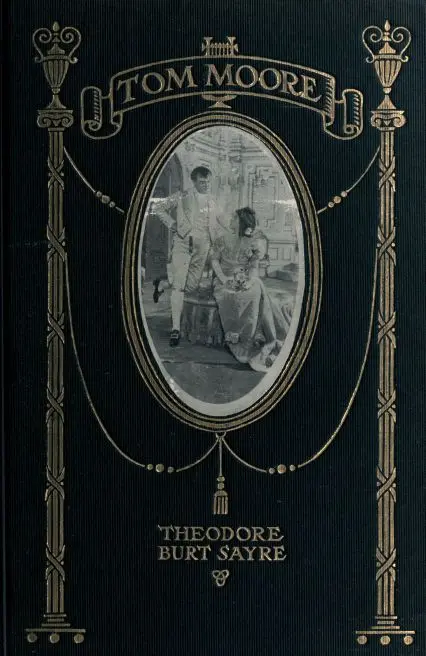
"Tom Moore: An Unhistorical Romance" by Theodore Burt Sayre is a novel written in the early 20th century. The narrative centers around the life of Thomas Moore, an influential Irish poet, capturing both his artistic endeavors and personal relationships during a period marked by ambition and creative struggle. The story introduces Moore as a character of great charm and wit, engaging in both humorous interactions and romantic pursuits in the backdrop of Ireland. At the start of the novel, Thomas Moore is portrayed as a cheerful and aspiring poet who enjoys fishing and reflecting on love as he navigates the rural landscape. The opening depicts Moore in a playful exchange with a young boy named Micky, highlighting his affable nature and deep-seated romantic inclinations. As he ventures toward a nearby school, where Mistress Bessie Dyke, the charming schoolmistress, teaches, their witty banter hints at a budding romance. The initial chapters set a vibrant tone, showcasing Moore's personality and laying the groundwork for the intricate relationships and societal dynamics that will unfold throughout the narrative.
Introduction adapted from the source catalogue; source summaries may be automatically generated.
Free to read · English · 78,818 words · No account needed
MAKE TIME FOR A GOOD BOOK
On by default. Untick to stop anonymous reading totals. Each page counts after 10 seconds in view. How this works.
Anonymous counting is on unless you have switched it off.
"Then it is the wind that tints your proboscis that strawberry pink, is it?" said Moore. "Suppose you have a gentle breeze with me. I 've a new lot of sherry just sent me by Admiral Nelson. You must try it, Mr. Slink. Just a little puff of wind? A squall more or less won't affect the color of your nose."
"I 'll be delighted, sir," replied the cobbler, getting on his feet. "As I always says to Matilda--
"A little wine now and then
Is cheery for the soberest men."
"Ah," said Moore, "I see you are a student of the poets?"
"That verse is of my own decomposition," answered Mr. Slink proudly.
"I believe you," said Moore, suavely. "Your health, Mr. Slink, the health of Mrs. Slink, and all the little Slinkers!"
The cobbler emptied his glass and smacked his lips.
"We forgot to drink your own health, Mr. Moore. We must repair that oversight instanterly, if I may make so bold."
"I 'm flattered," replied Moore. "Buster, fill the glasses again."
"Splendid wine," remarked Mr. Slink, rather thickly for, if the truth be known, he had treated himself twice at the ale-house across the street before mounting to the attic, and this unwonted indulgence in addition to the hospitality of the poet made an aggregate amount of intoxicants quite a little more than he could comfortably contain.
"You 're a judge of liquor, Mr. Moore, a gentleman and a scholar in the bargain. I 've always told Matilda so, I assure you."
"I am delighted to hear you say so, Mr. Slink. Now if you will take this shoe that is tight back to the shop and have it stretched, I 'll pay you for the pair if the one that pinches suits as well as this I have on, when I try it on again."
"Just so, sir," replied the cobbler, cheerfully, meanwhile getting down on his knees to remove the unsatisfactory boot. "I 'll not be long, sir. You can rely on my return, sir, within the hour."
"That will be soon enough," said Moore. "Here is your paper, Mr.
Slink."
"Thank you, sir," said the now thoroughly exhilarated shoemaker, wrapping up the boot, as Moore resumed the well-worn slippers he had temporarily discarded for the test of Mr. Slink's handiwork.
"Good day, Mr. Slink."
"Good day, Mr. Moore."
"Oh, my best respects to Mrs. Slink."
"Matilda will be delighted, sir," replied the cobbler, moving out into the hall with a step decidedly uncertain.
Moore gave vent to a sigh of satisfaction as the sound of feet died away
upon the stairs below.
Your reading position is saved on this browser. Take it to another device with a library code. Reading pages adapt to text, rather than matching a printed edition.
BEHIND THE BOOK
This eBook is for the use of anyone anywhere in the United States and most other parts of the world at no cost and with almost no restrictions whatsoever. You may copy it, give it away or re-use it under the terms of the Project Gutenberg License included with this eBook or online at www.gutenberg.org. If you are not located in the United States, you will have to check the laws of the country where you are located before using this eBook. Read the source licence.
The original source file, including credits and licence, is retained by this library. Request an original-format copy at no charge. Please include the book title and Project Gutenberg identifier #41656.
KEEP YOUR CURIOSITY GOING
Coulson Kernahan

Maurice Baring
Frances Wright
Cécile Tormay

Frederic Jesup Stimson

W. H. P. (William Henry Pope) Jarvis