THE CLASSIC COLLECTION✦A dead man’s diaryCLASSIC FREE BOOKS
A dead man’s diary
Coulson Kernahan
THE CLASSIC COLLECTION · 1902
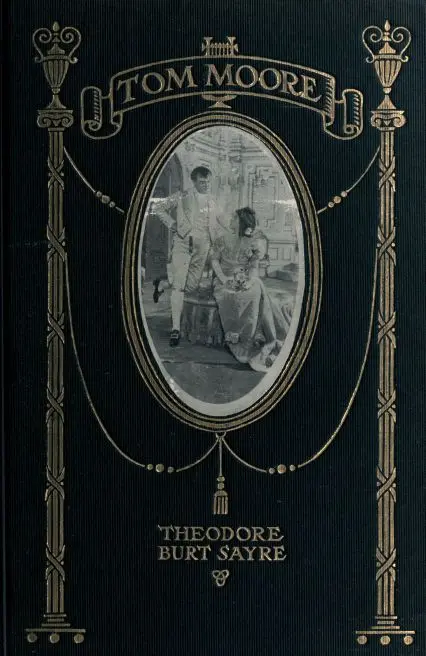
"Tom Moore: An Unhistorical Romance" by Theodore Burt Sayre is a novel written in the early 20th century. The narrative centers around the life of Thomas Moore, an influential Irish poet, capturing both his artistic endeavors and personal relationships during a period marked by ambition and creative struggle. The story introduces Moore as a character of great charm and wit, engaging in both humorous interactions and romantic pursuits in the backdrop of Ireland. At the start of the novel, Thomas Moore is portrayed as a cheerful and aspiring poet who enjoys fishing and reflecting on love as he navigates the rural landscape. The opening depicts Moore in a playful exchange with a young boy named Micky, highlighting his affable nature and deep-seated romantic inclinations. As he ventures toward a nearby school, where Mistress Bessie Dyke, the charming schoolmistress, teaches, their witty banter hints at a budding romance. The initial chapters set a vibrant tone, showcasing Moore's personality and laying the groundwork for the intricate relationships and societal dynamics that will unfold throughout the narrative.
Introduction adapted from the source catalogue; source summaries may be automatically generated.
Free to read · English · 78,818 words · No account needed
MAKE TIME FOR A GOOD BOOK
On by default. Untick to stop anonymous reading totals. Each page counts after 10 seconds in view. How this works.
Anonymous counting is on unless you have switched it off.
"I have, sir," replied the cobbler, exhibiting a paper-wrapped bundle, nestling beneath his arm. "Here they are, sir, but the money, sir? You promised cash, sir. That is to say, sir, I intimidated as delicatesome as I could that I must have the coin, sir, before I could let you have them, sir."
"So I have been informed by my man," replied Moore. "Really, my good sir, such suspicions are unworthy of you. Believe me, it is with regret I perceive the taint of cynicism in an otherwise charming character."
"Yes, sir," answered Mr. Slink. "Yes, sir. Them is just my own sentiments, but I have a large family, and one that I may say, proudly and truthfully, sir, is on the steady increase."
"My sympathy to you in your misfortune," said Moore, hastily. "Ah, England owes much of her advancement to her noble citizens. It is such men as you make possible the Orphan Asylums, for without the young and deserving what would become of such worthy institutions?"
"Sir, you take the werry words out o' my mouth. Scarcely a day passes but I says much the same thing to Matilda. You see, she being a mother and a woman--"
"The natural implication, believe me, Mr. Slink," interrupted Moore.
"Oh, quite, sir. One usually follows on the other. Matilda is apt to become downcast when she compares population with pocket-book, for as one goes up the other goes down, so I made her a solemn promise after the sixth that business should be placed on a strictly cash basis in the future."
"Ah," observed Moore, interestedly, "and did that encourage the good
woman?"
"I think it must have, for our next blessing was twins, boy and girl,
sir."
"Cause and effect is a most diverting study," observed Moore. "Now that you have explained the reason for your insisting upon immediate material compensation for your labor, I cease to regard such a stipulation as insulting."
"Yes, sir," replied the gratified cobbler.
"But, Mr. Slink, have you thought of the result that might ensue if too much encouragement be provided for so lofty an ambition as that which stirs your wife's existence? Twins can be endured, but, sir, think of triplets!"
"Well, sir, I holds that there is luck in odd numbers," answered Mr. Slink, quite unimpressed by the poet's argument and its obvious conclusions, "so, if you 'll let me, I shall be delighted to enleather your pedals, if I may make bold to so term your feet."
"Just as you say, Mr. Slink; but, of course, before I part with my money I naturally desire to be certain that the boots fit me."
Your reading position is saved on this browser. Take it to another device with a library code. Reading pages adapt to text, rather than matching a printed edition.
BEHIND THE BOOK
This eBook is for the use of anyone anywhere in the United States and most other parts of the world at no cost and with almost no restrictions whatsoever. You may copy it, give it away or re-use it under the terms of the Project Gutenberg License included with this eBook or online at www.gutenberg.org. If you are not located in the United States, you will have to check the laws of the country where you are located before using this eBook. Read the source licence.
The original source file, including credits and licence, is retained by this library. Request an original-format copy at no charge. Please include the book title and Project Gutenberg identifier #41656.
KEEP YOUR CURIOSITY GOING
Coulson Kernahan

Maurice Baring
Frances Wright
Cécile Tormay

Frederic Jesup Stimson

W. H. P. (William Henry Pope) Jarvis