THE CLASSIC COLLECTION✦A dead man’s diaryCLASSIC FREE BOOKS
A dead man’s diary
Coulson Kernahan
THE CLASSIC COLLECTION · 1902
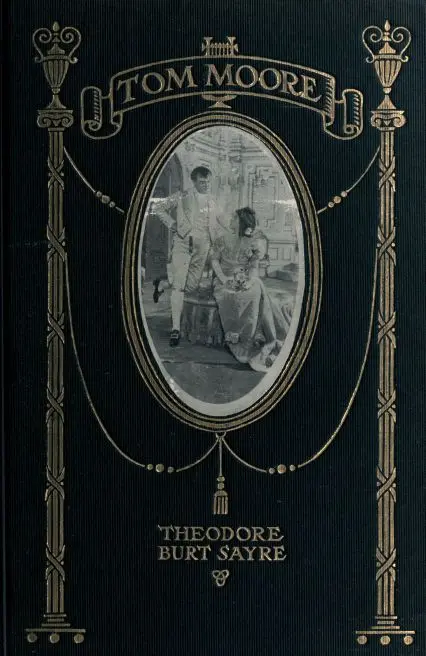
"Tom Moore: An Unhistorical Romance" by Theodore Burt Sayre is a novel written in the early 20th century. The narrative centers around the life of Thomas Moore, an influential Irish poet, capturing both his artistic endeavors and personal relationships during a period marked by ambition and creative struggle. The story introduces Moore as a character of great charm and wit, engaging in both humorous interactions and romantic pursuits in the backdrop of Ireland. At the start of the novel, Thomas Moore is portrayed as a cheerful and aspiring poet who enjoys fishing and reflecting on love as he navigates the rural landscape. The opening depicts Moore in a playful exchange with a young boy named Micky, highlighting his affable nature and deep-seated romantic inclinations. As he ventures toward a nearby school, where Mistress Bessie Dyke, the charming schoolmistress, teaches, their witty banter hints at a budding romance. The initial chapters set a vibrant tone, showcasing Moore's personality and laying the groundwork for the intricate relationships and societal dynamics that will unfold throughout the narrative.
Introduction adapted from the source catalogue; source summaries may be automatically generated.
Free to read · English · 78,818 words · No account needed
MAKE TIME FOR A GOOD BOOK
On by default. Untick to stop anonymous reading totals. Each page counts after 10 seconds in view. How this works.
Anonymous counting is on unless you have switched it off.
Moore, touched to the heart at the lad's generous devotion, felt the tears gathering in his eyes, but forced them back with an effort, though his voice shook as he answered:
"My dear, brave, little fellow, how can I doubt Providence when there is one such loyal heart near me? Stay, Buster. We will rise or fall together."
As he spoke he held his hand out to the boy, who took it joyfully.
"Yessir, that we will, sir. You hand me, hand Lord Castlereagh."
The bulldog, as though understanding the situation, thrust his cold nose in Moore's hand, and wagged his tail sympathetically as the poet crossed to the fireplace after patting the ugly head, rough with the scars of years of battling.
"Buster," continued Moore, without turning round.
"Yessir?"
"May God bless you, lad," said the poet, bowing his head on the mantelpiece to hide the tears that would come in spite of him.
"Thank you, sir."
Then as Moore dropped into the old arm-chair beside the hearth, the boy, resolved to wake him from his unhappy mood, burst into song, rendering one of his master's most recent productions in a style worthy of a scissor-grinding machine.
"Horf in the stilly night
H'ere slumber's chains 'as bound me,
The shadows hof hother days
Comes a-gathering round me."
Moore, roused to mental activity by the racket, sat bolt upright in
dismay.
"Buster!" he cried, reprovingly, but the boy continued at the top of his lungs as though he had not heard.
"The smiles, the tears,
Hof boyish years--"
Bang! came a book against the door from across the room, missing Buster, who had dodged, by a few inches.
"For Heaven's sake stop that caterwauling," cried Moore. "You put my
teeth on edge."
Lord Castlereagh became victim of a hallucination that the book thrown by Moore was a rat of large size, and was fast shaking the life out of it when Buster descended upon him and effected a rescue.
"Blow me, Lord Castlereagh, if you hain't a knocking the stuffin' hout of 'The Rivals,'" he remarked reprovingly.
"Out of the rivals?" said Moore, with a laugh. "Faith, I 'd like to try the same game on mine, Buster. It's the simplest way, after all; isn't it, doggie?"
Lord Castlereagh became quite giddy, and, possessed by a puppyish fancy, decided upon an immediate and vigorous pursuit of his stumpy tail as the proceeding next in order, prosecuting his endeavor with such enthusiasm that he collided violently with everything in the room, including Moore and Buster, in the space of a moment, abandoning his enterprise only when winded as a result of running broadside on against a wall.
Your reading position is saved on this browser. Take it to another device with a library code. Reading pages adapt to text, rather than matching a printed edition.
BEHIND THE BOOK
This eBook is for the use of anyone anywhere in the United States and most other parts of the world at no cost and with almost no restrictions whatsoever. You may copy it, give it away or re-use it under the terms of the Project Gutenberg License included with this eBook or online at www.gutenberg.org. If you are not located in the United States, you will have to check the laws of the country where you are located before using this eBook. Read the source licence.
The original source file, including credits and licence, is retained by this library. Request an original-format copy at no charge. Please include the book title and Project Gutenberg identifier #41656.
KEEP YOUR CURIOSITY GOING
Coulson Kernahan

Maurice Baring
Frances Wright
Cécile Tormay

Frederic Jesup Stimson

W. H. P. (William Henry Pope) Jarvis