THE CLASSIC COLLECTION✦A dead man’s diaryCLASSIC FREE BOOKS
A dead man’s diary
Coulson Kernahan
THE CLASSIC COLLECTION · 1902
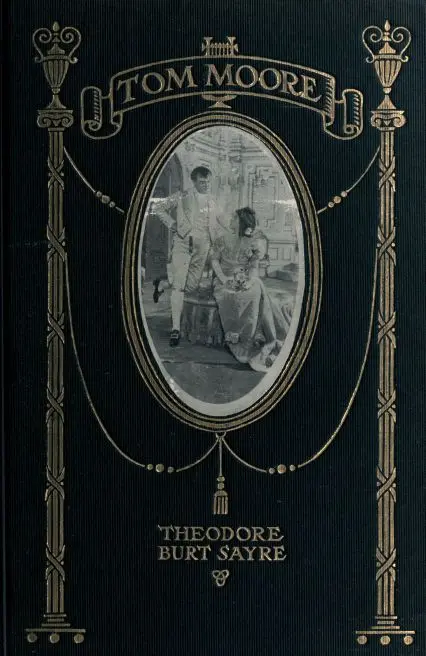
"Tom Moore: An Unhistorical Romance" by Theodore Burt Sayre is a novel written in the early 20th century. The narrative centers around the life of Thomas Moore, an influential Irish poet, capturing both his artistic endeavors and personal relationships during a period marked by ambition and creative struggle. The story introduces Moore as a character of great charm and wit, engaging in both humorous interactions and romantic pursuits in the backdrop of Ireland. At the start of the novel, Thomas Moore is portrayed as a cheerful and aspiring poet who enjoys fishing and reflecting on love as he navigates the rural landscape. The opening depicts Moore in a playful exchange with a young boy named Micky, highlighting his affable nature and deep-seated romantic inclinations. As he ventures toward a nearby school, where Mistress Bessie Dyke, the charming schoolmistress, teaches, their witty banter hints at a budding romance. The initial chapters set a vibrant tone, showcasing Moore's personality and laying the groundwork for the intricate relationships and societal dynamics that will unfold throughout the narrative.
Introduction adapted from the source catalogue; source summaries may be automatically generated.
Free to read · English · 78,818 words · No account needed
MAKE TIME FOR A GOOD BOOK
On by default. Untick to stop anonymous reading totals. Each page counts after 10 seconds in view. How this works.
Anonymous counting is on unless you have switched it off.
"You know betther, Tom Moore. Was n't it my old man, God rest his good soul in peace, that taught you your A-B-C's in Ireland? Yes it was, and many 's the time he said to me, 'Thot bye would blarny the horns off a cow's forehead if he cud spake her language.'"
"Oh! those were the good old days!" began the poet, hoping to touch a sentimental spot in the old lady's memory.
"Yis, I know all thot," she interrupted. "You almost worried the poor
man to death."
"Well," said Moore, half seriously, "you are getting even with me now,
are n't you?"
"Niver mind thot. If you don't pay me, out you walk this day, me
bucko."
"Won't you let me run if I prefer it?"
"No impudence! When will you pay me?"
Moore turned to Buster, interrogatively.
"When, my lad, will it be most convenient for us to pay Mrs. Malone?" he
asked, gravely.
Buster scratched his head and pondered, but no answer was forthcoming, so Moore decided to depend upon his own resources for a satisfactory reply.
"After I am dressed," said he. "Come back in half an hour when I am
dressed and I 'll pay you."
"Very well, then," replied Mrs. Malone, "I 'll come up again in half an hour by the clock. And no tricks. I 'm watching the hall, so you can't get away. Do you hear? I'm watching the hall."
Moore nodded his head approvingly.
"Quite right, Mrs. Malone," said he. "It's nice to know there is no danger of the hall being stolen. Sure, what would we do without it?"
"Bah!" exclaimed the landlady, and with her head held scornfully high, she marched out, slamming the door by way of rebuke to the levity of her lodger.
"My heye!" exclaimed Buster, breathing more freely. "She 's more wicious than usual to-day, Mr. Moore."
"I know, lad, but we can't blame her," replied the poet. "She is a good old soul, and, as she says, it was her husband who first whacked knowledge into me."
"Hi suppose 'ee were a fine scholard."
"Well," said Moore, "he was all right when he was sober, but he was never sober that I remember. He was always in high spirits as a result of the spirits being high in him. However, that has nothing to do with the rent. Is the ladder that leads to the roof of the house next door out the window?"
"Yessir," said Buster. "You can go hout the same way you did
yesterday."
"Good," said Moore, "then I won't have to disturb Mrs. Malone's watch on
the hall."
"No, sir, that you won't."
Your reading position is saved on this browser. Take it to another device with a library code. Reading pages adapt to text, rather than matching a printed edition.
BEHIND THE BOOK
This eBook is for the use of anyone anywhere in the United States and most other parts of the world at no cost and with almost no restrictions whatsoever. You may copy it, give it away or re-use it under the terms of the Project Gutenberg License included with this eBook or online at www.gutenberg.org. If you are not located in the United States, you will have to check the laws of the country where you are located before using this eBook. Read the source licence.
The original source file, including credits and licence, is retained by this library. Request an original-format copy at no charge. Please include the book title and Project Gutenberg identifier #41656.
KEEP YOUR CURIOSITY GOING
Coulson Kernahan

Maurice Baring
Frances Wright
Cécile Tormay

Frederic Jesup Stimson

W. H. P. (William Henry Pope) Jarvis