THE CLASSIC COLLECTION✦A dead man’s diaryCLASSIC FREE BOOKS
A dead man’s diary
Coulson Kernahan
THE CLASSIC COLLECTION · 1902
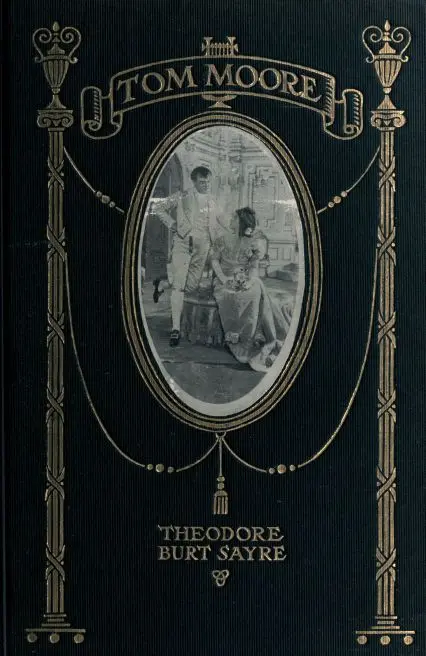
"Tom Moore: An Unhistorical Romance" by Theodore Burt Sayre is a novel written in the early 20th century. The narrative centers around the life of Thomas Moore, an influential Irish poet, capturing both his artistic endeavors and personal relationships during a period marked by ambition and creative struggle. The story introduces Moore as a character of great charm and wit, engaging in both humorous interactions and romantic pursuits in the backdrop of Ireland. At the start of the novel, Thomas Moore is portrayed as a cheerful and aspiring poet who enjoys fishing and reflecting on love as he navigates the rural landscape. The opening depicts Moore in a playful exchange with a young boy named Micky, highlighting his affable nature and deep-seated romantic inclinations. As he ventures toward a nearby school, where Mistress Bessie Dyke, the charming schoolmistress, teaches, their witty banter hints at a budding romance. The initial chapters set a vibrant tone, showcasing Moore's personality and laying the groundwork for the intricate relationships and societal dynamics that will unfold throughout the narrative.
Introduction adapted from the source catalogue; source summaries may be automatically generated.
Free to read · English · 78,818 words · No account needed
MAKE TIME FOR A GOOD BOOK
On by default. Untick to stop anonymous reading totals. Each page counts after 10 seconds in view. How this works.
Anonymous counting is on unless you have switched it off.
Seizing a brush from the table, the boy began to rub a dilapidated topboot vigorously, meanwhile humming in cheerful discord a verse of a song, as yet unknown to the general public, but destined to become a permanent favorite with all lovers of music and poetry.
"'Twas the last rose hof summer left bloomink alone."
A knock on the door interrupted his song, but before he could reply to it, in marched Mrs. Malone with arms akimbo, and a determined expression making grave a face naturally good humored.
"Oh, hit's you, his it?" said Buster, regarding the woman with
disapproving eye.
"I suppose you t'ought it was the Prince of Wales," replied Mrs. Malone.
"No, Hi didn't, 'cos w'y? 'Cos 'is Royal 'Ighness never hopens the door till Hi says come hin. 'Ee 's got better manners, 'ee 'as," replied the boy.
The landlady, not at all impressed, snapped her fingers scornfully
"That for you and the prince," she said, her nose in the air.
"Mrs. Malone, you 're a hanarchist," declared Buster, shocked beyond
expression.
"Mr. Buster, you 're a liar," replied the landlady, promptly.
"You 're no judge, Mrs. Malone. We honly puts hup with hanarchy from Mr. Dyke, the poet, who comes 'ere and reads 'is treason reeking verses to Mr. Moore. One hanarchist on hour calling list is enough."
"You call me that name again, and I 'll smack you," exclaimed Mrs.
Malone, pugnaciously.
"Smack me!" echoed Buster, in trepidation. "Hif you kisses me, Mrs.
Malone, Hi 'll scream."
"Kiss you, indeed!" snorted the landlady, scornfully.
"Don't you dare," warned Buster, getting behind a table for greater
safety.
"Is your good-for-nothing master in?"
"Hi am not hacquainted with no such hindividual. Hif you means Mr.
Moore, 'ee 's hout."
Mrs. Malone looked her disbelief, and pointed grimly to the boots, which Buster had dropped upon the table.
"Oh," said Buster, a trifle dashed, but rallying immediately, "these is souvenirs of the great poet. This goes to 'is Reverence the Harchbishop of Canterbury to be used as a snuff box, and this his to stand on the dressing-table of Mrs. Fitz'erbert 'erself. She will put 'er combings hinto it."
"Thot jezebel?" ejaculated the woman, with a sniff of disdain.
"But Mrs. Fitz'erbert does n't 'ail from Jersey," corrected Buster. "She 's from Wicklow, Hireland."
"She 's not," cried Mrs. Malone in a high dudgeon. "We don't raise her kind there. Only dacent people like me comes from the Vale of Avoca."
Buster looked interested.
"Say, tell us, his there hany more like you there?" he asked anxiously.
"There is," replied Mrs. Malone, proudly, "but none betther."
Your reading position is saved on this browser. Take it to another device with a library code. Reading pages adapt to text, rather than matching a printed edition.
BEHIND THE BOOK
This eBook is for the use of anyone anywhere in the United States and most other parts of the world at no cost and with almost no restrictions whatsoever. You may copy it, give it away or re-use it under the terms of the Project Gutenberg License included with this eBook or online at www.gutenberg.org. If you are not located in the United States, you will have to check the laws of the country where you are located before using this eBook. Read the source licence.
The original source file, including credits and licence, is retained by this library. Request an original-format copy at no charge. Please include the book title and Project Gutenberg identifier #41656.
KEEP YOUR CURIOSITY GOING
Coulson Kernahan

Maurice Baring
Frances Wright
Cécile Tormay

Frederic Jesup Stimson

W. H. P. (William Henry Pope) Jarvis