THE CLASSIC COLLECTION✦A dead man’s diaryCLASSIC FREE BOOKS
A dead man’s diary
Coulson Kernahan
THE CLASSIC COLLECTION · 1902
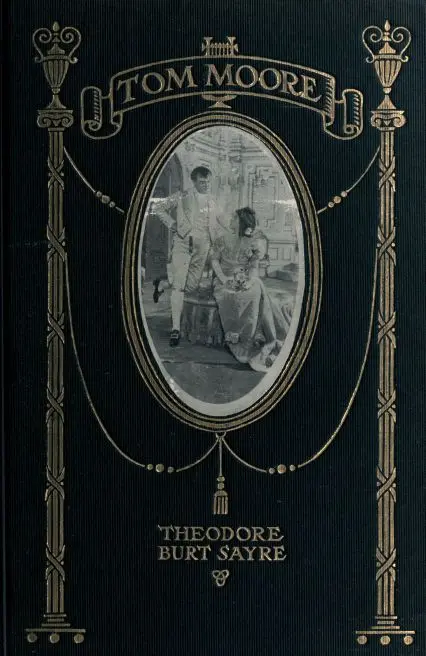
"Tom Moore: An Unhistorical Romance" by Theodore Burt Sayre is a novel written in the early 20th century. The narrative centers around the life of Thomas Moore, an influential Irish poet, capturing both his artistic endeavors and personal relationships during a period marked by ambition and creative struggle. The story introduces Moore as a character of great charm and wit, engaging in both humorous interactions and romantic pursuits in the backdrop of Ireland. At the start of the novel, Thomas Moore is portrayed as a cheerful and aspiring poet who enjoys fishing and reflecting on love as he navigates the rural landscape. The opening depicts Moore in a playful exchange with a young boy named Micky, highlighting his affable nature and deep-seated romantic inclinations. As he ventures toward a nearby school, where Mistress Bessie Dyke, the charming schoolmistress, teaches, their witty banter hints at a budding romance. The initial chapters set a vibrant tone, showcasing Moore's personality and laying the groundwork for the intricate relationships and societal dynamics that will unfold throughout the narrative.
Introduction adapted from the source catalogue; source summaries may be automatically generated.
Free to read · English · 78,818 words · No account needed
MAKE TIME FOR A GOOD BOOK
On by default. Untick to stop anonymous reading totals. Each page counts after 10 seconds in view. How this works.
Anonymous counting is on unless you have switched it off.
"La, Mistress Farrell," he sighed, prettily, "your father is indeed fortunate. With such a son and such a daughter his old age should be crowned with happiness and content."
"Father finds much to criticise," said the girl. "I fear he takes no such flattering view of his children as you insinuate he should."
"Criticise?" repeated Sir Percival in a tone of astonishment. "What can
he wish for?"
"Much, if one may judge from his complaints," answered Winnie, not a little puffed up by the baronet's condescension and approval. "I 'll not keep you from your business with my prattle, sir. Terence, I will go on to Mrs. McCloud's and stop for you at the school-house on my way back."
"You are most amiable, Mistress Farrell," said Sir Percival, gratefully.
The girl courtesied in what she hoped was a good imitation of the London manner, and continued on her way, leaving the two gentlemen to stroll toward the schoolhouse.
"Well, Sir Percival," said Farrell knowingly, "what is afoot?"
As he spoke he gave the baronet a searching look, which drew forth a pleasant smile by way of answer.
"You never lose time in getting to the point."
"Except when it's a sword," replied Farrell. "Then I can be devilish
slow."
Sir Percival's face wore a pensive look as he regarded his friend.
"For a country squire you present a wonderfully fashionable appearance," he remarked, his eye travelling approvingly from the bell-crowned beaver on the youth's well-shaped head to the carefully tied stock and thence to the immaculately polished boots which ornamented feet both small and neatly turned. "Your costume would not be out of place on Pall Mall, Terence."
With characteristic cunning the courtier had detected young Farrell's weak point. The youthful Irishman's fondest wish was that he might some day be acknowledged as a beau in no less a place than London itself; a city which dictated fashion to the rest of the kingdom, drawing its own inspiration from the finicky fancy of George Brummell, now at the height of his power as dictator of society.
Farrell flushed with pleasure at Sir Percival's commendation.
"I' faith," he answered, "even in Ireland we are not entirely lacking in
taste."
"No, not entirely," observed the baronet. "And the cards, Terence? Does Fortune smile upon you these days?"
"Not so frequently as my pocket demands, sir. To tell the truth, I 've played in most villainous luck this last week."
"Then possibly you would regard the opportunity to earn one hundred
pounds with favoring eye?"
"Would I? Try me, Sir Percival," answered Farrell eagerly.
Your reading position is saved on this browser. Take it to another device with a library code. Reading pages adapt to text, rather than matching a printed edition.
BEHIND THE BOOK
This eBook is for the use of anyone anywhere in the United States and most other parts of the world at no cost and with almost no restrictions whatsoever. You may copy it, give it away or re-use it under the terms of the Project Gutenberg License included with this eBook or online at www.gutenberg.org. If you are not located in the United States, you will have to check the laws of the country where you are located before using this eBook. Read the source licence.
The original source file, including credits and licence, is retained by this library. Request an original-format copy at no charge. Please include the book title and Project Gutenberg identifier #41656.
KEEP YOUR CURIOSITY GOING
Coulson Kernahan

Maurice Baring
Frances Wright
Cécile Tormay

Frederic Jesup Stimson

W. H. P. (William Henry Pope) Jarvis