THE CLASSIC COLLECTION✦A dead man’s diaryCLASSIC FREE BOOKS
A dead man’s diary
Coulson Kernahan
THE CLASSIC COLLECTION · 1902
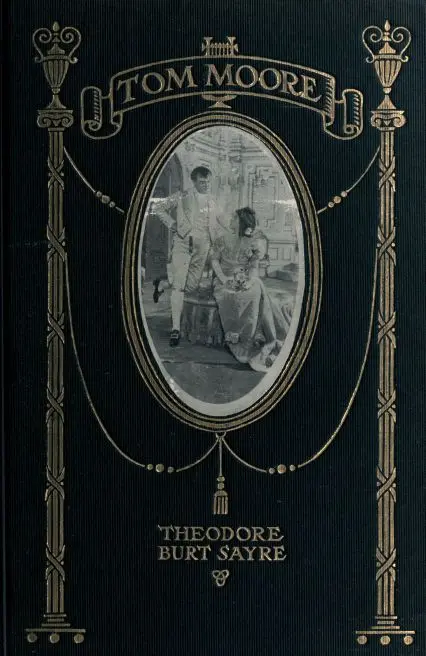
"Tom Moore: An Unhistorical Romance" by Theodore Burt Sayre is a novel written in the early 20th century. The narrative centers around the life of Thomas Moore, an influential Irish poet, capturing both his artistic endeavors and personal relationships during a period marked by ambition and creative struggle. The story introduces Moore as a character of great charm and wit, engaging in both humorous interactions and romantic pursuits in the backdrop of Ireland. At the start of the novel, Thomas Moore is portrayed as a cheerful and aspiring poet who enjoys fishing and reflecting on love as he navigates the rural landscape. The opening depicts Moore in a playful exchange with a young boy named Micky, highlighting his affable nature and deep-seated romantic inclinations. As he ventures toward a nearby school, where Mistress Bessie Dyke, the charming schoolmistress, teaches, their witty banter hints at a budding romance. The initial chapters set a vibrant tone, showcasing Moore's personality and laying the groundwork for the intricate relationships and societal dynamics that will unfold throughout the narrative.
Introduction adapted from the source catalogue; source summaries may be automatically generated.
Free to read · English · 78,818 words · No account needed
MAKE TIME FOR A GOOD BOOK
On by default. Untick to stop anonymous reading totals. Each page counts after 10 seconds in view. How this works.
Anonymous counting is on unless you have switched it off.
Dyke flushed with pleasure at the heartiness of the great gentleman's greeting. He was a pleasant-faced old man, simple and good-hearted, too prone to trust in the honor of others, but erring only by giving them credit for benevolence and honesty equal to his own. He was quite a portly old person, with a face strongly lined in spite of its placid expression. His hair, worn rather long as became a poet, was a wavy, shimmery gray, and he walked with a rambling sort of gait that suggested vaguely a compromise between a stride and a toddle. Sir Percival's quick eye caught sight of a suggestive roll of manuscript sticking out of the new-comer's pocket.
"Ah!" exclaimed the baronet, tapping the paper with his cane. "I see a paper peeking from your coat, Mr. Dyke. Another poem, I 'll be bound. Come now, sir, out with it. I swear, we will hear it, eh, Brooking?"
"I 'm afraid we will," murmured his lordship beneath his breath, but he bowed in pleasant assent in reply to the old gentleman's inquiring look.
"What?" continued Sir Percival. "Too modest, eh? Then I will read it myself," and, with a gesture gracefully apologetic for the liberty, he drew the roll from Dyke's pocket.
"Really, Sir Percival," stammered the old man, in pleased embarrassment.
"My poor effort--"
"Your poor effort," repeated Sir Percival, scanning the first page through his eyeglass, as he spoke. "If this be his poor effort, Brooking, what would his best be?"
"God knows!" murmured Brooking to himself, "I hate to think of it."
Sir Percival's quick ear caught his lordship's muttered remark, so, as the flustered poet crossed to the window in hope of obtaining a glimpse of the absent schoolmistress, the baronet turned to Brooking with a laugh.
"Perhaps God knows," he whispered, "or perhaps it is better known in the other place. Look at it, Brooking."
"Must I?" replied the younger man, reluctantly.
"Of course you must," asserted Sir Percival. Then more loudly he
continued:
"Genius in every line, and more between them. My dear Dyke, we must have
you in England."
"You think so, Sir Percival?" said the old gentleman, greatly flattered.
"I am sure of it," answered the other as though convinced, returning the poem to its author. "But once you are there, no seditious political versifying like this. Why, sir, the Prince would foam at the mouth if he saw this. Love lyrics, sir, for the ladies. That must be your game, dear man."
Your reading position is saved on this browser. Take it to another device with a library code. Reading pages adapt to text, rather than matching a printed edition.
BEHIND THE BOOK
This eBook is for the use of anyone anywhere in the United States and most other parts of the world at no cost and with almost no restrictions whatsoever. You may copy it, give it away or re-use it under the terms of the Project Gutenberg License included with this eBook or online at www.gutenberg.org. If you are not located in the United States, you will have to check the laws of the country where you are located before using this eBook. Read the source licence.
The original source file, including credits and licence, is retained by this library. Request an original-format copy at no charge. Please include the book title and Project Gutenberg identifier #41656.
KEEP YOUR CURIOSITY GOING
Coulson Kernahan

Maurice Baring
Frances Wright
Cécile Tormay

Frederic Jesup Stimson

W. H. P. (William Henry Pope) Jarvis