THE CLASSIC COLLECTION✦A dead man’s diaryCLASSIC FREE BOOKS
A dead man’s diary
Coulson Kernahan
THE CLASSIC COLLECTION · 1902
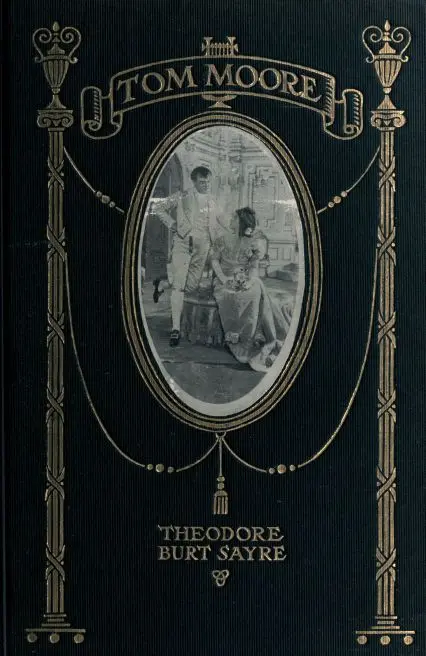
"Tom Moore: An Unhistorical Romance" by Theodore Burt Sayre is a novel written in the early 20th century. The narrative centers around the life of Thomas Moore, an influential Irish poet, capturing both his artistic endeavors and personal relationships during a period marked by ambition and creative struggle. The story introduces Moore as a character of great charm and wit, engaging in both humorous interactions and romantic pursuits in the backdrop of Ireland. At the start of the novel, Thomas Moore is portrayed as a cheerful and aspiring poet who enjoys fishing and reflecting on love as he navigates the rural landscape. The opening depicts Moore in a playful exchange with a young boy named Micky, highlighting his affable nature and deep-seated romantic inclinations. As he ventures toward a nearby school, where Mistress Bessie Dyke, the charming schoolmistress, teaches, their witty banter hints at a budding romance. The initial chapters set a vibrant tone, showcasing Moore's personality and laying the groundwork for the intricate relationships and societal dynamics that will unfold throughout the narrative.
Introduction adapted from the source catalogue; source summaries may be automatically generated.
Free to read · English · 78,818 words · No account needed
MAKE TIME FOR A GOOD BOOK
On by default. Untick to stop anonymous reading totals. Each page counts after 10 seconds in view. How this works.
Anonymous counting is on unless you have switched it off.
The other exception was Sir Percival, who was so gay, so generous, so witty that Brooking, blinded by the glitter of a sparklingly brilliant personality, neither saw nor felt the hideous moral imperfections that this winning gentleman hid beneath his splendid exterior. The several peccadilloes really beyond all extenuation or apology of which the baronet had been guilty had never been brought to the attention of his younger friend and so at the time of which this tale is a chronicle it would have been difficult to find two closer cronies than this pair of young noblemen, who were strolling leisurely in the direction of the schoolhouse.
Sir Percival looked at Brooking quizzically.
"You do not approve, lad," he said with a little laugh. "You 're too good a fellow, I am afraid."
"I wish I could be as timid about you," replied Brooking, pleasantly.
"Can't you, dear boy? No? Pray, why not?"
"Do you really wish to know?" asked Brooking, hesitating a little.
Sir Percival treated himself daintily to a pinch of snuff and brushed the dust from his coat with an embroidered handkerchief.
"I think you wish to tell me," he answered, smiling. "It amounts to the same thing between friends, doesn't it?"
"I think we may as well understand each other now," said Brooking, in a
serious tone.
"I quite agree with you," remarked Sir Percival, inwardly wondering what this introduction would lead to.
"I have been postponing this conversation from day to day for the last
week."
"Indeed? And why?"
"It is rather a delicate subject."
"I would prefer one that is indelicate, if it is not inconvenient,"
suggested Sir Percival.
"For once in your life, Lovelace, be serious."
"Even that I will not deny you. Proceed."
"We have been pals since boyhood. As little lads we blacked each
other's eyes."
"We did," admitted Sir Percival, laughing gently, "and bled each other's
noses, too."
"We licked the same stick of candy."
"Gad, yes. My favorite was peppermint. I remember it as well as though
it were but yesterday."
"We grew up to manhood together," continued Brooking, half sadly. "A pretty couple of rakes we were, too."
"We are still, dear lad," corrected Sir Percival. "Two very pretty little libertines, upon my honor."
"In London, where we were well known as an unworthy couple, I have no
fault to find with you."
"No?" said the baronet in surprise. "To tell the truth, that statement causes me some little astonishment."
"We sailed under our true colors there--"
"But," interrupted Sir Percival, "the same flag is still flying, old
man."
Your reading position is saved on this browser. Take it to another device with a library code. Reading pages adapt to text, rather than matching a printed edition.
BEHIND THE BOOK
This eBook is for the use of anyone anywhere in the United States and most other parts of the world at no cost and with almost no restrictions whatsoever. You may copy it, give it away or re-use it under the terms of the Project Gutenberg License included with this eBook or online at www.gutenberg.org. If you are not located in the United States, you will have to check the laws of the country where you are located before using this eBook. Read the source licence.
The original source file, including credits and licence, is retained by this library. Request an original-format copy at no charge. Please include the book title and Project Gutenberg identifier #41656.
KEEP YOUR CURIOSITY GOING
Coulson Kernahan

Maurice Baring
Frances Wright
Cécile Tormay

Frederic Jesup Stimson

W. H. P. (William Henry Pope) Jarvis