THE CLASSIC COLLECTION✦A dead man’s diaryCLASSIC FREE BOOKS
A dead man’s diary
Coulson Kernahan
THE CLASSIC COLLECTION · 1902
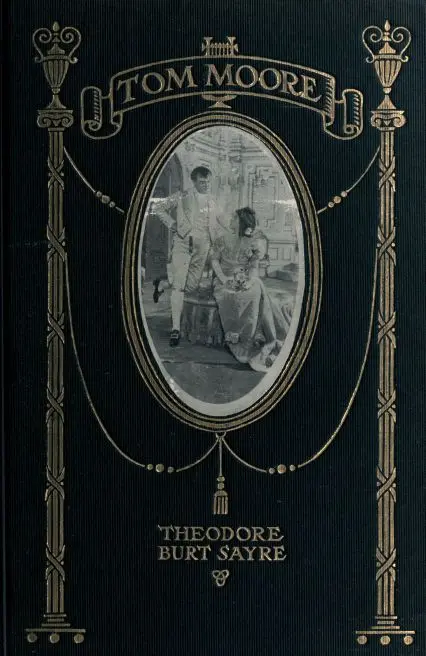
"Tom Moore: An Unhistorical Romance" by Theodore Burt Sayre is a novel written in the early 20th century. The narrative centers around the life of Thomas Moore, an influential Irish poet, capturing both his artistic endeavors and personal relationships during a period marked by ambition and creative struggle. The story introduces Moore as a character of great charm and wit, engaging in both humorous interactions and romantic pursuits in the backdrop of Ireland. At the start of the novel, Thomas Moore is portrayed as a cheerful and aspiring poet who enjoys fishing and reflecting on love as he navigates the rural landscape. The opening depicts Moore in a playful exchange with a young boy named Micky, highlighting his affable nature and deep-seated romantic inclinations. As he ventures toward a nearby school, where Mistress Bessie Dyke, the charming schoolmistress, teaches, their witty banter hints at a budding romance. The initial chapters set a vibrant tone, showcasing Moore's personality and laying the groundwork for the intricate relationships and societal dynamics that will unfold throughout the narrative.
Introduction adapted from the source catalogue; source summaries may be automatically generated.
Free to read · English · 78,818 words · No account needed
MAKE TIME FOR A GOOD BOOK
On by default. Untick to stop anonymous reading totals. Each page counts after 10 seconds in view. How this works.
Anonymous counting is on unless you have switched it off.
"Not I, sir. You rid us of them very neatly."
"For a while, your Highness. They may return."
"True," said Wales, "so we had best lose no time in getting help."
"Your Highness is right," said the poet, beginning to restore the room to something like its old appearance. "Father-in-law, run out and--"
"Let me arrange this," interrupted the Prince. "Mr. Dyke, if you will carry this ring to the house of Sir Percival Lovelace, you will find him at supper. Tell him of my predicament and say I bid him take such steps as he may deem best to extricate me from this misadventure without betraying my identity."
Mr. Dyke took the ring held out to him by the Prince.
"I 'll make haste," he said, and toddled out and down the stairs as fast as his legs could carry him.
Wales accepted the chair which Moore placed for him.
"Sir," said he, "you have a talent for intrigue."
"Ah, Sire," said Moore, ingenuously, "if it were not disrespectful, I would return the compliment. Your Highness must have passed an exciting evening."
"Quite true, Mr. Moore, but I fancy I can do without such excitement in
the future."
"I rejoice to hear you say that, your Highness," said Moore, sincerely.
"Indeed, Mr. Moore? And why so, if I may ask."
"Because," said the poet so winningly that it was quite impossible for even a prince of the blood to take offence, "'The First Gentleman of Europe' is too proud a title to be lightly risked."
Wales grew red and bit his lip.
"I accept your reproof," he said. "It is not undeserved."
"Not reproof, your Highness. Friendly advice, nothing more."
"As you would have it, Mr. Moore," responded the Prince, wearily.
Meanwhile Bessie had found the teapot to be one exception to the general ruin wrought of Moore's household utensils.
"Would it please your Highness to have a cup of tea?" she asked,
timidly.
"It will delight me much, Mistress Dyke. May I inquire when you intend to honor Mr. Moore by becoming his wife?"
Bessie flushed up prettily and looked at her lover.
"The wedding would take place to-morrow if I could afford it," said Moore, righting the table and brushing it off with his coat-tail.
"Then I take it you cannot afford it?" said his Highness.
"Not just at present," said Moore, cheerily. "I trust your health continues to be of the best, your Highness?"
"I thank you, yes, but I have heard no such singing in my favorite drawing-rooms as when you were wont to frequent the haunts of the beau monde."
Your reading position is saved on this browser. Take it to another device with a library code. Reading pages adapt to text, rather than matching a printed edition.
BEHIND THE BOOK
This eBook is for the use of anyone anywhere in the United States and most other parts of the world at no cost and with almost no restrictions whatsoever. You may copy it, give it away or re-use it under the terms of the Project Gutenberg License included with this eBook or online at www.gutenberg.org. If you are not located in the United States, you will have to check the laws of the country where you are located before using this eBook. Read the source licence.
The original source file, including credits and licence, is retained by this library. Request an original-format copy at no charge. Please include the book title and Project Gutenberg identifier #41656.
KEEP YOUR CURIOSITY GOING
Coulson Kernahan

Maurice Baring
Frances Wright
Cécile Tormay

Frederic Jesup Stimson

W. H. P. (William Henry Pope) Jarvis