THE CLASSIC COLLECTION✦A dead man’s diaryCLASSIC FREE BOOKS
A dead man’s diary
Coulson Kernahan
THE CLASSIC COLLECTION · 1902
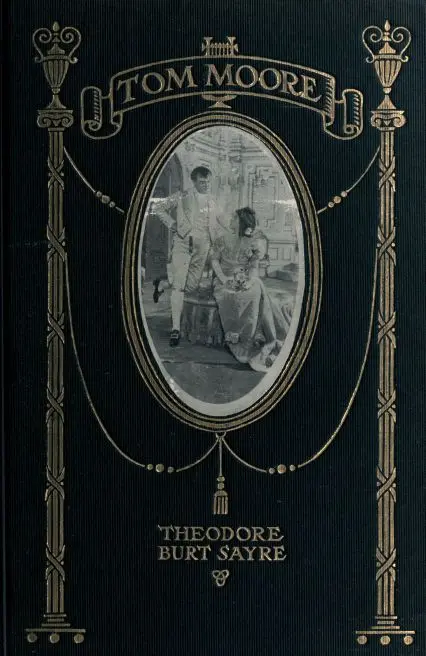
"Tom Moore: An Unhistorical Romance" by Theodore Burt Sayre is a novel written in the early 20th century. The narrative centers around the life of Thomas Moore, an influential Irish poet, capturing both his artistic endeavors and personal relationships during a period marked by ambition and creative struggle. The story introduces Moore as a character of great charm and wit, engaging in both humorous interactions and romantic pursuits in the backdrop of Ireland. At the start of the novel, Thomas Moore is portrayed as a cheerful and aspiring poet who enjoys fishing and reflecting on love as he navigates the rural landscape. The opening depicts Moore in a playful exchange with a young boy named Micky, highlighting his affable nature and deep-seated romantic inclinations. As he ventures toward a nearby school, where Mistress Bessie Dyke, the charming schoolmistress, teaches, their witty banter hints at a budding romance. The initial chapters set a vibrant tone, showcasing Moore's personality and laying the groundwork for the intricate relationships and societal dynamics that will unfold throughout the narrative.
Introduction adapted from the source catalogue; source summaries may be automatically generated.
Free to read · English · 78,818 words · No account needed
MAKE TIME FOR A GOOD BOOK
On by default. Untick to stop anonymous reading totals. Each page counts after 10 seconds in view. How this works.
Anonymous counting is on unless you have switched it off.
"You are indeed fortunate," interjected Sheridan. "I cannot recall any period in my career when I had anywhere near enough to drink."
"You must remember, Sherry," said the Beau, languidly, "every Irishman does not have a bottomless pit where nature usually places a stomach. Your pardon, Mistress Dyke, for using so corporeal a term."
"Well, to continue," said Moore, "besides the possessions already enumerated I have a roof over my head, and these same luxuries I can offer to my wife when I get her."
Bessie looked up at him lovingly as he sat down on the arm of the chair
she occupied.
"We will be so happy," she said shyly to Mr. Sheridan.
"And we will need no chaperon, I 'm thinking," said Moore.
"I 'll wager you won't," said Sheridan, wisely. "Well, George, let's get
on our way."
"What's that?" said Moore, quickly. "Get on your way? Not much. You are going to stay to supper with us."
"Well," said Sheridan, who had risen in a hesitating way, "I--"
"Oh," said Moore, divining the cause of his countryman's embarrassment, "it is true that you won't get much to eat, but you are more than welcome to whatever there is; and besides, think of the company you will be in."
"That last decides me, if Mistress Dyke extends the invitation," said Sheridan, yielding in response to a nod from the Beau, who had decided to remain.
"Tom speaks for both of us," said Bessie. "Don't you, Tom?"
"Yes, and some day I 'll listen for both of us, no doubt. That will be when she points out my faults, lads. You must stay. Bessie will make the tea--that is, if there is any tea. If there is n't any, she 'll mix the whisky."
"Good," said Sheridan, smacking his lips.
"But there is tea," said the girl, opening the caddy which she found in
the cupboard.
"Just our luck, eh, Sherry?" said the poet, disconsolately.
Buster entered at this opportune moment and busied himself, with the assistance of Bessie, in preparing the simple meal.
Moore drew the chairs into position by the table as Bessie laid the
plates.
"You are to sit there, you disreputable old Hibernian," said he, assisting Sheridan to a seat on the right.
"Your place is there at the end, Fashion Plate. I 'll preside just opposite you across the festive board, and Bessie shall sit on your left hand."
"Is she heavy?" inquired Sheridan, interestedly, as he sat down.
"I 'm speaking metaphorically," the poet rattled on. "How goes the play,
Sherry?"
"'Pizarro' is certainly doing a fine business," replied the aged dramatist. "The public likes blood and thunder."
Your reading position is saved on this browser. Take it to another device with a library code. Reading pages adapt to text, rather than matching a printed edition.
BEHIND THE BOOK
This eBook is for the use of anyone anywhere in the United States and most other parts of the world at no cost and with almost no restrictions whatsoever. You may copy it, give it away or re-use it under the terms of the Project Gutenberg License included with this eBook or online at www.gutenberg.org. If you are not located in the United States, you will have to check the laws of the country where you are located before using this eBook. Read the source licence.
The original source file, including credits and licence, is retained by this library. Request an original-format copy at no charge. Please include the book title and Project Gutenberg identifier #41656.
KEEP YOUR CURIOSITY GOING
Coulson Kernahan

Maurice Baring
Frances Wright
Cécile Tormay

Frederic Jesup Stimson

W. H. P. (William Henry Pope) Jarvis