THE CLASSIC COLLECTION✦A dead man’s diaryCLASSIC FREE BOOKS
A dead man’s diary
Coulson Kernahan
THE CLASSIC COLLECTION · 1902
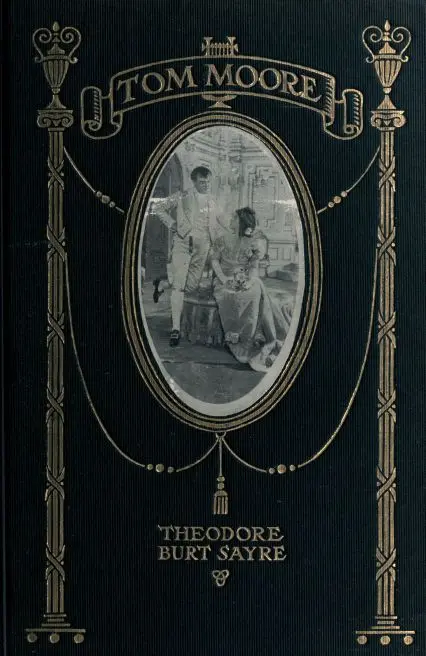
"Tom Moore: An Unhistorical Romance" by Theodore Burt Sayre is a novel written in the early 20th century. The narrative centers around the life of Thomas Moore, an influential Irish poet, capturing both his artistic endeavors and personal relationships during a period marked by ambition and creative struggle. The story introduces Moore as a character of great charm and wit, engaging in both humorous interactions and romantic pursuits in the backdrop of Ireland. At the start of the novel, Thomas Moore is portrayed as a cheerful and aspiring poet who enjoys fishing and reflecting on love as he navigates the rural landscape. The opening depicts Moore in a playful exchange with a young boy named Micky, highlighting his affable nature and deep-seated romantic inclinations. As he ventures toward a nearby school, where Mistress Bessie Dyke, the charming schoolmistress, teaches, their witty banter hints at a budding romance. The initial chapters set a vibrant tone, showcasing Moore's personality and laying the groundwork for the intricate relationships and societal dynamics that will unfold throughout the narrative.
Introduction adapted from the source catalogue; source summaries may be automatically generated.
Free to read · English · 78,818 words · No account needed
MAKE TIME FOR A GOOD BOOK
On by default. Untick to stop anonymous reading totals. Each page counts after 10 seconds in view. How this works.
Anonymous counting is on unless you have switched it off.
"Sing, Thomas Moore," commanded the girl, but a softer look came into her eyes as she settled comfortably back in her chair to listen.
"I 'd like to pass my life singing to you, Bessie."
"That's all very well, Tom, but the notes from your throat are not taken
at the bank."
"Well," retorted he, cheerily, "to get even, it is not many bank-notes I
take."
Moore, after fetching a high stool from a distant corner of the room, perched himself upon it and began to sing, the school-room echoing with the clear ringing voice that was destined in after years to be the delight of the most fashionable circle in Europe. He had selected an old ballad setting forth the emotions felt by a world-worn traveller as he threaded the streets of his native village after years of wandering abroad, and, as the chorus was composed of the various song-game rhymes sung by the children in their play, it was quite familiar to the pupils of Mistress Dyke, who joined in heartily.
"Ready," cried Moore, beckoning the children from their places. "Now,
all together.
"'I came to see Miss Jenny O'Jones,
Jenny O'Jones, Jenny O'Jones,
I came to see Miss Jenny O'Jones,
And how is she to-day?'"
Hand in hand the children, their shrill voices raised tunefully under the leadership of Moore, marched gayly forward and back, the poet prancing as joyously as any of them, as he beat time with a ruler.
"Second verse," he said, and, enjoying every note, sang it through to the huge delight of his audience, who, when the chorus was reached a second time, danced around him in a circle, their pleasure proving so infectious that Bessie herself deserted her desk to take part in the wind-up, which was both uproarious and prolonged.
"That will do you," said Moore, mopping his face with his handkerchief. "Faith, it is great fun we have been having, Bessie."
"So it appears," she replied, rapping on the desk for order.
"You have a fine lot of pupils, Bessie. I 'd like to be father of them
all."
"Mr. Moore!" exclaimed the girl, horrified at such a wish.
"I mean I 'd like to have a family as smart as they look," explained Moore, helping himself to a chair.
"That would not require much effort," replied the girl, coldly.
"But it would take time," suggested the graceless young joker. Then he continued, as Bessie gave him a freezing glance, "I mean, never having been married, I don't know, so I will have to take your word for it."
"You deserve to be punished for your impudence, Tom Moore."
Your reading position is saved on this browser. Take it to another device with a library code. Reading pages adapt to text, rather than matching a printed edition.
BEHIND THE BOOK
This eBook is for the use of anyone anywhere in the United States and most other parts of the world at no cost and with almost no restrictions whatsoever. You may copy it, give it away or re-use it under the terms of the Project Gutenberg License included with this eBook or online at www.gutenberg.org. If you are not located in the United States, you will have to check the laws of the country where you are located before using this eBook. Read the source licence.
The original source file, including credits and licence, is retained by this library. Request an original-format copy at no charge. Please include the book title and Project Gutenberg identifier #41656.
KEEP YOUR CURIOSITY GOING
Coulson Kernahan

Maurice Baring
Frances Wright
Cécile Tormay

Frederic Jesup Stimson

W. H. P. (William Henry Pope) Jarvis