THE CLASSIC COLLECTION✦A dead man’s diaryCLASSIC FREE BOOKS
A dead man’s diary
Coulson Kernahan
THE CLASSIC COLLECTION · 1902
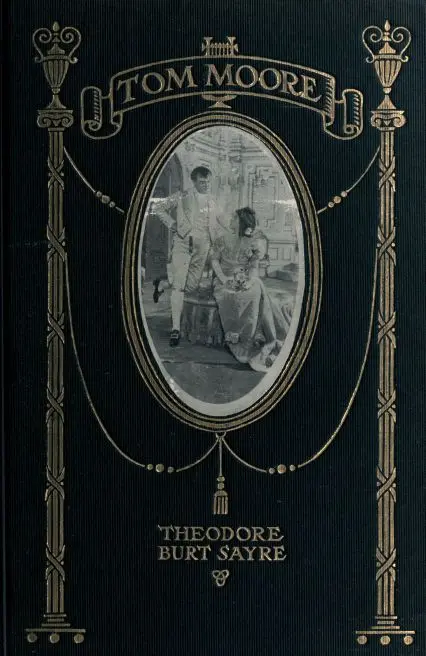
"Tom Moore: An Unhistorical Romance" by Theodore Burt Sayre is a novel written in the early 20th century. The narrative centers around the life of Thomas Moore, an influential Irish poet, capturing both his artistic endeavors and personal relationships during a period marked by ambition and creative struggle. The story introduces Moore as a character of great charm and wit, engaging in both humorous interactions and romantic pursuits in the backdrop of Ireland. At the start of the novel, Thomas Moore is portrayed as a cheerful and aspiring poet who enjoys fishing and reflecting on love as he navigates the rural landscape. The opening depicts Moore in a playful exchange with a young boy named Micky, highlighting his affable nature and deep-seated romantic inclinations. As he ventures toward a nearby school, where Mistress Bessie Dyke, the charming schoolmistress, teaches, their witty banter hints at a budding romance. The initial chapters set a vibrant tone, showcasing Moore's personality and laying the groundwork for the intricate relationships and societal dynamics that will unfold throughout the narrative.
Introduction adapted from the source catalogue; source summaries may be automatically generated.
Free to read · English · 78,818 words · No account needed
MAKE TIME FOR A GOOD BOOK
On by default. Untick to stop anonymous reading totals. Each page counts after 10 seconds in view. How this works.
Anonymous counting is on unless you have switched it off.
Once by themselves, Sheridan seized Moore's arm.
"Tommy," said he, "I 'm a drunken old reprobate."
"They say confession is good for the soul, Sherry," replied Moore,
politely.
"But I 'm not such a rascal as s'm' others I know of."
"I hope you mean nothing personal?"
"Shut up, Tommy."
"Yessir," replied the gentleman thus admonished.
"Goo' boy, Tommy. Now listen. Having had a drink or two or pos'bly three to be 'tirely frank, Tommy, I 'cided to get a little air."
"I thought you had a little heir, Sherry."
"Y'r a fool, Tommy."
"I can't conscientiously deny it."
"Oh, H--l!" remarked the elder Irishman, "it's too important to be so
curst silly about."
"I beg your pardon," said Moore, contritely. "Proceed."
"Where was I?"
"You were looking for air."
"So I was. Well, so in I go to a room ver' little frequented. And there I raise a window and have a shock, fo' outside I see quite plainly the ugly mug of a bailiff. A bailiff I 'm quite attached to f'r ole times' sake. 'Shoo' old acquaintance be f'rgot,' and so forth. Understan', Tommy?"
"Perfectly."
"So of course I think he is after me. Understan'?"
"The presumption is quite natural."
"And bob back my head f'r fear he mi' see me. Then down comes window on m' crown, tips my wig over m' ear, and lays me out cold on the floor behind the por'chers. Understan'?"
"Very clearly, Sherry."
"Then when I become sens'ble, I hear voices outside window recess in the room, Sir Percival and Farrell having confidential chat. Thass what I want tell you."
"Oh," said Moore, in sudden interest, "what were they talking about?"
"Curst 'f I know now," said the dramatist, blankly, all recollection of the important information he had to convey suddenly obliterated.
Moore immediately waxed anxious.
"Think, Sherry, think!"
"I 'm too drunk to do anything but--"
"But what?"
"--but drink some more drinksh."
"Sit down here now and take things easily," urged Moore, resolved to learn what had weighed so heavily upon the old gentleman's mind.
"I 'm ver' thirsty," observed Sheridan, thoughtfully. "Go' lump on m' head, Tommy. Ver' dis'oblegin' window, most inconsid'rate. Almost scalped ven'rable author of 'Schoo' f'r Scan'al.'"
"Now there are only two subjects on which Sir Percival could converse that would interest me in the least, Sherry."
"Two. Thass ver' few f'r so clever a man as you, Tommy. I fear you lack ver'--ver'--vers'tility, m' boy."
"The first subject is, of course, Bessie."
"Curst nice lil' girl," observed Sheridan, conscious that the young lady spoken of was in some way connected with the idea that had so suddenly vanished.
"The other is myself."
Your reading position is saved on this browser. Take it to another device with a library code. Reading pages adapt to text, rather than matching a printed edition.
BEHIND THE BOOK
This eBook is for the use of anyone anywhere in the United States and most other parts of the world at no cost and with almost no restrictions whatsoever. You may copy it, give it away or re-use it under the terms of the Project Gutenberg License included with this eBook or online at www.gutenberg.org. If you are not located in the United States, you will have to check the laws of the country where you are located before using this eBook. Read the source licence.
The original source file, including credits and licence, is retained by this library. Request an original-format copy at no charge. Please include the book title and Project Gutenberg identifier #41656.
KEEP YOUR CURIOSITY GOING
Coulson Kernahan

Maurice Baring
Frances Wright
Cécile Tormay

Frederic Jesup Stimson

W. H. P. (William Henry Pope) Jarvis