THE CLASSIC COLLECTION✦A dead man’s diaryCLASSIC FREE BOOKS
A dead man’s diary
Coulson Kernahan
THE CLASSIC COLLECTION · 1902
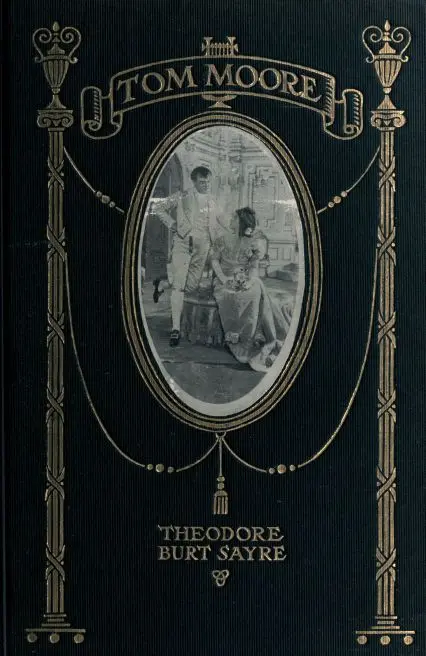
"Tom Moore: An Unhistorical Romance" by Theodore Burt Sayre is a novel written in the early 20th century. The narrative centers around the life of Thomas Moore, an influential Irish poet, capturing both his artistic endeavors and personal relationships during a period marked by ambition and creative struggle. The story introduces Moore as a character of great charm and wit, engaging in both humorous interactions and romantic pursuits in the backdrop of Ireland. At the start of the novel, Thomas Moore is portrayed as a cheerful and aspiring poet who enjoys fishing and reflecting on love as he navigates the rural landscape. The opening depicts Moore in a playful exchange with a young boy named Micky, highlighting his affable nature and deep-seated romantic inclinations. As he ventures toward a nearby school, where Mistress Bessie Dyke, the charming schoolmistress, teaches, their witty banter hints at a budding romance. The initial chapters set a vibrant tone, showcasing Moore's personality and laying the groundwork for the intricate relationships and societal dynamics that will unfold throughout the narrative.
Introduction adapted from the source catalogue; source summaries may be automatically generated.
Free to read · English · 78,818 words · No account needed
MAKE TIME FOR A GOOD BOOK
On by default. Untick to stop anonymous reading totals. Each page counts after 10 seconds in view. How this works.
Anonymous counting is on unless you have switched it off.
"Because I am jealous of the amorous looks he bestows upon you, even if you do not return them. I wished to have you to myself to-night, so I have placed it beyond Moore's power to interfere in his usual impudent manner."
"You need not explain," Bessie said coldly, as a servant approached.
"The Prince's carriage blocks the way," he announced to his master.
"Good!" exclaimed Sir Percival. "His Highness' tardiness worried me. I was afraid he was not coming."
"His Royal Highness, the Prince of Wales," announced the footman a moment later, "and Mr. Thomas Moore!"
The Regent entered the room with his arm linked in that of the poet, whose eyes, twinkling with merriment, showed plainly his enjoyment of Sir Percival's surprise and disappointment.
"Percy, I took the liberty of bringing Tom Moore with me."
"Your Highness does not doubt that I am glad to welcome any friend of yours," glibly replied Sir Percival.
Then as the Prince, seeing Sheridan, ever a favorite of his, turned away, the baronet said to Moore, a sneer disfiguring his handsome face:
"Believe me, Mr. Moore, my house is honored."
"I believe you, Sir Percival," responded the poet, promptly, "so that
need not worry you."
"Nothing ever worries me, sir."
"Not even conscience, Sir Percival?"
"No, Mr. Moore," replied the baronet, as Wales and Sheridan drew nearer.
"Ah, I see, conscience, like a powdered wig, is no longer in style."
"Tut, tut, Tom," said Sheridan reprovingly. "I still cling to the old
fashion."
Moore eyed the speaker's wig with tolerant eye.
"Faith, Sherry," said he, "brains such as yours are an excuse for
anything."
"Perhaps," said Sheridan. "But it is a poor rule that does n't work both ways, and surely you will not have the temerity to assert that 'Anything is an excuse for brains.'"
"In society who can doubt the truth of the statement?"
"It takes a sinner to be cynical," said Sheridan, having recourse to his
snuff-box.
"Then," said Moore, "what a doubter our greatest dramatist must be."
"I have been described as a doubtful character more than once," returned the old gentleman. "Your Highness, when you arrived we were discussing matrimony."
"An amatory eccentricity," drawled Brummell, who had joined the little group now surrounding the Prince.
"The connecting link between bankruptcy and the Bank of England,"
declared Sir Percival.
"The straight-jacket in which are confined couples suffering from sentimental insanity pronounced incurable by the church," said Moore.
"Ah," said Wales, "recovery is sometimes rapid, nevertheless."
"Marriage is deceptive," said Mr. Sheridan, with a sigh. "Lovers go to church for a bridal and return home to find they have been given a yoke."
Your reading position is saved on this browser. Take it to another device with a library code. Reading pages adapt to text, rather than matching a printed edition.
BEHIND THE BOOK
This eBook is for the use of anyone anywhere in the United States and most other parts of the world at no cost and with almost no restrictions whatsoever. You may copy it, give it away or re-use it under the terms of the Project Gutenberg License included with this eBook or online at www.gutenberg.org. If you are not located in the United States, you will have to check the laws of the country where you are located before using this eBook. Read the source licence.
The original source file, including credits and licence, is retained by this library. Request an original-format copy at no charge. Please include the book title and Project Gutenberg identifier #41656.
KEEP YOUR CURIOSITY GOING
Coulson Kernahan

Maurice Baring
Frances Wright
Cécile Tormay

Frederic Jesup Stimson

W. H. P. (William Henry Pope) Jarvis