THE CLASSIC COLLECTION✦A dead man’s diaryCLASSIC FREE BOOKS
A dead man’s diary
Coulson Kernahan
THE CLASSIC COLLECTION · 1902
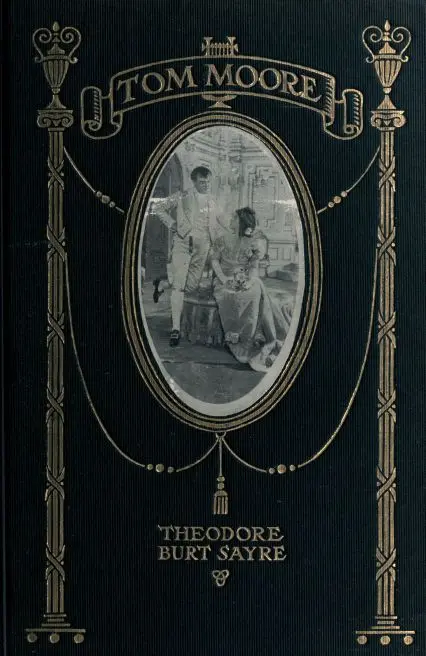
"Tom Moore: An Unhistorical Romance" by Theodore Burt Sayre is a novel written in the early 20th century. The narrative centers around the life of Thomas Moore, an influential Irish poet, capturing both his artistic endeavors and personal relationships during a period marked by ambition and creative struggle. The story introduces Moore as a character of great charm and wit, engaging in both humorous interactions and romantic pursuits in the backdrop of Ireland. At the start of the novel, Thomas Moore is portrayed as a cheerful and aspiring poet who enjoys fishing and reflecting on love as he navigates the rural landscape. The opening depicts Moore in a playful exchange with a young boy named Micky, highlighting his affable nature and deep-seated romantic inclinations. As he ventures toward a nearby school, where Mistress Bessie Dyke, the charming schoolmistress, teaches, their witty banter hints at a budding romance. The initial chapters set a vibrant tone, showcasing Moore's personality and laying the groundwork for the intricate relationships and societal dynamics that will unfold throughout the narrative.
Introduction adapted from the source catalogue; source summaries may be automatically generated.
Free to read · English · 78,818 words · No account needed
MAKE TIME FOR A GOOD BOOK
On by default. Untick to stop anonymous reading totals. Each page counts after 10 seconds in view. How this works.
Anonymous counting is on unless you have switched it off.
"There is no one coming," she said severely.
"Is there not?" asked the poet, stowing away the prize he had won in his coat-tail pocket. "Shall I help you up on the table again?"
Bessie looked daggers at him, but he smiled blandly back at her in
innocent good-nature.
"I am very angry with you," she announced, decisively. "Really, Mr. Moore, your behavior is perfectly intolerable."
"And why are you so provoked? Because I took your ruffle?" queried the poet. "Why angry, since I left the skirt?"
"Mr. Moore!" she cried warningly.
"Well, Mistress?"
"Be careful, sir!"
"I do not have to be," he answered, "but you are very different. Now you dare not be long cross."
"Oh, don't I, indeed? And if I dare not, what is the reason, sir," she demanded in a tone as sarcastic as she could make it, though this, it must be admitted, was not saying much.
"Because," he said, slowly and coolly, "if you do let your temper get the better of you the skirt is liable to follow the ruffle into my possession."
"Insolent," exclaimed the girl, sitting down and carefully turning her back towards her tormentor.
That she was very angry with Moore cannot be doubted. Probably it was because she was so exasperated at his behavior and so desirous of being plagued no further by him that she remained in this secluded nook instead of returning to the adjacent rooms, the greater number of which were thronged with guests. Certainly her staying where she was could not be regarded as anything but indicative of a sincere desire to be rid of his company. Unfortunately this very evident fact was not plain to the poet, for he proceeded quite as though he interpreted her tarrying as proof of his own success in providing her with pleasant diversion, a grievous error, as any one conversant with the real state of affairs would have admitted.
"Lady Donegal is a delightful hostess, is n't she, Mistress Dyke?"
"At last you have suggested a subject on which we can agree," replied
Bessie, stiffly.
"Oh, I can suggest another," said Moore, trying to catch her eye, an
undertaking Bessie rendered a failure by resolutely turning her head
away.
"What is that, Mr. Moore?"
"You know I think you are very pretty, Bessie."
"As though I care what you think."
"And I know you think you are very pretty, so we agree again."
"You think I am conceited."
"I know you have good reason to think well of yourself," answered Moore,
sweetly.
"Indeed, sir?"
"Indeed, ma'am, for are you not favored with the undying devotion of one
Thomas Moore?"
"Oh," said Bessie, disappointed.
Your reading position is saved on this browser. Take it to another device with a library code. Reading pages adapt to text, rather than matching a printed edition.
BEHIND THE BOOK
This eBook is for the use of anyone anywhere in the United States and most other parts of the world at no cost and with almost no restrictions whatsoever. You may copy it, give it away or re-use it under the terms of the Project Gutenberg License included with this eBook or online at www.gutenberg.org. If you are not located in the United States, you will have to check the laws of the country where you are located before using this eBook. Read the source licence.
The original source file, including credits and licence, is retained by this library. Request an original-format copy at no charge. Please include the book title and Project Gutenberg identifier #41656.
KEEP YOUR CURIOSITY GOING
Coulson Kernahan

Maurice Baring
Frances Wright
Cécile Tormay

Frederic Jesup Stimson

W. H. P. (William Henry Pope) Jarvis