THE CLASSIC COLLECTION✦A dead man’s diaryCLASSIC FREE BOOKS
A dead man’s diary
Coulson Kernahan
THE CLASSIC COLLECTION · 1902
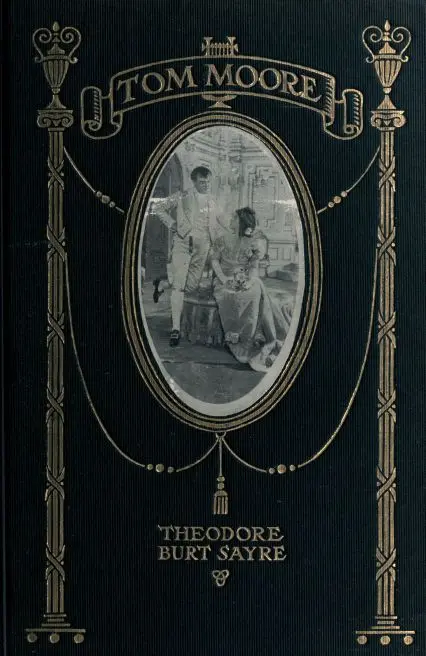
"Tom Moore: An Unhistorical Romance" by Theodore Burt Sayre is a novel written in the early 20th century. The narrative centers around the life of Thomas Moore, an influential Irish poet, capturing both his artistic endeavors and personal relationships during a period marked by ambition and creative struggle. The story introduces Moore as a character of great charm and wit, engaging in both humorous interactions and romantic pursuits in the backdrop of Ireland. At the start of the novel, Thomas Moore is portrayed as a cheerful and aspiring poet who enjoys fishing and reflecting on love as he navigates the rural landscape. The opening depicts Moore in a playful exchange with a young boy named Micky, highlighting his affable nature and deep-seated romantic inclinations. As he ventures toward a nearby school, where Mistress Bessie Dyke, the charming schoolmistress, teaches, their witty banter hints at a budding romance. The initial chapters set a vibrant tone, showcasing Moore's personality and laying the groundwork for the intricate relationships and societal dynamics that will unfold throughout the narrative.
Introduction adapted from the source catalogue; source summaries may be automatically generated.
Free to read · English · 78,818 words · No account needed
MAKE TIME FOR A GOOD BOOK
On by default. Untick to stop anonymous reading totals. Each page counts after 10 seconds in view. How this works.
Anonymous counting is on unless you have switched it off.
"On that I 'll stake my life, Sir Percival," responded Farrell. "Though I dislike Tom Moore with all my heart, I know he is a genius in his line. If he will only keep his courage in the face of disappointment there is no man who will achieve more success in the writing of verses, I feel certain."
"Dear me," said Sir Percival, taking snuff, "if such is really the truth, I 'll have to interest myself in his affairs again. Hullo, what is this?"
As he spoke, the baronet drew from the heap of manuscripts the verses satirizing the Prince of Wales written and left in Moore's keeping by Mr. Dyke, which the poet had accidentally taken from the drawer when he flung his armful of rejected poems on the table before Lord Brooking.
Sir Percival scanned the verses, his dubious expression changing to one of great delight as he read on, until as he finished he laughed aloud.
"What is it pleases you, Sir Percival?"
"Egad, Terence, I 've happened on a treasure. A satire on the Prince. Gad, he cooks Wales to a cinder. Listen, Terence.
"It is of scraps and fragments built,
Borrowed alike from Fools and Wits,--
His mind is like a patchwork quilt
Made up of motley, cast-off bits.
Poor Prince! And how else could it be,
His notions all at random caught,
His mind a mental fricassee
Made up of odds and ends of thought.'
"And so on for several more verses. The Regent has n't had such a toasting in many a day. I swear I 'll have this published immediately."
"Ah," said Farrell, "and why, sir?"
"'T will ruin Moore," replied the baronet, regarding the other in
surprise.
Farrell surveyed the attic with a contemptuous stare before answering.
"Surely, Sir Percival, this shabby hole is not indicative of either success or affluence," said he slowly. "One does not dig into the earth to crush a worm under foot."
"You speak in riddles, Terence," observed Sir Percival, pleasantly
puzzled.
"I 'll make my meaning plain, sir. Tom Moore does not annoy you now. Wait till he succeeds, if he ever does so, before you publish that poem. The time to spoil his career is when he has accomplished something and is about to climb higher. He is starving here."
"Stab me, if you are not right, Terence," exclaimed the baronet, approvingly. "I will keep this bit of humor in reserve, and you shall be witness that I found it fresh from Moore's pen upon his table."
"Willingly," said Farrell. "Meanwhile, continue your pursuit of Mistress Dyke. Are you making progress there?"
Your reading position is saved on this browser. Take it to another device with a library code. Reading pages adapt to text, rather than matching a printed edition.
BEHIND THE BOOK
This eBook is for the use of anyone anywhere in the United States and most other parts of the world at no cost and with almost no restrictions whatsoever. You may copy it, give it away or re-use it under the terms of the Project Gutenberg License included with this eBook or online at www.gutenberg.org. If you are not located in the United States, you will have to check the laws of the country where you are located before using this eBook. Read the source licence.
The original source file, including credits and licence, is retained by this library. Request an original-format copy at no charge. Please include the book title and Project Gutenberg identifier #41656.
KEEP YOUR CURIOSITY GOING
Coulson Kernahan

Maurice Baring
Frances Wright
Cécile Tormay

Frederic Jesup Stimson

W. H. P. (William Henry Pope) Jarvis